
2025 Top Trends in Agile Robotics: Transforming Industries with Innovation
The emergence of agile robotics is set to revolutionize various industries by 2025, as organizations increasingly seek innovative solutions to enhance efficiency and productivity. According to a recent report by the International Federation of Robotics, the global market for agile robotics is projected to reach $20 billion by 2025, driven by advancements in artificial intelligence and machine learning. This cornerstone technology is poised to transform not just manufacturing but also sectors such as healthcare, logistics, and agriculture, where flexibility and quick adaptation are paramount.
As companies navigate the complexities of digital transformation, agile robotics emerges as a critical component in streamlining operations and reducing costs. A survey conducted by McKinsey & Company indicates that organizations adopting agile robotics experience a 30% improvement in operational efficiency. Moreover, the versatility of agile robotic systems enables businesses to respond swiftly to market demands, ultimately leading to enhanced customer satisfaction and competitive advantage.
In this context, understanding how to effectively implement and leverage agile robotics becomes essential for industry leaders aiming to stay ahead in an increasingly automated world. This article will explore the top trends shaping agile robotics by 2025, providing insights into the strategies that organizations can adopt to harness the full potential of these innovative technologies.
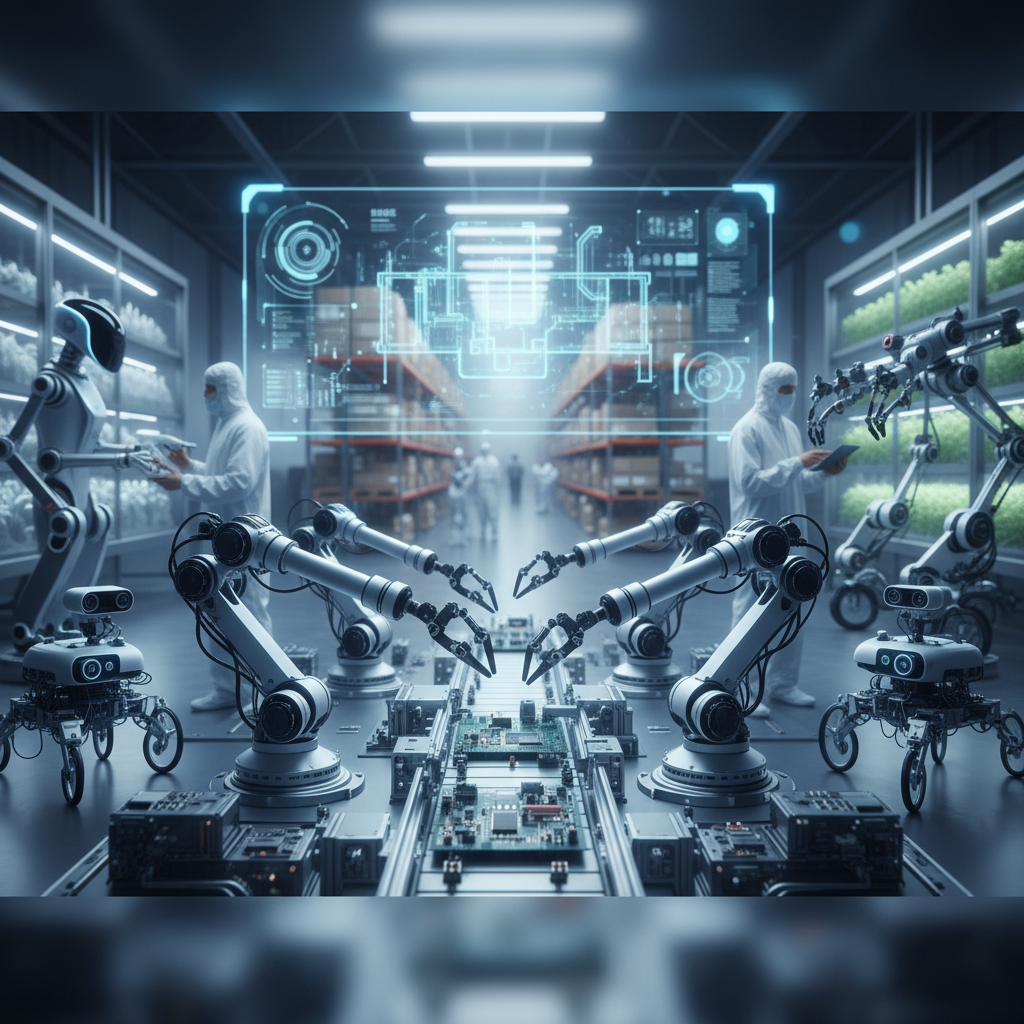
The Rise of Collaborative Robots: Bridging Human-Machine Interaction in Workspaces
The emergence of collaborative robots, or cobots, is reshaping the landscape of various industries by enhancing human-machine interaction in the workplace.
Unlike traditional robots that operate in isolation, cobots are designed to work alongside human workers, augmenting their capabilities and increasing productivity. This synergy not only boosts operational efficiency but also fosters a safer work environment where robots take on repetitive or hazardous tasks, allowing humans to focus on more complex and rewarding work.
Tips for integrating collaborative robots into your workspace include starting with a clear understanding of your operational needs. Determine which tasks can be effectively automated and ensure that your team is well-prepared to work alongside these new technologies. Training is crucial; invest in comprehensive training programs that cover both technical skills and safety protocols. This will not only ease the transition but also enhance team morale, as employees will feel empowered rather than threatened by automation.
As the reliance on collaborative robots grows, continuous communication between humans and machines is key.
Establishing protocols for feedback and adjustments will ensure that cobots evolve alongside human roles. Encourage a culture of openness where employees feel comfortable sharing their experiences and suggestions regarding robot interactions, which will facilitate a more harmonious and efficient workspace.

Integrating AI and Machine Learning: Enhancing Decision-Making in Agile Robotics
The integration of artificial intelligence (AI) and machine learning (ML) into agile robotics is revolutionizing industries by enhancing decision-making processes. According to a report by MarketsandMarkets, the global AI in robotics market is projected to reach $10.3 billion by 2025, growing at a CAGR of 25.6%. This growth is driven by the increasing demand for advanced automation solutions that can adapt and respond to dynamic environments.
Agile robots equipped with AI algorithms can analyze vast amounts of data in real time, allowing them to adjust their operations based on changing conditions, ultimately improving efficiency and productivity.
Furthermore, a study published by McKinsey highlights that organizations that leverage AI in robotic decision-making can improve their operational efficiency by up to 40%. By employing machine learning techniques, these robots can learn from past performances, make informed predictions and optimize workflows. For example, in the manufacturing sector, agile robots that utilize AI can identify potential bottlenecks and suggest adjustments before issues arise.
This capability not only reduces downtime but also plays a vital role in minimizing operational costs and maximizing output, marking a significant transformation in how industries approach automation.
Market Projections: $30 Billion in Robotics by 2025 - Key Growth Areas to Watch
As we approach 2025, the Agile Robotics sector is set to become a pivotal player in transforming various industries, projecting a remarkable market growth trajectory. Recent estimates indicate that the global robotics market is expected to reach $30 billion by 2025, highlighting key growth areas such as industrial automation, healthcare applications, and smart manufacturing solutions. Amidst this surge, the Japanese AI market also showcases a striking expansion, with projections showing growth from $15.64 billion in 2025 to $123.9 billion by 2032, translating to a compound annual growth rate of 34.40%.
A notable development in the technology investment landscape is the strategy employed by a major Japanese conglomerate, noted for its bold decisions. By critically reshaping its investment portfolio, this company demonstrates a clear vision towards capitalizing on lucrative opportunities within the tech sector, particularly in areas involving cutting-edge robotics and AI innovations. Coupled with the anticipated growth in photonic sensors, which is expected to evolve from a market size of $2.16 billion in 2025 to $3.55 billion by 2032, the synergy between these technological advancements will significantly influence productivity and efficiency across industries.
2025 Top Trends in Agile Robotics: Transforming Industries with Innovation
| Trend | Market Projection (2025) | Key Growth Areas | Estimated Growth Rate (%) |
|---|---|---|---|
| Autonomous Robotics | $10 Billion | Manufacturing, Warehousing | 15% |
| Collaborative Robots (Cobots) | $7 Billion | Healthcare, Retail | 12% |
| Service Robots | $5 Billion | Hospitality, Domestic | 20% |
| Agricultural Robotics | $3 Billion | Farming, Crop Management | 18% |
| Logistics and Delivery Drones | $5 Billion | E-commerce, Supply Chain | 16% |
Safety and Compliance: Best Practices for Implementing Robotics in Industries
As industries increasingly adopt agile robotics, ensuring safety and compliance becomes paramount. Implementing robotics in any setting poses unique challenges, necessitating a thorough understanding of regulations and best practices. Organizations must prioritize their safety protocols to protect not only the workers but also the technology itself. This involves conducting routine risk assessments to identify potential hazards and mitigate them effectively.
Tips: Regularly update training programs for employees to ensure they are well-versed in safety practices related to robotics. Establishing clear communication channels can significantly enhance safety, as workers should feel comfortable reporting any unsafe conditions or near-miss incidents.
Compliance with industry standards must also be a key focus. Adhering to local and international regulations helps avoid costly fines and enhances the organization's reputation. This can be achieved by integrating compliance checks into the robotic deployment process.
Tips: Collaborate with legal and regulatory experts to track any changes in laws affecting robotics. Documenting all compliance measures and maintaining transparency will build trust with stakeholders and clients alike, fostering a culture of safety and accountability within the organization.
Innovations in Mobile Robotics: Transforming Supply Chain Logistics and Delivery Systems
The landscape of supply chain logistics and delivery systems is being radically transformed by innovations in mobile robotics, a trend predicted to accelerate in the coming years. According to a report by Grand View Research, the global mobile robotics market is expected to reach $14.4 billion by 2027, growing at a CAGR of 22.5%. This growth is fueled by the rising demand for automation and efficiency in warehouse operations. Mobile robots are increasingly utilized for tasks such as inventory management, package sorting, and last-mile delivery, resulting in significant improvements in operational speed and accuracy.
Moreover, the integration of artificial intelligence with mobile robotics is enhancing decision-making processes in logistics. A McKinsey report highlights that AI can automate up to 45% of tasks in supply chain management, leading to reduced labor costs and minimized human error. Startups are emerging with innovative solutions, such as autonomous delivery vehicles and robotic assistants for sorting and packing, which are streamlining logistics operations. As the technology continues to evolve, companies that adopt these innovations can expect measurable benefits, including improved delivery times and customer satisfaction.
Related Posts
-
Rethinking Robots: How Innovative Technology is Shaping Our Future Workspaces
-
Ultimate Guide to Mastering Agile Robotics for Business Success
-
Top 10 Innovative Think Robotics Solutions Transforming the Future of Automation
-

Top 10 Robotics Lab Innovations Transforming Technology and Education
-
5 Best Innovations in Think Robotics for the Future of Automation
-

10 Unmatched Robotics Innovations You Should Think About