2026 Top Commercial Fan Types for Global Buyers
Choosing the right Commercial Fan can shape air quality, energy use, and daily operating costs. In 2026, global buyers are comparing more than airflow ratings. They are examining motor efficiency, noise levels, installation space, controls, maintenance access, and regional operating conditions.
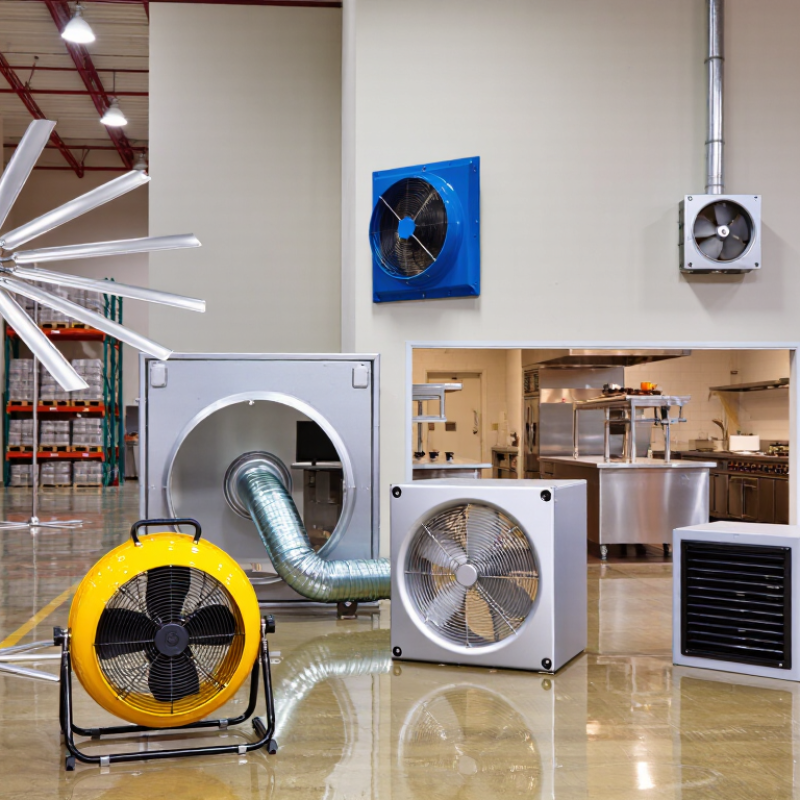
A warehouse may need a high-volume, low-speed fan to move air across tall storage racks. A restaurant kitchen requires strong extraction, heat resistance, and easy cleaning. Offices, retail stores, workshops, farms, and logistics centers each create different ventilation demands. Common choices include axial fans, centrifugal fans, exhaust fans, HVLS fans, wall-mounted fans, and portable industrial units. Each type solves a different problem, though product descriptions sometimes make selection appear easier than it is.
Details matter.
Experienced buyers should review airflow performance under real resistance, not only free-air figures. They should also check voltage, frequency, control compatibility, corrosion protection, bearing design, spare-parts access, and documented testing. Regional standards and installation requirements must be verified with qualified professionals before purchase. A low price can become expensive when a motor overheats or replacement parts take months to arrive. That point is easy to miss.
This guide compares the leading Commercial Fan types for international sourcing in 2026. It considers practical applications, technical strengths, limitations, operating environments, and supplier reliability. Some recommendations will depend on building design and climate. No single fan fits every facility. Careful evaluation remains essential, especially when catalog information feels incomplete.
Commercial Fan Basics and Selection Criteria for Global Buyers
2026 Top Commercial Fan Types for Global Buyers
Commercial Fan Basics and Selection Criteria for Global Buyers
Commercial fans support cooling, ventilation, moisture control, and process airflow. The right choice starts with the building, not the catalog. Axial fans suit large air volumes with low resistance. Centrifugal fans handle duct systems and higher static pressure. HVLS fans circulate air across warehouses and retail floors. Mixed-flow fans balance airflow and pressure in compact systems. Airflow comes first. Measure the space.
Global buyers should confirm airflow volume, static pressure, duty cycle, noise, power supply, and mounting conditions. A commercial kitchen may need corrosion-resistant materials and easy cleaning. A dusty workshop may require a suitable enclosure and documented protection rating. Warehouses often benefit from variable-speed control when occupancy changes. Check motor efficiency, bearing access, guards, vibration limits, and replacement-part availability. Local electrical requirements matter. Request test data, installation instructions, and traceable compliance documents. A low purchase price can become expensive when wiring, controls, or lifting equipment are excluded.
In practical site reviews, fan placement often causes more trouble than fan type. Beams, racking, doors, and heat sources can interrupt the intended air path. I have seen a powerful unit create noise while leaving workers uncomfortable. That result deserves a second look. Select a fan after mapping airflow and measuring actual conditions where possible. Leave room for maintenance. Specifications can be incomplete when duty points remain unclear. Treat assumptions as risks, and request clarification before ordering.
2026 Top Commercial Fan Types for Global Buyers
Chart focus: Representative airflow capacity for commonly specified commercial fan types, measured in cubic metres per hour (m³/h). These figures are practical screening references rather than fixed product limits.
Selection criteria: Global buyers should confirm the required airflow and static pressure at the duty point, installation method, energy efficiency, noise level, operating temperature, corrosion resistance, voltage and frequency, safety compliance, and local certification requirements before purchase.
Key Commercial Fan Types and Their Core Applications
Commercial fans serve different duties, so selection begins with airflow, pressure, and working conditions. Axial fans move large air volumes through open spaces, making them useful in warehouses, workshops, and agricultural buildings. Their broad blades create a noticeable breeze but usually handle resistance poorly. Centrifugal fans generate stronger pressure for ducted ventilation, dust collection, and process exhaust. A curved metal housing directs air efficiently through bends and filters. Mixed-flow fans balance volume and pressure in compact systems. They fit tunnels, parking structures, and long ventilation routes. I have found that fan type matters less than system matching. A powerful fan can still perform badly when ducts are narrow or clogged.
Roof exhaust fans remove hot, stale air from factories and commercial kitchens. Wall-mounted propeller fans support cross-ventilation where fresh air enters from opposite openings. HVLS fans move slow, wide air patterns across retail floors, logistics centers, and sports halls. They improve comfort without creating a harsh draft near workstations. Portable fans help with temporary cooling, maintenance work, and emergency airflow. However, noise, cleaning access, motor protection, and control compatibility deserve equal attention. These details are often missed during purchasing. That is a costly lesson.
Tips: Measure airflow at actual operating pressure, not only the catalog rating. Check temperature, humidity, dust, and available power before ordering. Ask for sound data and maintenance clearances. If the application is uncertain, test one unit first. A small pilot may reveal turbulence, noise, or weak extraction before full installation.
How to Match Fan Types with Commercial Spaces and Climates
Fan selection starts with climate, not catalog labels. In hot, humid warehouses, HVLS fans move large air volumes across wide floors. They improve perceived comfort by increasing air speed, but they do not remove moisture. Pair them with correctly sized ventilation or dehumidification. The International Energy Agency reports that cooling consumes about 10% of global electricity use. Better air movement can reduce dependence on mechanical cooling, when controls are used carefully.
For retail stores and workshops, ceiling or wall-mounted axial fans suit open areas with moderate ceiling heights. They create visible air movement near workers and support quick installation. The U.S. Department of Energy notes that ceiling fans may allow a thermostat setting increase of up to 4°F while maintaining comfort. This benefit depends on occupancy, clothing, and humidity. An empty room gains little.
Centrifugal fans fit ducted exhaust systems, kitchens, and process areas requiring higher resistance handling. In dusty or corrosive locations, specify suitable materials, filtration, and motor protection. ASHRAE Standard 55 treats air speed as part of thermal comfort, yet real buildings remain uneven. A fan may cool one aisle while leaving another still. That weakness deserves field testing. Use variable-speed controls, temperature sensors, and measured airflow rather than relying on advertised coverage alone.
Global Buying Factors: Safety, Compliance, Cost, and Maintenance
Commercial fan selection in 2026 should start with operating conditions, not catalog size. Axial fans suit high airflow and low resistance. Centrifugal fans handle higher pressure and duct resistance. HVLS fans move large air volumes slowly across open floors. The U.S. Department of Energy estimates fan systems can consume 15–20% of manufacturing electricity, according to Improving Fan System Performance: A Sourcebook. Efficiency deserves early attention.
Safety and compliance vary by country, building use, and installation location. Buyers should check airflow testing, motor protection, guards, emergency isolation, and noise limits. ISO 12100 supports machinery risk assessment, while IEC 60204-1 addresses electrical equipment safety. ASHRAE Standard 90.1-2022 also includes fan-power requirements for covered building systems. Local inspection rules still decide acceptance. Paperwork is not decoration.
Cost means more than purchase price. A cheaper fan may demand larger motors, frequent belt replacement, or difficult access above a ceiling. Ask for tested performance curves, duty-point efficiency, spare-part availability, and expected service intervals. DOE guidance recommends correcting system resistance and avoiding unnecessary throttling. Maintenance teams often notice these losses first. I have seen specifications look complete while ignoring cleaning access. That is an avoidable weakness. Procurement reviews should compare energy, downtime, compliance work, and maintenance labor over the fan’s operating life.