Why is Autonomous Logistics the Future of Supply Chain Management?
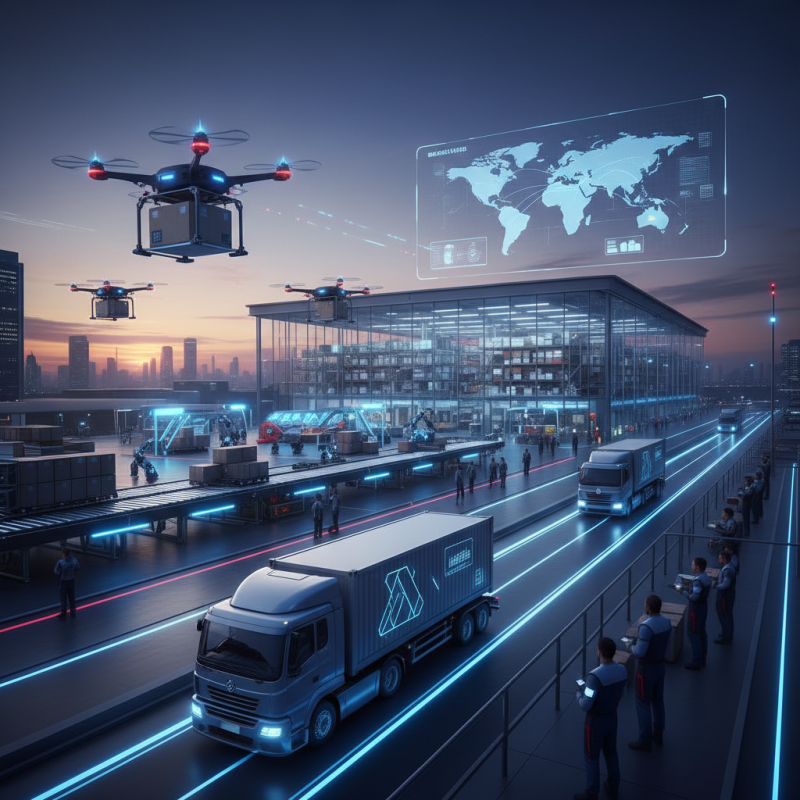
In recent years, autonomous logistics has emerged as a revolutionary force in supply chain management. According to Dr. Emily Zhang, a leading expert in this field, “Autonomous logistics will redefine how we think about efficiency and speed.” This statement encapsulates the transformative potential of our industry.
The blending of technology and logistics is changing the landscape. Drones, self-driving trucks, and automated warehouses promise increased efficiency. Companies are already witnessing streamlined operations and reduced costs. Yet, challenges like initial investment and workforce adaptation remain.
The future is bright, but it is not without its hurdles. Autonomous logistics creates new questions about job security and infrastructure readiness. Addressing these concerns is vital as we move forward. The balance between innovation and practicality will define the success of autonomous logistics.
Understanding Autonomous Logistics in Supply Chain Management
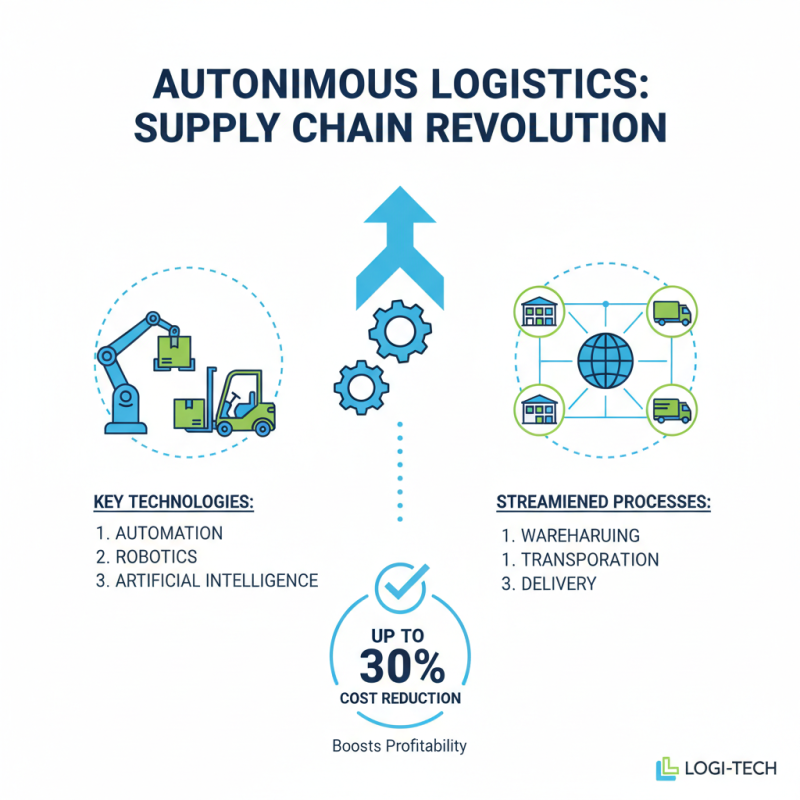
Autonomous logistics is transforming supply chain management in profound ways. This technology relies on automation, robotics, and artificial intelligence to streamline processes. Reports indicate that companies adopting these systems see up to a 30% reduction in operational costs. This is significant for businesses struggling with tight margins and rising expenses.
However, the path to full automation is rocky. Many organizations face challenges in integrating these tools. Staff training is often overlooked, leading to inefficiencies. A survey revealed that 40% of logistics companies reported resistance to automation from their teams. These hurdles can slow progress, but the potential benefits are too crucial to ignore.
Moreover, autonomous logistics aims to enhance accuracy and speed. A study showed that warehouses using automation improved order accuracy by 99.9%. Still, it's essential to recognize that technology can malfunction. Disruptions can occur if systems are not regularly updated and monitored. Balancing human oversight with automation is key for success in this evolving landscape.
Key Technologies Driving Autonomous Logistics Forward
Autonomous logistics is poised to reshape supply chain management dramatically. Key technologies are driving this evolution. For instance, automation is reducing human error. Robotics and AI can enhance warehouse operations, making them faster and more efficient. As per a report by McKinsey, companies adopting automation could see operational efficiency improve by 20-30%.
However, challenges still exist. Relying on algorithms can lead to unexpected outcomes. Data integrity becomes crucial when systems operate autonomously. Real-time tracking systems, powered by IoT, provide valuable insights. Yet, they require constant updates to maintain accuracy. Companies must navigate cybersecurity threats that come with these advancements.
Moreover, the integration of autonomous vehicles is a pivotal development. These vehicles can optimize last-mile delivery. According to a Gartner report, 75% of supply chain leaders plan to invest in autonomous delivery solutions. But issues remain regarding infrastructure readiness. Not every city can support these innovations yet. Organizations need to consider both the potential and the applied reality of these technologies.
Benefits of Implementing Autonomous Logistics Solutions
Autonomous logistics is reshaping the supply chain landscape. According to recent reports, implementing these solutions can increase operational efficiency by up to 30%. With automation taking over repetitive tasks, human workers can focus on more strategic roles. Robots and autonomous vehicles streamline processes, reducing delivery times significantly. These enhancements come with a reduced error rate, with some forecasts suggesting errors could drop by as much as 70%.
Moreover, cost savings are substantial. Companies often see a reduction in labor costs and overhead expenses. Research indicates that autonomous solutions could save the logistics industry around $1.5 trillion by 2025. However, challenges remain. High initial investment costs can deter smaller companies. Integration with existing systems poses another hurdle. Many businesses struggle to adapt.
Consumer expectations are evolving, too. Fast and accurate deliveries are crucial in today's market. Autonomous logistics helps meet these demands but also raises questions about job displacement. Striking a balance between automation and human roles is essential for a sustainable future in logistics.
Challenges and Considerations in Autonomous Logistics Adoption
The adoption of autonomous logistics is not without challenges. One concern is the significant initial investment required for technology. According to a recent report, companies may need to spend between $3 million to $5 million on automated systems. This cost can be a barrier for many businesses. Smaller firms may struggle to justify such expenses.
Another issue is the integration of autonomous systems into existing supply chains. A study showed that around 40% of companies face difficulties when trying to combine new technologies with their legacy systems. Inconsistent data formats and incompatible software can lead to operational disruptions. Additionally, workforce training and safety concerns present hurdles. Employees need to be retrained for a tech-driven environment. Over 50% of logistics professionals believe that employee resistance could slow down automation.
Maintaining security is also crucial. Autonomous systems are susceptible to cyber threats. A report indicated that 30% of businesses have experienced security breaches linked to automated technologies. Companies must prioritize robust cybersecurity measures. Without them, the benefits of automation might not be fully realized. Each challenge underscores the need for careful planning and evaluation.
Why is Autonomous Logistics the Future of Supply Chain Management? - Challenges and Considerations in Autonomous Logistics Adoption
| Dimension |
Description |
Challenges |
Considerations |
| Technology Integration |
Combining AI, IoT, and robotics in logistics. |
High initial costs and interoperability issues. |
Ensure compatibility with existing systems. |
| Safety and Compliance |
Meeting safety regulations and standards. |
Regulatory hurdles and liability concerns. |
Regular audits and compliance checks. |
| Scalability |
Ability to scale solutions across operations. |
Challenges in scaling proven solutions. |
Plan for phased implementation. |
| Data Security |
Protection of sensitive logistic data. |
Increased vulnerability to cyberattacks. |
Implement robust cybersecurity measures. |
| Workforce Adaptation |
Reskilling workforce for new technologies. |
Resistance to change among employees. |
Invest in training programs. |
Future Trends and Implications of Autonomous Logistics in Supply Chains
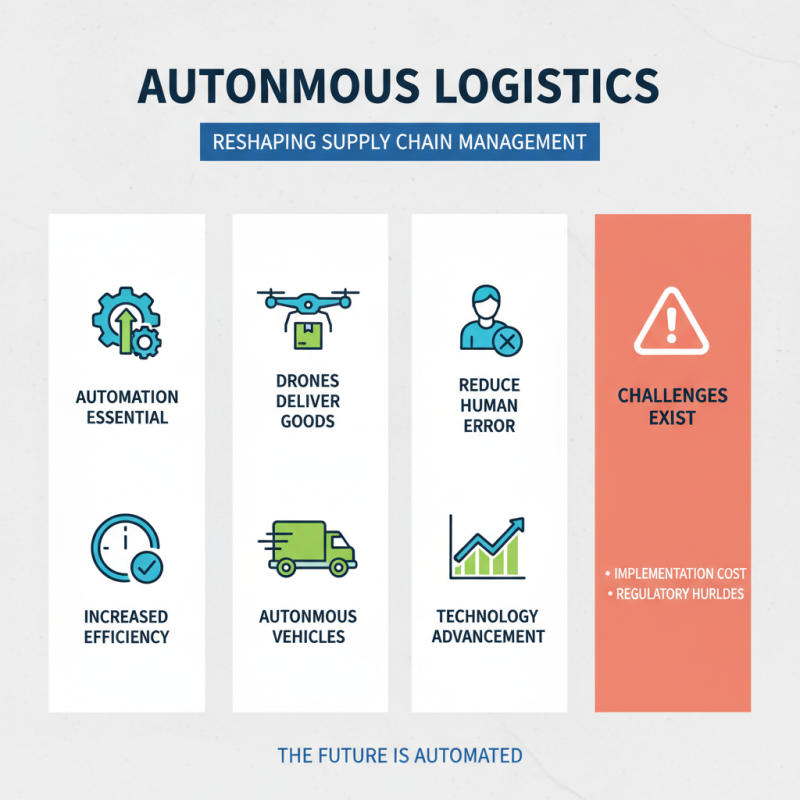
Autonomous logistics is reshaping the future of supply chain management. As technology advances, automation becomes essential. Drones and autonomous vehicles are already delivering goods. They help reduce human errors and increase efficiency. However, this approach isn't without challenges.
Implementing autonomous logistics can lead to initial high costs. Companies may hesitate to invest heavily without clear ROI. Additionally, the reliance on technology raises concerns. What happens when systems fail? Cybersecurity threats are also a growing worry. These challenges require careful consideration and planning.
The workforce faces transformation. Jobs may shift from manual tasks to tech-driven roles, prompting workforce retraining. Adapting to these changes is crucial for success. The potential for enhanced efficiency exists, but organizations must remain vigilant. Balancing innovation with caution will be key to thriving in this new landscape.