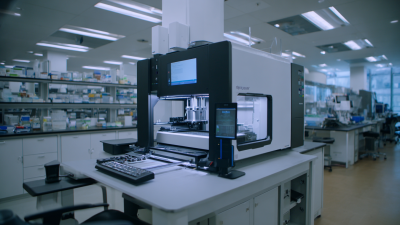
What Are the Benefits of Laboratory Robotics for Efficiency?
Laboratory robotics has become an essential asset in modern scientific research. According to a 2022 report by ResearchAndMarkets.com, the laboratory robotics market is expected to reach $4.14 billion by 2027, with an annual growth rate of over 15%. This illustrates the increasing reliance on automated systems within laboratories. Automation enhances accuracy and throughput, freeing scientists from routine tasks.
While the benefits are significant, challenges remain. Issues such as initial setup costs and the need for staff training can impede adoption. Furthermore, not all laboratory tasks are suited for automation. Balancing human expertise with robotic efficiency is crucial. Despite these challenges, the advantages of laboratory robotics often outweigh the drawbacks, making it a vital component for achieving operational efficiency in research settings.
The increasing sophistication of laboratory robotics means that users must adapt continuously. Keeping up with technological advances can be overwhelming. Yet, as labs strive for peak efficiency, embracing this technology is essential for staying competitive in research.

Overview of Laboratory Robotics and Their Role in Modern Labs
Laboratory robotics are transforming the landscape of modern labs. These advanced systems streamline repetitive tasks, enhancing both accuracy and throughput. According to a report by Frost & Sullivan, automating laboratory processes can lead to efficiency gains of up to 40%. This improvement not only reduces human error but also frees up valuable time for scientists to focus on complex analyses.
Incorporating robotics into laboratory workflows can also optimize resource allocation. Automated systems can perform assays and tests 24/7, ensuring that projects progress continuously. A case study from the National Institutes of Health revealed that labs using robotics reported a 50% reduction in processing time for high-throughput screening. Such data underscores the potential for significant operational improvements.
**Tip:** When considering laboratory automation, assess specific tasks that consume time. Identifying bottlenecks can help determine where robotics would have the greatest impact.
However, implementing robotics comes with challenges. Initial setup costs can be high, and staff may require training. It's essential to consider the long-term return on investment. Some labs report a struggle with integrating new technologies into existing systems. This requires careful planning and a willingness to adapt workflows.
**Tip:** Regularly review automation strategies. This allows labs to adjust to evolving needs and technologies, ensuring sustained efficiency.
Efficiency Benefits of Laboratory Robotics
Key Features of Laboratory Robotics that Enhance Efficiency
Laboratory robotics is transforming the way researchers handle tasks. One key feature is automation. By automating repetitive tasks, laboratories can save time and reduce human error. Robots can perform pipetting, mixing, and sample analysis with precision. This leads to more reliable results, which is critical for experimental validity.
Another important aspect is the integration of data management. Modern laboratory robots can connect with databases and software tools. This streamlines workflows by logging results automatically. Researchers can focus on analysis rather than data entry. Enhanced connectivity improves collaboration among team members.
Despite the advantages, there are challenges. Implementing robotic systems requires training. Staff must adapt to new workflows. Additionally, high initial costs may deter some labs. Balancing automation with human expertise is essential for progress. A thoughtful approach is necessary to make the most of laboratory robotics.
Impact of Laboratory Robotics on Time Management and Productivity
Laboratory robotics significantly enhances time management and productivity within research and clinical settings. According to the 2021 Global Laboratory Automation Market report, automation can increase productivity by over 30%. This efficiency is crucial in a world where time is often limited and resources are stretched thin. Robots can handle repetitive tasks, allowing scientists to focus on complex analysis. A study from the National Institutes of Health revealed that automation reduced experiment time by 50%, improving overall research output.
While the benefits of robotics are clear, challenges remain. Not all laboratories have adapted to this technology seamlessly. A survey by the Laboratory Robotics Interest Group indicated that about 40% of labs faced integration issues. These obstacles can lead to delays and frustrations, counteracting the anticipated gains in productivity. Training personnel on new systems is also a critical factor. Inadequate training can result in misuse, affecting both time management and data quality.
The impact of laboratory robotics isn't uniformly positive. A report from the Journal of Laboratory Automation pointed out that reliance on machines may foster complacency among researchers. Labs must balance automation with skilled human oversight to ensure results remain valid and reliable. Striving for this equilibrium is essential as laboratories evolve with technology.
What Are the Benefits of Laboratory Robotics for Efficiency? - Impact of Laboratory Robotics on Time Management and Productivity
| Benefit |
Impact on Time Management |
Impact on Productivity |
| Increase in Sample Throughput |
Reduces time spent on each sample |
Higher number of samples processed in the same time |
| Consistent Results |
Minimizes variability in experiment conditions |
Increases reliability of data |
| Automation of Repetitive Tasks |
Saves time on routine protocols |
Allows scientists to focus on complex analyses |
| Reduction of Human Error |
Improves accuracy in data collection |
Enhances overall data quality |
| Scalability of Experiments |
Easily adjust experiment size without extra labor |
Increases output without corresponding increase in workforce |
Comparative Analysis: Traditional Methods vs. Laboratory Robotics
Traditional laboratory methods often rely on manual processes. This can lead to human errors and inconsistencies. For example, researchers may mislabel samples or miscalculate measurements. These mistakes can compromise experimental results, wasting time and resources.
Laboratory robotics address these issues effectively. Automation ensures precision in handling samples. Robotic systems can perform repetitive tasks consistently without fatigue. This increases throughput and reduces the risk of errors. However, integrating robotics into a laboratory can be challenging. Initial setup costs and technical training are significant considerations.
Balancing automation with human oversight remains vital. While robotics can streamline processes, human expertise is still crucial for complex decision-making. There is a learning curve with new technology, requiring continuous evaluation of efficiency. We must ensure that the transition to robotics enhances the overall research quality and does not introduce new errors.
Future Trends in Laboratory Robotics for Enhanced Operational Efficiency
The rise of laboratory robotics is transforming research environments. Recent data from industry reports indicates that laboratories using robotics can improve operational efficiency by up to 40%. This shift is not just a trend; it demonstrates a commitment to precision and speed. Such efficiency reduces human error, particularly in repetitive tasks like sample handling and analysis.
Future trends point to increased automation and integration of AI systems in laboratories. These technologies can take on complex processes that traditionally require human oversight. This evolution presents challenges. As AI systems evolve, their reliability must be rigorously tested. It’s crucial to remember that while robotics can boost output, they also necessitate a new skill set for employees and present a learning curve that can disrupt workflows.
Moreover, the transition to fully automated systems may raise concerns about job displacement. Balancing automation with the need for human oversight remains critical. Robust training programs for lab personnel will be necessary to maximize the benefits of these advancements. Laboratories must reflect on their unique needs and whether investing in robotics aligns with their long-term goals.