Best China Galvanized Steel Coil Manufacturer?
Choosing the Best China Galvanized Steel Coil Manufacturer requires more than comparing prices on a spreadsheet. Buyers must examine steel quality, coating consistency, production control, and long-term service. A dependable supplier should explain its base metal grades, zinc coating weights, coil dimensions, and surface finish clearly. It should also provide traceable mill certificates and inspection records.
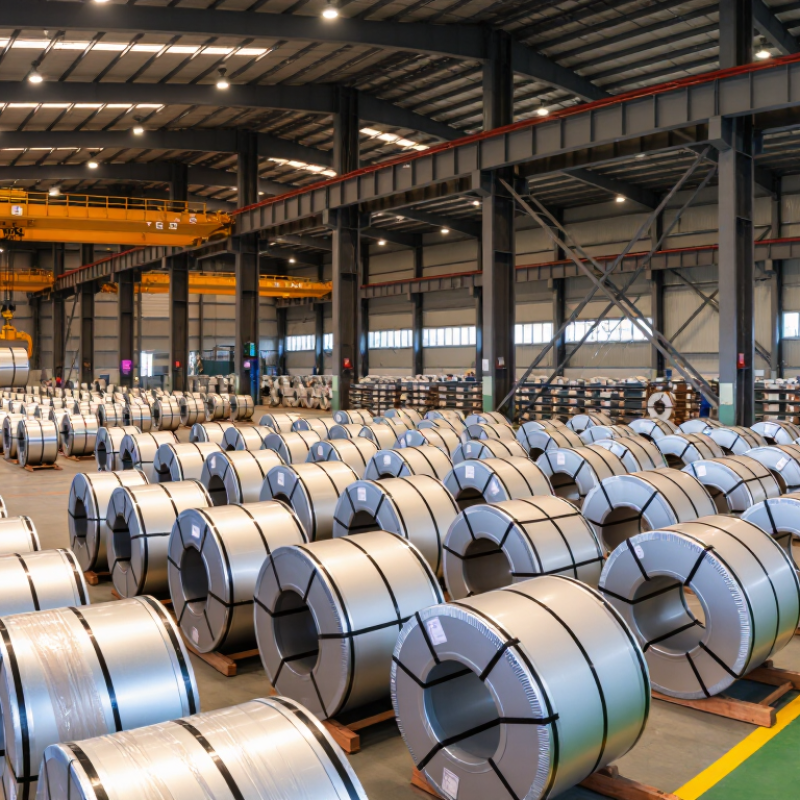
Practical evaluation begins with the coil itself. Look for an even zinc layer, clean edges, stable thickness, and secure export packaging. Small details matter. A damaged outer wrap can expose steel to moisture during transport. Reliable manufacturers usually discuss loading methods, storage conditions, testing procedures, and delivery schedules before receiving an order. They should welcome third-party inspection when appropriate, rather than avoiding difficult questions.
A strong Galvanized Steel Coil Manufacturer also understands different applications. Construction panels, automotive parts, ventilation systems, and agricultural equipment may require different grades and forming properties. Experienced technical teams can recommend suitable options without forcing one product onto every project. That said, no supplier is perfect. Even a well-managed mill may face delays, specification misunderstandings, or unexpected market changes. Honest communication matters more than polished promises.
This guide examines how to compare Chinese manufacturers through verifiable evidence, not attractive claims alone. It considers factory capability, quality assurance, customization, packaging, communication, and after-sales support. The goal is practical judgment. A low quotation may look appealing, but inconsistent coating or poor documentation can cost much more later. Buyers should ask precise questions, review samples, and record every agreed specification before production begins.
What Defines a Leading China Galvanized Steel Coil Manufacturer?
A leading China galvanized steel coil manufacturer is defined by control, not production volume alone. The World Steel Association reported that China produced about 1.005 billion tonnes of crude steel in 2024. That scale creates strong supply depth, but it does not guarantee consistent galvanized quality.
A practical assessment starts with the coating line. Buyers should check zinc coating mass, yield strength, elongation, flatness, and width tolerance against agreed standards such as ASTM A653, EN 10346, or ISO requirements. A reliable mill provides heat numbers, coating test results, and complete coil traceability. Operators should also control strip cleaning, annealing, bath chemistry, and surface inspection. Small defects matter. Bare spots can become visible after forming.
The OECD’s latest steel market analysis continues to highlight pressure from overcapacity and weak margins. That makes transparent quality control even more important. A manufacturer may offer an attractive price, yet inconsistent coating thickness can increase fabrication waste. Certification helps, but it is not enough. Buyers should request recent inspection records, loading photographs, and independent testing when the project is critical. Even experienced purchasers can miss edge cracking or poor passivation during a quick visit. That is an uncomfortable limitation, but honest suppliers make those risks visible.
How Galvanized Steel Coils Are Produced and Quality-Controlled
Best China Galvanized Steel Coil Manufacturer? How Galvanized Steel Coils Are Produced and Quality-Controlled
A reliable galvanized steel coil begins with controlled substrate preparation. The steel strip is cleaned, pickled, rinsed, and annealed before entering a zinc bath near 450°C. Air knives then regulate coating thickness, while skin-pass rolling improves flatness and surface appearance. World Steel Association’s World Steel in Figures 2024 reports approximately 1.89 billion tonnes of crude steel production in 2023. That scale makes process discipline essential, not optional.
Quality control should follow measurable checkpoints. Technicians inspect zinc coating mass, width, thickness, tensile strength, elongation, surface defects, and coil shape. ASTM A653 coating designations, ISO 2178 thickness testing, and calibrated weighing equipment provide useful verification. The U.S. Geological Survey’s Mineral Commodity Summaries 2024 reports global zinc mine production at roughly 12 million metric tons in 2023, reminding buyers that zinc availability can influence cost and production planning. Each coil should carry heat numbers, test results, coating data, and traceable inspection records.
Small defects deserve serious attention. A dirty edge can create an uncoated line. Excessive tension may cause telescoping during winding. No production line is flawless. I would question any supplier claiming zero variation. Independent testing, retained samples, and pre-shipment inspection offer stronger evidence than polished photographs. Salt-spray results also need careful interpretation, because laboratory hours do not directly equal outdoor service life.
Best China Galvanized Steel Coil Manufacturer? - How Galvanized Steel Coils Are Produced and Quality-Controlled
| Category | Production or Quality-Control Stage | What Happens | Typical Parameters or Requirements | Quality-Control Method |
|---|---|---|---|---|
| Galvanized Steel Coil Production Process | ||||
| 1 | Base Steel Selection | Low-carbon or HSLA steel strip is selected according to the required strength, forming performance, thickness, width, and end use. | Typical commercial thickness: approximately 0.20–3.00 mm. Exact grades and dimensions depend on the applicable product standard. | Review of heat number, mill certificates, chemical composition, mechanical properties, and incoming surface condition. |
| 2 | Cleaning and Degreasing | Oil, dirt, and rolling residues are removed from the strip before galvanizing to ensure continuous zinc coverage. | Alkaline cleaning, brushing, and rinsing are commonly used. The strip must be free from visible oil and contamination before entering the annealing section. | Visual inspection, bath concentration checks, temperature monitoring, and periodic surface cleanliness testing. |
| 3 | Annealing and Reduction | The strip is heated in a controlled atmosphere to adjust its metallurgical condition and mechanical properties. | Heating cycles vary by steel grade and thickness. A reducing atmosphere is used to limit re-oxidation before zinc immersion. | Continuous monitoring of furnace temperature, strip speed, atmosphere composition, line tension, and mechanical-property results. |
| 4 | Zinc Bath Immersion | The prepared steel strip passes through a molten zinc bath, where zinc bonds metallurgically with the steel surface. | Molten zinc is commonly maintained at approximately 450–465°C. Bath chemistry and aluminum content are controlled according to the coating system and standard. | Monitoring of bath temperature, zinc chemistry, immersion stability, strip speed, and coating appearance. |
| 5 | Air-Knife Coating Control | Air knives remove excess molten zinc and establish the target coating thickness on both sides of the strip. | Coating mass depends on the ordered designation. Common total coating masses include approximately 60–275 g/m² for both sides, subject to the product specification. | Online coating gauges, air pressure and gap checks, and laboratory coating-mass verification. |
| 6 | Cooling and Surface Solidification | The zinc-coated strip is cooled under controlled conditions so the coating solidifies evenly and maintains the required surface appearance. | Cooling intensity and strip tension are adjusted to reduce uneven solidification, coating defects, and excessive spangle variation. | Continuous surface inspection for bare spots, dross, pinholes, scratches, roughness, and uneven coating. |
| 7 | Skin Pass and Tension Leveling | A light rolling and leveling operation improves flatness, surface finish, shape, and dimensional consistency. | Reduction is controlled according to the required surface quality, yield-point behavior, elongation, and flatness. | Flatness measurement, elongation and yield-strength testing, surface inspection, and verification of rolling parameters. |
| 8 | Passivation or Oiling | A chemical treatment or protective oil may be applied to reduce white rust during storage and transportation. | Surface treatment must match the customer’s forming, painting, welding, and storage requirements. Untreated surfaces require controlled dry storage. | Coating-weight or treatment checks, visual inspection, and corrosion-resistance testing when specified. |
| 9 | Recoiling and Packaging | The finished strip is recoiled, weighed, labeled, protected, and prepared for shipment. | Inner and outer diameters, coil weight, edge condition, wrapping method, and identification must comply with the order. | Final review of coil identification, packaging integrity, weld locations, coil shape, and traceability records. |
| Key Galvanized Steel Coil Quality-Control Dimensions | ||||
| A | Chemical Composition | Steel chemistry affects strength, ductility, weldability, coating behavior, and forming performance. | Carbon, manganese, silicon, phosphorus, sulfur, and alloying elements are checked against the ordered steel grade. | Heat-based chemical analysis using supplier mill certificates and laboratory verification where required. |
| B | Mechanical Properties | Tensile strength, yield strength, and elongation confirm whether the coil meets its specified forming or structural class. | Values depend on the selected grade and applicable standard; no single mechanical range applies to every galvanized coil. | Standard tensile testing of samples taken along the rolling direction, with results recorded by coil or heat. |
| C | Coating Mass | The amount of zinc on the two surfaces determines corrosion protection and is normally specified as total coating mass. | Reported in g/m², typically as a triple-spot average and, where applicable, a single-spot minimum according to the governing standard. | Gravimetric stripping tests, X-ray fluorescence measurement, or calibrated online coating gauges. |
| D | Coating Adhesion | The zinc layer must remain attached during bending, stamping, roll forming, or other intended fabrication processes. | Acceptance depends on grade, coating designation, bend radius, and the applicable standard or purchase specification. | Controlled bend test followed by inspection for flaking, peeling, or cracking of the coating. |
| E | Dimensional Accuracy | Thickness, width, length, coil inner diameter, outer diameter, and mass are checked for production and application compatibility. | Tolerances are defined by the relevant standard and order. Thickness is measured across the strip while accounting for coating. | Calibrated micrometers, width gauges, laser measurement systems, weighing equipment, and documented sampling plans. |
| F | Flatness and Shape | Flatness control limits waviness, buckles, edge waves, and center waves that can interfere with downstream forming or cutting. | Requirements vary by product class and end use. The strip should remain stable during uncoiling and processing. | Visual inspection, straightedge or flatness gauges, and online shape-monitoring systems. |
| G | Surface Appearance | The surface is assessed for uniform zinc coverage and defects that could affect appearance, corrosion protection, or fabrication. | Typical checks include spangle uniformity, roughness, dross, bare areas, black spots, scratches, dents, stains, and white rust. | Full-length visual inspection under controlled lighting, supplemented by automated surface inspection when available. |
| H | Corrosion Protection | Zinc provides barrier protection and sacrificial protection to exposed steel, while storage conditions and surface treatment influence service performance. | Performance depends on coating mass, environment, forming damage, cut edges, drainage, and maintenance conditions. | Coating-mass verification, humidity or salt-spray testing when specified, and storage-condition audits. |
| I | Traceability and Documentation | Each coil is linked to its heat, production line, process records, inspection results, and shipping information. | Records commonly include grade, dimensions, coating designation, coil number, test results, and applicable standard. | Document review, barcode or label verification, certificate matching, and retention of inspection records. |
| Common Reference Standards | ||||
| Standard Reference | ASTM A653/A653M | Commonly used for hot-dip galvanized and galvannealed steel sheet in coil and cut-length forms. | Addresses steel grades, coating designations, dimensions, mechanical properties, coating mass, and testing requirements. | Confirm the exact edition and purchase requirements before applying acceptance limits. |
| Standard Reference | EN 10346 | European standard for continuously hot-dip coated steel flat products used for forming and structural applications. | Includes material grades, coating types, coating masses, tolerances, surface quality, and testing provisions. | Acceptance is based on the ordered grade, coating designation, surface class, and stated tolerances. |
| Standard Reference | ISO 1461 | Specifies requirements for hot-dip galvanized coatings on fabricated iron and steel articles. | It is generally associated with fabricated components rather than continuously galvanized sheet coil; the correct product standard should be selected. | Use only when applicable to the supplied product and agreed in the purchase specification. |
| Practical Supplier Evaluation Criteria | ||||
| 1 | Process Capability | Assess whether the production line can consistently produce the required grade, thickness, width, coating mass, surface quality, and coil weight. | Review equipment capability, process controls, calibration status, maintenance practices, and production records. | Technical audit, sample evaluation, trial order, and comparison of measured results with the purchase specification. |
| 2 | Quality Consistency | Consistent results between coils are essential for stamping, roll forming, painting, welding, and construction applications. | Evaluate variation in coating mass, mechanical properties, dimensions, flatness, and surface appearance across multiple production lots. | Review historical inspection data rather than relying on a single sample or one-time test report. |
| 3 | Inspection Transparency | A reliable supplier should provide traceable inspection evidence for the supplied material without replacing independent verification when required. | Documentation should clearly identify the standard, grade, coating designation, dimensions, test methods, and coil references. | Cross-check certificates, laboratory results, production labels, and physical coil markings. |
| 4 | Storage and Delivery Protection | Correct packaging and dry transportation help prevent white rust, mechanical damage, edge corrosion, and coil deformation. | Use moisture-resistant wrapping, suitable separators, secure strapping, protected edges, and adequate ventilation during storage. | Inspect packaging before dispatch and record condition at loading and receipt. |
| Note: Typical values shown in this table are general industry references. Final acceptance criteria must be confirmed against the applicable product standard, ordered grade, coating designation, dimensions, surface class, and purchase agreement. | ||||

Key Standards, Coating Types, and Product Specifications
A reliable China galvanized steel coil manufacturer should document standards clearly. Common references include ASTM A653/A653M, EN 10346, and JIS G3302. These standards define chemical composition, mechanical performance, dimensions, and zinc coating requirements. Ask for current mill test certificates, not only a sales quotation. The certificate should match the actual coil number, thickness, width, grade, and coating mass. A missing traceability record is a serious warning.
Coating selection depends on the working environment. Regular zinc coatings suit many indoor and general construction applications. Heavier zinc layers provide stronger atmospheric protection, but they may increase cost and forming resistance. Aluminium-zinc coatings can improve heat and corrosion performance, although their behavior differs during bending and welding.
Specify coating mass in grams per square metre, surface finish, spangle condition, and passivation requirements. Typical product details include 0.30–2.00 mm thickness, 900–1,250 mm width, yield strength, tensile strength, and elongation. These values must fit the forming process. More coating is not always better.
Tips: Request a sample coil, inspection photos, and an independent dimensional check. Confirm edge condition, flatness, packaging, and salt-spray expectations. Do not rely on “best quality” language. It is too vague. A common mistake is choosing a high-strength grade for deep drawing. That decision can cause cracking. Specifications should be reviewed with the fabricator before purchase. Some documents look complete, yet omit coating tolerance or surface restrictions. That detail deserves a second look.
How to Evaluate China-Based Galvanized Steel Coil Suppliers
Choosing the best China galvanized steel coil manufacturer starts with evidence, not search rankings. The World Steel Association reported that China produced about 1,005 million tonnes of crude steel in 2024. That scale shows capacity, but it does not prove coating consistency. Treat national output as context, not a supplier certificate.
Request recent mill test certificates, coating-weight results, and third-party inspection records. Check yield strength, tensile strength, zinc coating, coil width, thickness tolerance, and surface finish. ASTM A653 and EN 10346 provide useful reference points. Ask whether the supplier can produce regular salt-spray, adhesion, and bend-test results. A glossy sample can hide uneven zinc distribution. Small details matter.
Audit the factory or use an independent inspector before payment. Review line speed, bath control, slitting equipment, packaging, and traceability from heat number to shipping documents. Compare the certificate with an actual laboratory sample. World Steel Association data confirms China’s enormous steel capacity, while OECD steel market reports continue to flag global overcapacity and demand uncertainty. Therefore, low prices deserve closer questions. Freight, export packing, claim handling, and replacement terms also affect the real cost. Some evaluations overvalue price and overlook damaged edges. That is an avoidable mistake. Another is trusting old certificates. Require current records, clear tolerances, and measurable corrective actions.
Applications, Export Services, and Buyer Considerations
Best China Galvanized Steel Coil Manufacturer?
Galvanized steel coil serves roofing panels, HVAC ducts, automotive parts, farm buildings, and warehouse cladding. Its zinc layer slows corrosion in humid and outdoor environments. World Steel Association’s World Steel in Figures 2024 reports global crude steel production of about 1.89 billion tonnes in 2023. That scale shows strong supply depth, but volume alone does not prove quality. A capable manufacturer should provide coating-weight records, mechanical test results, dimensional checks, and traceable heat numbers.
Export service matters as much as the coil itself. Buyers should confirm container loading plans, moisture protection, edge protection, export documentation, and delivery terms before payment. HS 7210 records from UN Comtrade can help compare a supplier’s declared trade history. However, trade data may contain classification or reporting delays. That is easy to overlook. Ask for recent inspection reports, packing photos, and independent pre-shipment verification. Coating choices should match exposure. USGS Mineral Commodity Summaries 2024 estimates global zinc mine production near 12 million metric tonnes in 2023, yet zinc prices and availability can still affect coating costs.
Tips: Specify grade, width, thickness, coating mass, surface finish, coil weight, and tolerance. Request samples. Test them. Do not rely only on certificates. A practical buyer should also examine recurring defects, such as bare spots, waviness, oil stains, and telescoping edges. Small issues can become expensive during roll forming. Supplier evaluation is never perfect, but documented checks make the decision more reliable.