What Is the Best Cleanroom Dehumidifier in China?
Choosing the best Cleanroom Dehumidifier in China requires more than comparing cooling capacity or purchase price. Pharmaceutical suites, semiconductor bays, medical-device rooms, and battery plants face different moisture risks. A dry room may require dew points below -40°C, while a pharmaceutical packing area may operate near ordinary controlled conditions. The answer is not perfectly simple.
ISO 14644-1 focuses on airborne particle classification, not a universal humidity target. Therefore, buyers must connect moisture control with product sensitivity, process temperature, cleanliness, and recovery time. The ASHRAE Handbook—HVAC Applications explains that desiccant systems can provide deeper drying than conventional cooling coils under low-dew-point conditions. This distinction matters when operators inspect condensation near airlocks, coil surfaces, or material transfer doors.
Industry data also shows why Chinese sourcing deserves careful evaluation. SEMI’s World Fab Forecast regularly reports strong semiconductor-fabrication investment in China and other Asian markets. ResearchAndMarkets and Grand View Research have likewise identified continuing expansion in cleanroom and controlled-environment technologies, although market estimates differ by scope and methodology. These reports suggest demand, not automatic equipment quality. That point is easy to overlook.
A reliable selection should examine desiccant performance, regeneration energy, stainless-steel construction, HEPA compatibility, controls, spare-parts support, and verified dew-point stability. Factory testing should include measured airflow, inlet conditions, outlet dew point, and power consumption. Certificates alone are insufficient. Site experience still matters.
This guide compares Chinese manufacturers through technical evidence, application fit, after-sales capability, and lifecycle cost. Some conclusions may remain conditional, because one supplier rarely excels in every cleanroom application. That is the honest limitation.
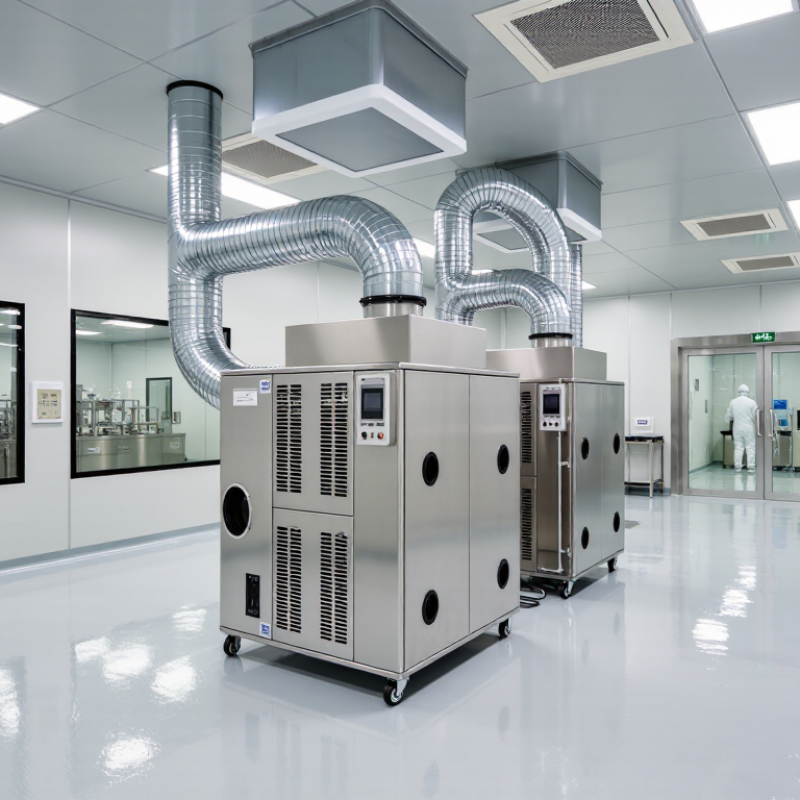
Cleanroom Dehumidifier Fundamentals and Performance Requirements
What Is the Best Cleanroom Dehumidifier in China?
Cleanroom Dehumidifier Fundamentals and Performance Requirements
The best cleanroom dehumidifier is not determined by country of origin or rated capacity alone. It must match the room’s moisture load, temperature, pressure, and operating schedule. Production materials, workers, door openings, and outdoor air can all add moisture. A practical design begins with a calculated dew-point target, not a guessed relative humidity value.
Desiccant systems are often selected for low-dew-point applications because they remove moisture effectively at stable conditions. Refrigerant units may suit warmer spaces with moderate humidity. Engineers should check airflow, regeneration energy, noise, heat release, and control response. In a validated cleanroom, the unit should support stable conditions without disturbing airflow patterns. Small changes matter.
Field commissioning often reveals problems hidden in product data sheets. Sensors may drift. Filters may load faster than expected. A dehumidifier can meet its laboratory rating but struggle during frequent door opening. Calibration records, alarm testing, access for cleaning, and corrosion-resistant construction are essential. Integration with the building control system also improves traceability.
A common mistake is choosing the largest unit available. Oversizing can cause short cycling, unstable humidity, and unnecessary energy use. Undersizing creates longer recovery times and process risk. There is no perfect selection. The final decision should combine measured moisture loads, cleanroom classification, maintenance skill, lifecycle cost, and documented performance testing.
What Is the Best Cleanroom Dehumidifier in China?
Cleanroom Dehumidifier Fundamentals and Performance Requirements
At a constant room temperature of 20°C, lower relative humidity means less water vapor remains in the air. A cleanroom dehumidifier should therefore be selected according to the required humidity setpoint, room volume, outdoor-air infiltration, process moisture, air-change rate, and the unit’s moisture-removal capacity.
Reference values are calculated from the standard saturation vapor-pressure relationship at 20°C and rounded to one decimal place. ISO 14644-1 classifies airborne particles; it does not prescribe one universal humidity level for every cleanroom.
Key Factors for Selecting a Cleanroom Dehumidifier in China
What Is the Best Cleanroom Dehumidifier in China?
Key Factors for Selecting a Cleanroom Dehumidifier in China
Selecting a cleanroom dehumidifier starts with the process, not the equipment catalogue. ISO 14644-1:2015 classifies airborne particles, but it does not prescribe one humidity level. Your materials, static-control needs, and production steps must set the target. The 2023 ASHRAE Handbook also recommends process-based humidity control. A stable dew point often matters more than a low relative-humidity number.
Check performance at China’s actual summer conditions. Coastal cities can deliver hot, moisture-heavy air, while northern winters create different risks. Request capacity data at the intended entering-air temperature and humidity. Confirm the unit’s dew-point range, regeneration heat, response time, filtration, and control accuracy. A laboratory result at 20°C may not represent a July production shift. That gap is easy to miss.
Energy deserves serious attention. Lawrence Berkeley National Laboratory has reported that semiconductor cleanrooms may consume 30–50 times more energy per area than ordinary commercial spaces. Efficient airflow, heat recovery, and demand-based control can reduce this burden. Oversizing is not always safer. It may cause unstable cycling and unnecessary power use.
Tips: Ask for a witnessed factory test and a site acceptance test. Measure dew point at the room, return duct, and critical process point. Review maintenance access before approval. A smaller unit may perform better when controls are correctly tuned. This is where many projects need a second look.
Comparison of Leading Cleanroom Dehumidifier Types
What Is the Best Cleanroom Dehumidifier in China?
Comparison of Leading Cleanroom Dehumidifier Types
Selecting the best cleanroom dehumidifier depends on dew point, room load, and process sensitivity. Desiccant dehumidifiers usually perform best when humidity must stay below 30% RH. They can reach very low dew points, even during humid summer weather. Their heated regeneration wheel, however, consumes considerable energy. A 100-square-meter room may also need careful airflow balancing.
Refrigeration dehumidifiers suit cleanrooms requiring moderate humidity control, often between 40% and 60% RH. They remove moisture by cooling air below its dew point. Energy use is generally lower at warmer conditions. Performance drops when the entering air becomes cold or extremely dry. Condensate drainage must remain clean and accessible.
Liquid desiccant systems offer steady moisture removal and can recover heat from nearby equipment. They may reduce corrosion risks when properly controlled. Membrane systems are compact and useful for targeted dry-air applications, but their capacity is often limited. Not every option fits every facility. During commissioning, engineers should check dew point sensors, pressure differences, filter loading, and hourly energy consumption. Small sensor errors can mislead an entire control strategy. I would not choose equipment from a catalogue value alone. Real performance changes with door openings, fresh-air volume, and seasonal weather. The quietest unit may still be the wrong choice.
Installation, Maintenance, and Compliance Considerations
What Is the Best Cleanroom Dehumidifier in China?
Selecting the best cleanroom dehumidifier depends on humidity limits, room size, heat load, and production risks.
In China, installation should match the facility layout and applicable cleanroom requirements. Position the unit where technicians can reach filters, coils, sensors, and electrical panels safely. Provide enough service clearance. Connect ductwork with sealed joints to prevent untreated air from entering. The condensate drain needs a steady slope, a trap, and visible inspection access.
Use calibrated hygrometers near critical work areas, not only beside the dehumidifier. This small detail is often missed.
Maintenance should follow a written schedule based on operating hours and contamination risk.
Inspect filters weekly during commissioning, then adjust the interval using pressure-drop records. Clean coils carefully, since dust can reduce heat transfer and encourage moisture problems. Check drain pans for standing water. Test alarms, fan performance, sensors, and automatic restart functions. Record every reading and repair.
Perfect schedules rarely survive busy production days, so responsibilities must be clear and practical.
Compliance requires documented design, installation, operation, and performance checks.
Qualification records should include airflow, humidity stability, alarm response, and sensor calibration. Procedures should support relevant GMP expectations, ISO 14644 principles, and applicable Chinese regulations. Requirements vary by industry and process.
Do not copy another facility’s limits. Review changes through risk assessment and change control, especially after relocating equipment or altering ductwork. Independent verification can reveal mistakes internal teams overlook.
How to Identify the Best Cleanroom Dehumidifier for Your Facility
Choosing the best cleanroom dehumidifier starts with the facility, not the equipment catalog. During cleanroom assessments, I check the required dew point, room volume, air changes, and production schedule. A unit sized only by floor area can struggle when doors open or wet materials enter.
Dew point matters most. Many controlled spaces need stable conditions near 10°C dew point, while sensitive processes may require lower levels. Confirm the unit’s capacity at actual operating conditions, not ideal laboratory data. Review airflow, heat rejection, noise, and electrical demand. A dehumidifier that removes moisture efficiently but overheats the room is not a practical choice. It happens more often than expected.
Construction details deserve close attention. Stainless steel surfaces, sealed drain pans, accessible filters, and corrosion-resistant coils support hygienic operation. Controls should connect with the building management system and provide alarms for high humidity, filter loading, and water drainage. Data logging helps operators prove stability during audits and investigate process changes.
Ask for performance records, factory testing, maintenance instructions, and service response times. Independent certification can strengthen confidence, but certificates cannot replace site testing. I recommend a short trial during peak moisture conditions, with calibrated sensors placed near doors and critical work zones. The result may expose weak airflow or an underestimated load. That finding is useful, even when it delays the purchase.

