How to Choose an AGV at the 139th Canton Fair?
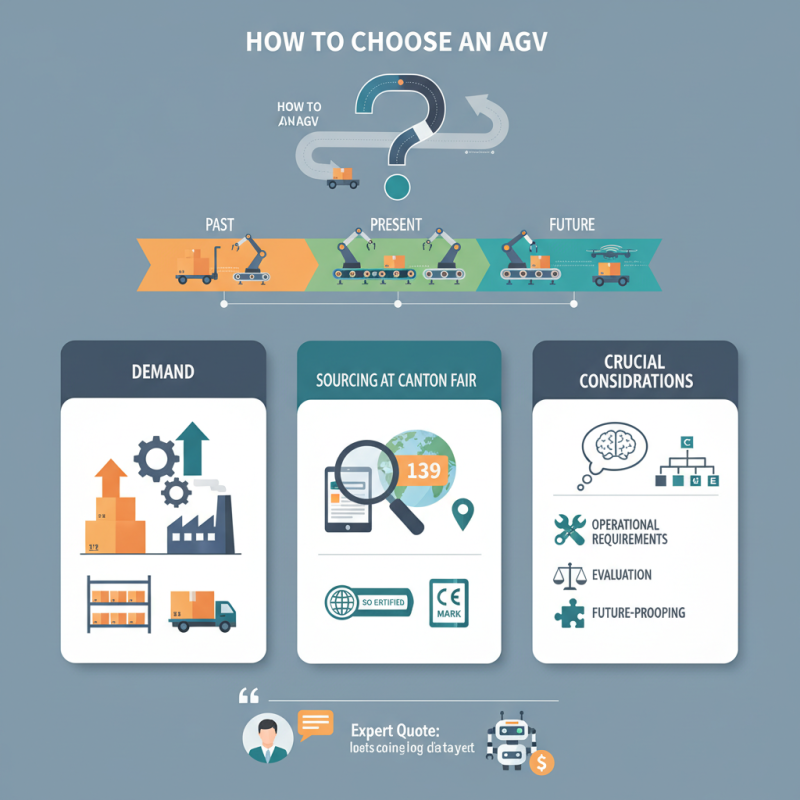
In recent years, the demand for Picking Agvs (Automated Guided Vehicles) has surged, especially in manufacturing and logistics sectors. The upcoming 139th Canton Fair provides an ideal platform for sourcing these technologies. Eric Johnson, an industry expert in warehouse automation, once said, "Selecting the right Picking AGV can transform your operational efficiency." This sentiment reflects the importance of making informed choices during such events.
Navigating through vast exhibitions can be overwhelming. The introduction of AI capabilities at the Canton Fair enhances the experience for buyers. With features like intelligent search and precise navigation, attendees can quickly identify suppliers with essential certifications, including ISO and CE. This adds convenience and facilitates better decision-making.
However, the selection process goes beyond technology. Buyers must consider their unique operational requirements and challenges. Evaluating various Picking AGVs, while daunting, is crucial in ensuring the right fit. In a rapidly evolving landscape, overlooking the subtleties of each option could lead to costly mistakes.
Understanding AGVs: Types and Applications in Various Industries
Automated Guided Vehicles (AGVs) are transforming industries. Understanding the types and applications of AGVs can help businesses make informed choices. There are several types of AGVs. Some are equipped with laser navigation systems, while others use magnetic strips for guidance. The choice depends on the specific needs of the operation.
In manufacturing, AGVs transport materials efficiently. They reduce labor costs and minimize human error. In the healthcare sector, AGVs deliver medications and supplies. This ensures timely access, which is crucial for patient care. However, integrating AGVs can be challenging. The environment must be adapted for safe navigation.
AGVs are also used in warehouses. They streamline order fulfillment processes, but not without issues. Reliability and maintenance can be areas of concern. Businesses must weigh the advantages against potential disruptions during implementation. Considering these factors can help in selecting the right AGV.
Key Factors to Consider When Choosing an AGV
When choosing an Automated Guided Vehicle (AGV), there are several key factors to consider. One crucial aspect is payload capacity. Many companies find that their AGVs must handle varying weights. According to a recent industry report, 42% of AGV users prioritize this factor. This highlights the need for adaptable vehicles that suit your specific requirements.
Another important consideration is navigation technology. Choices range from laser-based systems to magnetic tape. A study revealed that 55% of progressive manufacturers prefer laser navigation for its flexibility. However, it may require frequent recalibration. Some users reported frustration when their systems failed to adapt quickly to changing environments.
Battery life and charging time are vital, too. An efficient AGV should minimize downtime. Statistics show that 30% of operators experience delays due to inadequate power management. Users must ponder whether the investment in advanced battery technology justifies the potential gains in productivity. Keep in mind that sometimes, less complex solutions could actually yield better results in specific settings. This reflection can help guide a more compatible choice.
Evaluating AGV Manufacturers and Their Reputation
When evaluating AGV manufacturers at the 139th Canton Fair, reputation matters. A recent industry report indicates that 75% of purchasing decisions are influenced by a manufacturer’s credibility. This reflects the need for thorough research. Trustworthy manufacturers often have clear certifications. Look for relevant quality standards that validate their products.
Consider the manufacturer's track record. Many reputable companies showcase customer testimonials. These can provide insights into their reliability and support. Data shows that vendors with a long history tend to have better after-sales service. However, not every established name guarantees success. Some may struggle with innovation, lacking the latest technology.
It's vital to assess their delivery timelines. Research shows that 60% of AGV delays stem from poor logistics. This can impact your operations significantly. Engaging in direct conversations with vendors can reveal much. Their responses often reflect their customer management philosophy. Observe how they handle inquiries; it speaks volumes about their working style.
Analyzing Cost vs. Benefits of AGVs for Your Business
When analyzing the cost vs. benefits of Automated Guided Vehicles (AGVs) for your business, it's essential to consider several factors. AGVs can streamline operations, reduce labor costs, and enhance efficiency. Yet, their initial investment can be daunting. Understanding the long-term savings can help justify the cost.
Consider the specific needs of your warehouse. Will an AGV enhance productivity? Are there repetitive tasks it can handle? Look closely at the potential return on investment. If an AGV saves even a few hours per week, the savings could quickly outweigh the costs.
**Tips:** Evaluate your current workflow. Identify bottlenecks that an AGV could solve. Speak with employees to gather insights on tasks that are redundant or time-consuming.
Think about maintenance costs too. AGVs require regular checks and updates. Budgeting for these expenses is crucial. They should also fit seamlessly into your existing systems. If integration proves tough, the benefits can diminish quickly.
**Tips:** Research available options. Consider trialing AGVs before committed purchases. Engaging with manufacturers can provide clarity.
Cost vs. Benefits of Automated Guided Vehicles (AGVs)
This chart illustrates the estimated costs and benefits of implementing AGVs in a typical logistics operation, highlighting potential savings over three years.
Insights from the 139th Canton Fair: Trends and Innovations in AGVs
The 139th Canton Fair showcased significant trends and innovations in Automated Guided Vehicles (AGVs). An industry report by Deloitte indicates that the AGV market is projected to grow at a CAGR of 14% from 2023 to 2028. This impressive growth is driven by increasing automation needs across various sectors.
Exhibitors presented a range of cutting-edge technologies at the fair. Many AGVs now feature advanced navigation systems, including LiDAR and computer vision. These innovations allow AGVs to operate efficiently in dynamic environments. Interestingly, however, some models still struggle with complex layouts, which could hinder operational efficiency.
Sustainability emerged as a key focus. Many companies are exploring electric AGVs to reduce carbon footprints. According to the International Energy Agency, switching to electric transport can lower emissions by up to 30%. Yet, not all businesses understand the long-term benefits of this shift. This gap highlights the need for more education and resources in the AGV sector. The future of AGVs looks promising, but there are still hurdles to address.
How to Choose an AGV at the 139th Canton Fair?
| AGV Type | Load Capacity (kg) | Navigation Technology | Battery Life (hours) | Speed (m/s) |
| Towing AGV | 1000 | Laser Navigation | 8 | 1.2 |
| Unit Load AGV | 500 | Magnetic Navigation | 6 | 1.0 |
| Chassis AGV | 200 | Vision Navigation | 10 | 1.5 |
| Forklift AGV | 1200 | SLAM Navigation | 7 | 1.8 |