How to Choose the Best Robotics Products for Your Needs?
In today's fast-paced technological landscape, robotics products have gained significant traction across various industries. According to a report by Fortune Business Insights, the global robotics market is expected to reach $153 billion by 2025. This exponential growth reflects the increasing demand for automation and precision in tasks ranging from manufacturing to healthcare. Choosing the right robotics products can be challenging yet crucial for optimizing efficiency and improving outcomes.
Yet, amidst this surge in options, buyers often confront confusion. Different sectors require specialized solutions, and not all products may fit your specific needs. For instance, a small business might find extensive robotic arms unnecessary and overly complex. Alternatively, a healthcare provider might need precise surgical robots, which can entail a hefty investment. It's essential to weigh the effectiveness versus the cost and functionality of these robotics products.
Moreover, many users initially overlook the importance of after-sales support. A stunning robot may catch your attention, but what happens when it malfunctions? These reflections highlight the importance of thorough research. Evaluating capabilities, reliability, and vendor reputation can greatly influence your experience with robotics products. Balancing excitement with practicality is key to making an informed choice that truly fits your requirements.

Understanding Your Robotics Needs and Goals
Understanding your robotics needs and goals is crucial when selecting the right products. Begin by assessing your specific requirements. Consider the tasks you want the robot to perform. Do you need a robot for education or industrial applications? Pinpointing your primary goal will help narrow your choices.
Evaluate the environment in which the robot will operate. Is it indoors, outdoors, or a mix of both? Different environments demand different capabilities. Think about the desired level of automation. Some tasks require full automation, while others may just need assistance. Reflect on your team's skill level. Can you manage more complex technology, or do you need user-friendly solutions?
Don’t overlook your budget. High-end robotics can be enticing but require careful thought. It's easy to fall into the trap of overestimating capabilities. Some products may look impressive but may not suit your needs. Prioritize essential features over flashy options. Regularly revisit your goals, as they can change. This will ensure you stay aligned with your requirements, adapting as necessary.
Evaluating Different Types of Robotics Products
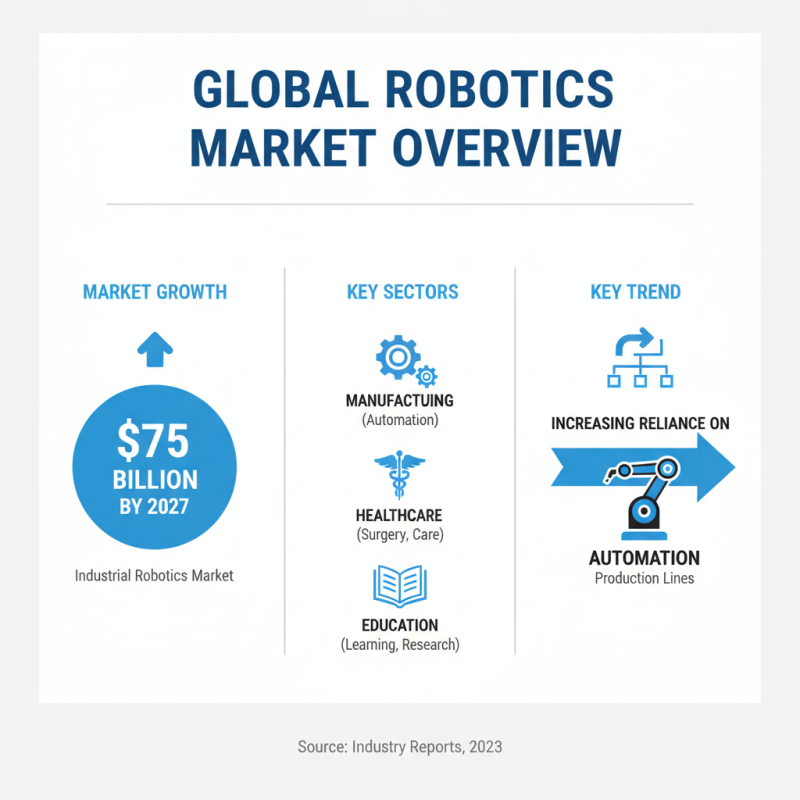
When evaluating types of robotics products, understanding their applications is key. Robotics spans various fields, including manufacturing, healthcare, and education. The global market for industrial robotics is expected to reach $75 billion by 2027, according to industry reports. This growth reflects the increasing reliance on automation in production lines. However, different sectors require specialized features.
In healthcare, surgical robots enhance precision. Data shows robotic-assisted surgeries can reduce recovery times by up to 30%. For education, programmable kits allow students to learn coding and engineering. But not all robotics products are ideal for every user. Some may lack necessary support or robust software updates. Evaluating compatibility with existing systems and ease of use is crucial.
Personal robotics, like home assistants, continue to evolve. Use-case scenarios vary widely. A product might excel in basic tasks but struggle with integration. Data indicates that up to 40% of users face challenges in optimizing functionality. This highlights the need for careful consideration and feedback from existing users. As the field develops, reflecting on these aspects can help in choosing the right robotics products.
Assessing Features and Specifications of Robotics Devices
When selecting robotics devices, features and specifications play a crucial role. Begin by looking at the device's purpose. Whether it's for education, research, or entertainment, this will guide your choice. For example, a device meant for coding skills should have user-friendly software and tutorials. On the other hand, a research-oriented robot needs robust connectivity options and advanced sensors.
Focus on specific features that align with your goals. Battery life, weight, and portability are essential. A lightweight robot with decent battery life can be ideal for education purposes. However, if you're working on complex tasks, sensor accuracy becomes more important. Don't overlook software compatibility. If the robot can't integrate with your existing tools, it may hinder productivity.
Consider the manufacturer's support and community engagement. Some devices have vibrant user forums, which can be a valuable resource. But remember, sometimes the excitement over features can overshadow practical needs. Reflect on your actual requirements, and avoid getting lost in the tech jargon. Choose wisely, and ensure that the product aligns with your objectives rather than following trends.
Comparing Brands and Their Offerings in Robotics
When exploring robotics products, it's essential to compare brands and their offerings. Each brand has unique specialties and features. Some excel in educational robots, while others focus on industrial automation. Identifying your specific needs will guide you in making a decision.
Tips: Narrow down your options by considering your primary purpose. Are you looking for a robot for learning, home assistance, or a specific task? This clarity aids in selection. Research user reviews for insights into performance and reliability. Remember, not every feature adds value; prioritize what truly matters for your use case.
Another aspect to consider is support and community. A strong user community can provide guidance and troubleshooting. Some brands might have extensive documentation available. Others may lack in this area, which can lead to frustration later on. Assess the availability of customer support and online resources.
Tips: Don’t hesitate to reach out to brand representatives. Ask questions and gauge their responsiveness. Also, connect with current users on forums or social media to gather firsthand experiences. This feedback can reveal potential issues you might not have considered.
Robotics Products Comparison: Features and Ratings
Budget Considerations for Purchasing Robotics Products
When considering the purchase of robotics products, budget is a crucial factor. According to a recent market analysis, businesses worldwide are expected to invest around $130 billion in robotics by 2025. However, understanding where to allocate funds can be challenging. Costs can differ significantly depending on the type of robotics product, from basic kits to advanced industrial robots. Entry-level options may range from a few hundred dollars, while sophisticated machines can exceed several thousand.
Careful budget planning is essential. A report from the Robotic Industries Association highlights that nearly 40% of companies fail to capitalize on automation due to budget constraints. This illustrates the importance of evaluating needs and potential return on investment. Consider maintenance costs as well. Ongoing expenses can impact your overall budget. For example, some robotic systems require specialized training and support, adding to the total expenditure.
Reflecting on your specific needs can help avoid overspending. Assessing functionalities versus price is key. It’s worth considering used or refurbished options as well, which can provide significant savings. However, make sure to weigh the risks. Quality may not always be guaranteed. By carefully balancing these factors, you can find the right robotics product that meets your financial and practical needs.
How to Choose the Best Robotics Products for Your Needs? - Budget Considerations for Purchasing Robotics Products
| Product Type |
Price Range |
Key Features |
Ideal For |
| Educational Robot Kit |
$100 - $300 |
Programmable, STEM learning, DIY assembly |
Students, Educators |
| Drones |
$200 - $1500 |
Camera equipped, GPS, autonomous flying |
Hobbyists, Surveyors, Filmmakers |
| Robotic Vacuum |
$150 - $1000 |
Self-navigation, app control, scheduled cleaning |
Homeowners, Cleaning Services |
| Industrial Robot Arm |
$5000 - $100,000 |
High precision, programmable, load handling |
Manufacturers, Assembly Lines |
| Robotics Simulator Software |
$50 - $300 |
Virtual design, simulation environment, training |
Developers, Educators, Hobbyists |