How to Choose the Best EC Meter for Water Testing?

Choosing the right Ec Meter can determine whether water-testing results are useful or misleading. A clear digital reading may look convincing, yet poor calibration, dirty probes, or an unrepresentative sample can quietly distort the result. The best meter is not always the most expensive model. It should match the water source, testing frequency, conductivity range, and required accuracy.

Water-quality specialist Dr. James L. McCarty offers a practical reminder: “Good water data begins with a representative sample, not a sophisticated instrument.” That principle matters in daily testing. A probe placed into a warm, cloudy sample may produce a different reading from one tested after proper mixing and temperature control. Small details matter.

Look beyond the screen.

A reliable Ec Meter should offer automatic temperature compensation, stable calibration, replaceable probes, and a readable display. For laboratory work, data logging and traceable calibration records may be essential. For hydroponics, aquaculture, or irrigation, fast response and simple maintenance can matter more. Consider whether the meter measures conductivity in µS/cm, mS/cm, or another selected range. Unit confusion remains an easy mistake.

Some recommendations may sound obvious. They are still worth checking. A meter can be technically accurate but unsuitable for your routine. Battery life, waterproof construction, cleaning requirements, and calibration-solution availability affect long-term performance. No instrument removes the need for judgment. Even experienced users should question unusual readings, repeat questionable tests, and compare results with a known reference when possible.
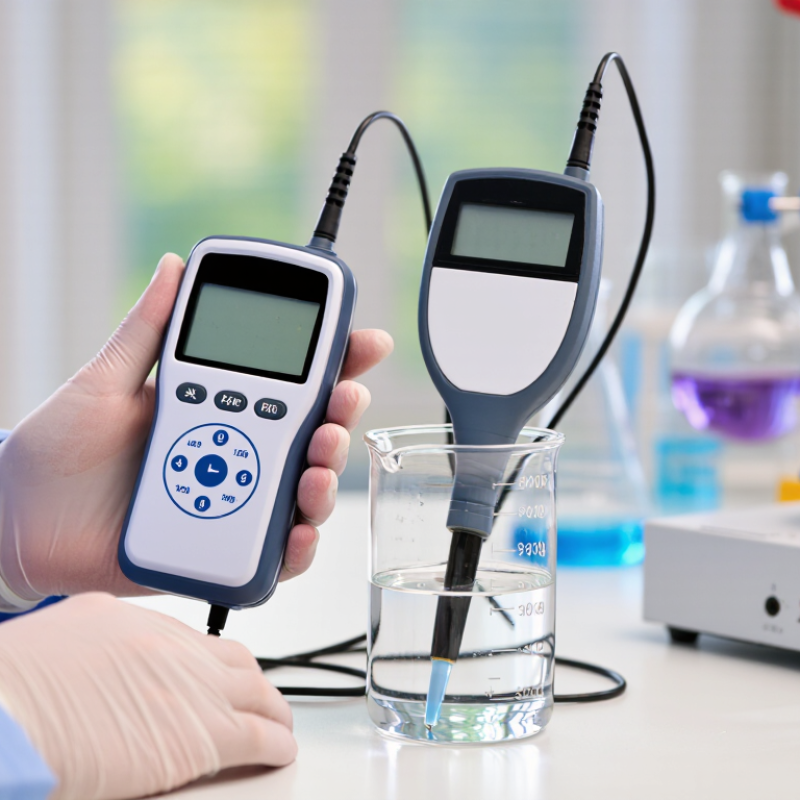
How to Choose the Best EC Meter for Water Testing?

What an EC Meter Measures in Water Testing

How to Choose the Best EC Meter for Water Testing?

What an EC Meter Measures in Water Testing

An EC meter measures electrical conductivity, not contamination directly. It detects how easily dissolved ions carry an electrical current through water. Calcium, chloride, sodium, and nitrate can raise conductivity. Pure water conducts very poorly.

The USGS National Field Manual identifies specific conductance as a practical indicator of dissolved ionic material. It also stresses temperature correction because conductivity changes as water warms.

A reliable meter should therefore include automatic temperature compensation and display measurements in microsiemens per centimeter. Check the stated reference temperature, usually 25°C.

EC does not identify individual substances. It cannot prove that water is safe. That limitation matters. The World Health Organization reports that drinking water below 600 mg/L total dissolved solids usually has good taste, while levels above 1,000 mg/L may become unpleasant. However, TDS is estimated from EC using a conversion factor, often between 0.5 and 0.9. The factor depends on the water’s ionic composition.

In practical testing, I would calibrate the meter before sampling and rinse the probe between sources. A cloudy glass, mineral crust, or unstable reading deserves attention. I still question single readings, especially from warm water or poorly mixed samples.

A useful meter needs stable calibration, a replaceable probe, clear temperature readings, and suitable accuracy for the testing purpose. Fancy resolution is not the same as reliable data.

Key Factors for Choosing an EC Meter

An EC meter measures electrical conductivity, helping you assess dissolved salts in water. The right choice depends on your testing conditions, not only the displayed accuracy. Start with the expected conductivity range. Low-conductivity water needs a sensitive meter, while nutrient-rich or saline samples require a wider range. A device that cannot handle your sample may give unstable readings.

Temperature compensation is another important factor. Conductivity changes noticeably with temperature, even when the water composition stays constant. Choose automatic compensation when samples vary between a cool tank and a warm outdoor container. Check the reference temperature, usually 25°C, because different settings can make results difficult to compare. Calibration also matters. Use certified conductivity standards near your working range, and recalibrate when readings drift. Do not trust one quick check.

The probe design affects daily reliability. A replaceable probe can reduce long-term costs, while a sealed housing helps during field testing. Look for clear instructions, a readable screen, and a stable connection between the probe and meter. Rinse the probe with clean water after each sample, then remove excess droplets without rubbing the sensor harshly. I once saw inconsistent readings caused by trapped air around the probe. Small details matter. Data logging is useful for repeated measurements, but stored numbers still need sampling notes, including temperature, location, and time. Portability sounds helpful, yet a compact meter may sacrifice durability or battery life. Check both before choosing.

How to Match Meter Features to Testing Needs

How to Choose the Best EC Meter for Water Testing?

The right EC meter depends on the water source, not the display size. Field technicians testing irrigation water may need a broad conductivity range, fast readings, and automatic temperature compensation. Aquarium or laboratory users may need finer resolution and stable readings at low conductivity. The USGS National Field Manual identifies specific conductance as a useful indicator of dissolved ions, but temperature strongly affects results. A meter without reliable compensation can mislead you.

Match the probe to the sample. A two-electrode sensor suits many routine tests, while a four-electrode design can reduce polarization in higher-conductivity water. Check the stated accuracy, calibration options, and response time. EPA Method 120.1 recommends calibration with suitable conductivity standards, not tap water. Small details matter. Rinse the probe between samples, remove trapped air, and record the water temperature beside every result.

EC does not measure every contaminant. It estimates ionic content. The World Health Organization’s Guidelines for Drinking-water Quality reports that total dissolved solids below 600 mg/L are generally acceptable in taste, while levels above 1,000 mg/L may become increasingly unpleasant. However, converting EC to TDS requires a chemistry-dependent factor. That shortcut can fail. For defensible testing, choose a meter that stores calibration records and supports the range you actually measure, rather than buying the highest-range model available.

How to Choose the Best EC Meter for Water Testing? - How to Match Meter Features to Testing Needs

Testing Need Typical Water Type or Application Recommended EC Range Recommended Meter Features Why the Feature Matters Priority
Very low conductivity measurement High-purity water, deionized water, laboratory rinse water Approximately 0.05–20 µS/cm Low-range resolution of at least 0.1 µS/cm; a cell constant suitable for low conductivity; temperature compensation; cleanable probe Low-conductivity samples are strongly affected by contamination, carbon dioxide absorption, and handling. Fine resolution and a suitable cell improve repeatability. High
General drinking-water testing Tap water, bottled water, wells, and routine field checks Approximately 50–1,500 µS/cm Range covering at least 0–2,000 µS/cm; automatic range selection; temperature compensation; clear digital display Most drinking-water checks fall within the low-to-mid conductivity range. Automatic ranging reduces setup time and reading errors. High
Hydroponic nutrient solution Fertilizer solution and recirculating growing systems Approximately 0.8–3.5 mS/cm, depending on crop and growth stage Resolution of 0.01 mS/cm or better; automatic temperature compensation; waterproof housing; calibration reminders or stored calibration points Small conductivity changes can indicate nutrient dilution or concentration. Temperature compensation is important because conductivity changes with temperature. High
Aquarium and freshwater monitoring Freshwater aquariums, ponds, and ornamental water systems Approximately 50–1,500 µS/cm, depending on water chemistry Stable readings at low conductivity; replaceable probe; temperature display; simple calibration procedure A replaceable probe lowers long-term maintenance cost, while temperature readings help explain changes in conductivity. Medium
Salinity and brackish-water screening Brackish water, aquaculture systems, estuaries, and saltwater preparation Approximately 2–60 mS/cm High-range capability up to at least 100 mS/cm; durable probe materials; automatic temperature compensation; optional salinity or TDS conversion Saltwater can exceed the range of basic freshwater meters. A high-range sensor prevents over-range readings and supports broader applications. High
Boiler, cooling-tower, and process-water checks Industrial water treatment and utility-water monitoring Approximately 0.1–20 mS/cm, depending on the process Wide measurement range; robust waterproof enclosure; data logging or export; calibration verification; replaceable probe Industrial samples may contain chemicals and suspended matter. Rugged construction and records support routine control and traceability. High
Fast on-site testing Field inspections, environmental surveys, and multiple sampling points Varies by sampling location Automatic range selection; fast stabilization; one-handed operation; backlit display; rechargeable or replaceable battery; waterproof rating of IP67 or better Portable meters must remain readable and protected when used outdoors. Fast stabilization helps reduce waiting time between samples. High
High-accuracy laboratory work Quality control, validation testing, and research measurements Selected according to the sample and method Documented accuracy and repeatability; multiple calibration points; temperature compensation; controlled measurement mode; data export Laboratory results require a documented procedure, suitable standards, and consistent temperature control rather than only a wide measurement range. High
Occasional household testing Home water checks, filter monitoring, and basic troubleshooting Approximately 0–2,000 µS/cm Simple two- or three-point calibration; automatic temperature compensation; clear units; replaceable batteries; protective cap Simple operation reduces user error. A protective cap helps keep the electrode hydrated or clean according to the manufacturer’s storage instructions. Standard
Testing samples with changing temperature Outdoor water, heated process water, and samples measured at different temperatures Any conductivity range Automatic temperature compensation with a built-in temperature sensor; selectable reference temperature, commonly 25°C Conductivity is temperature-dependent. Compensation allows readings from different sample temperatures to be compared using a common reference. High
Low-maintenance routine testing Frequent measurements by operators with limited calibration time Based on the process range Replaceable electrode; calibration reminders; automatic buffer or standard recognition; stable storage solution; easy rinsing Regular cleaning, correct storage, and periodic calibration are essential for reliable conductivity measurements and longer probe life. Medium

Note: Conductivity ranges are general selection guidelines, not universal limits. The actual range depends on the water source, temperature, dissolved substances, measurement method, and applicable testing standard. EC is commonly reported in µS/cm or mS/cm, where 1 mS/cm equals 1,000 µS/cm.

Steps for Comparing Accuracy, Range, and Durability

Choosing the best EC meter for water testing requires more than comparing prices. In routine testing, I compare accuracy, usable range, and physical durability under real working conditions. Accuracy starts with proper calibration. Before trusting a result, I check the meter with fresh, certified calibration solutions. I also confirm whether automatic temperature compensation is active and suitable for the sample. Record the calibration date and solution condition. Small details matter. I once accepted a stable reading from a dirty probe. That mistake changed the test result.

The measurement range should match the water being tested. A meter designed for low-conductivity water may struggle with concentrated nutrient solutions. Check the stated range, resolution, and accuracy across that range, not only at one point. For field work, quick stabilization is useful, but speed should not replace repeatability. Take three readings from the same sample. If they differ widely, investigate the probe, temperature, and sample mixing. A broad range can be helpful, yet it may reduce sensitivity at low values.

Durability becomes clear during daily handling. Look for a sealed housing, strong cable connections, and a probe that tolerates regular rinsing. An appropriate water-resistance rating helps, but it does not excuse careless immersion. Avoid storing the sensor dry when its instructions require a storage solution. Inspect the connector after every wet test. Battery access, screen visibility, and replaceable probes also affect long-term reliability. I have overlooked these practical points before. The meter worked well, but maintenance became frustrating.

How to Choose the Best EC Meter for Water Testing?

Compare the required measurement range, accuracy, and field durability before selecting an EC meter.

How to read the chart: The ranges show typical electrical conductivity values found in different water types. Choose a meter whose range comfortably covers the highest expected value while still providing reliable low-range resolution.

Accuracy: For routine drinking-water and irrigation checks, an accuracy of about ±1% of reading is a practical target. More demanding laboratory or process-control work benefits from ±0.5% or better.

Durability: For outdoor or field testing, look for a sealed housing rated around IP65 or higher, a replaceable probe, automatic temperature compensation, and a stable calibration system.

The conductivity values are approximate reference ranges; actual readings vary with dissolved minerals, temperature, treatment method, and sample contamination.

How to Use and Maintain an EC Meter Properly

Choosing the best EC meter for water testing begins with proper use and maintenance. A reliable meter should offer stable readings, automatic temperature compensation, and a replaceable probe. However, features cannot correct careless handling.

Before testing, rinse the probe with clean distilled water. Gently shake off excess drops. Do not wipe the sensor, because tissue can create static or leave fibers behind. Calibrate the meter with fresh conductivity standards at the recommended temperature. I usually calibrate before important measurements, especially after long storage. Check that the reading becomes stable before recording it.

Keep the probe wet according to its instructions, but never store it in distilled water for long periods. Distilled water can gradually damage the sensor’s response. Inspect the probe every few uses. Mineral deposits may appear as a pale film. A suitable cleaning solution can remove them, but aggressive scrubbing may harm the sensor. I once trusted a quick reading from a dirty probe, and the result was clearly misleading.

Temperature matters. Warm water usually shows higher conductivity, so measure samples at similar temperatures when comparing results. Rinse between samples to prevent carryover. Record the water temperature, EC value, calibration date, and sample location. Small details help reveal unusual changes. Batteries also deserve attention. Weak power can cause unstable displays, although I sometimes check the probe first and overlook this simple cause.

Scroll to Top