Cobot Robot Tips for Boosting Your Business Efficiency?
In today's fast-paced industrial landscape, companies face the challenge of maintaining efficiency. The introduction of cobot robots is transforming this paradigm. A recent report by McKinsey indicates that incorporating collaborative robots can increase productivity by up to 30%. Cobot robots work alongside human operators, enhancing workflows without replacing the workforce. This partnership allows for more flexible and dynamic operations.
Moreover, a study from the International Federation of Robotics projects that the market for cobots will reach $16 billion by 2025. This growth highlights the significant impact cobots have on various sectors, from manufacturing to logistics. However, businesses must address potential integration issues and training requirements for employees. Effective implementation is key to reaping the full benefits of cobot robots. Companies that ignore the need for adaptation may face challenges in optimizing productivity.
Exploring cobot robots offers exciting opportunities, but companies should approach with caution. The balance between automation and human input is critical. As industries evolve, staying informed about advancements will be essential. Embracing cobot robots could be the key to unlocking new levels of efficiency in your business.
Understanding Collaborative Robots: What They Are and How They Work
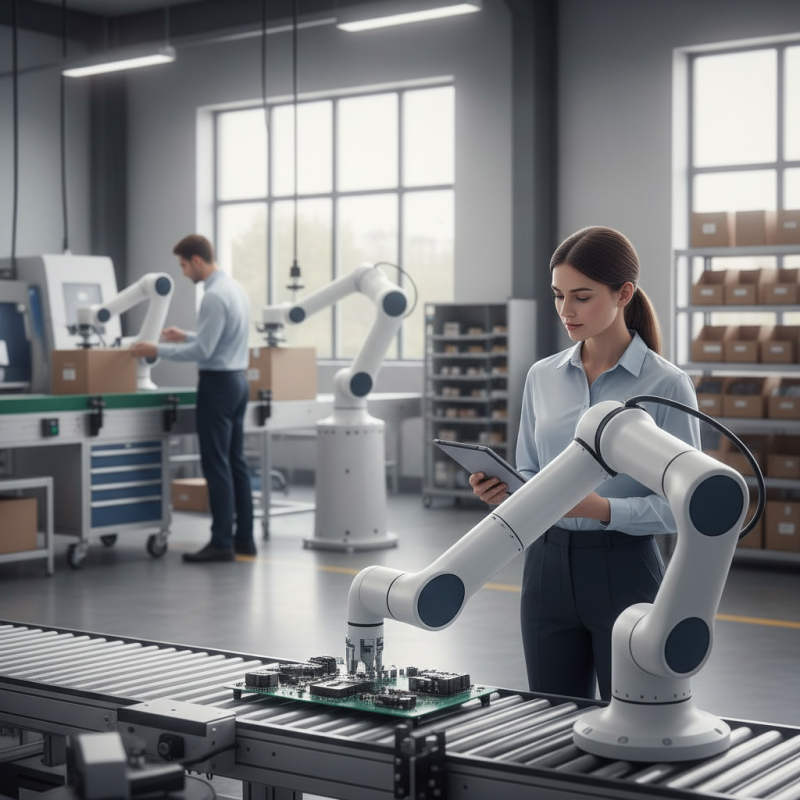
Collaborative robots, or cobots, are designed to work alongside humans in various environments. They are built to assist rather than replace, which makes them unique. Cobots can handle repetitive tasks with precision, such as assembly and quality checks. This allows human workers to focus on more complex tasks that require creativity and critical thinking.
Understanding how cobots function is essential. They use advanced sensors and AI to navigate and interact safely with humans. Their programming allows for quick adjustments to tasks, but this requires periodic evaluation and updates. Some users might find the initial setup challenging. Testing and fine-tuning may take time, leading to potential frustration.
Despite these hurdles, the integration of cobots can significantly enhance efficiency. They can operate at a consistent pace without fatigue. However, the effectiveness of a cobot depends on the workspace design and task complexity. Regular feedback from workers is vital to optimize their functions. Ignoring their input can lead to misalignment between cobot capabilities and workplace demands, which can hamper productivity.
Key Advantages of Implementing Cobots in Your Business Operations
The implementation of cobots, or collaborative robots, brings significant benefits to business operations. Research suggests that productivity can increase by up to 85% when integrating these robots into workflows. Cobots work alongside human employees, taking on repetitive tasks. This allows workers to focus on more complex responsibilities, enhancing job satisfaction and creativity.
Efficiency is not the only gain from cobots. Companies can reduce operational costs by nearly 30% through automation of mundane processes. A report from an industry study indicates that businesses integrating cobots have reported a return on investment within just six months. However, some companies may struggle with integration. There can be a learning curve as employees get accustomed to working beside robots. Proper training and gradual implementation can help ease this transition.
Moreover, while the efficiency gains are clear, some companies may overlook potential technical issues. Cobots require regular maintenance and updates, which can lead to unexpected downtime. Not all tasks may be suitable for cobot assistance. An analysis shows that about 40% of companies initially misjudge which processes to automate. This highlights the importance of careful planning before implementation, ensuring businesses maximize the benefits of cobots.
Identifying Areas of Your Business That Can Benefit from Cobots
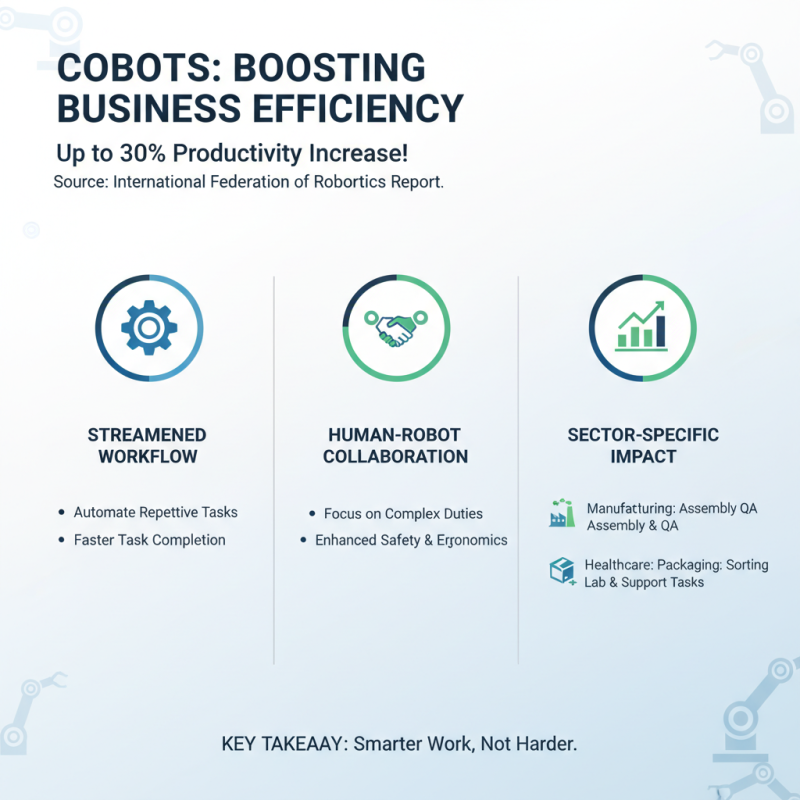
Identifying areas where cobots can enhance efficiency is crucial for any business. According to a recent report by the International Federation of Robotics, collaborative robots are expected to increase productivity by up to 30% in various sectors. This boost stems from their ability to handle repetitive tasks, allowing human workers to focus on more complex duties.
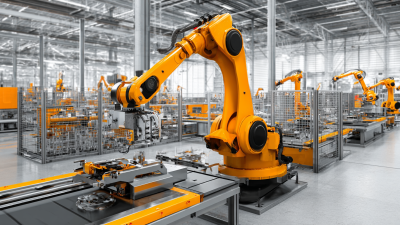
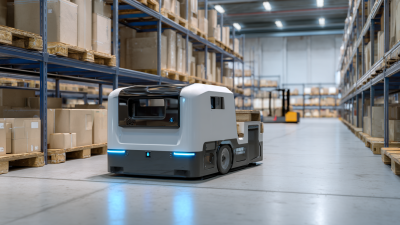
For example, in manufacturing, cobots can assist in assembly lines. They can lift heavy components and perform precise tasks without tiring. In warehouses, these robots can manage inventory more efficiently. They can transport goods from one location to another, reducing the time employees spend on these activities. Yet, companies often overlook how integrating cobots can transform workflow.
However, it’s essential to assess your specific needs. Not every task is suitable for automation. Some processes might require human creativity or judgment. Misplacing reliance on technology can lead to inefficiencies. Companies should pilot cobots in low-risk areas first. Understanding where they fit best can prevent costly mistakes and ensure successful integration in the long run.
Best Practices for Integrating Cobots into Your Workflow
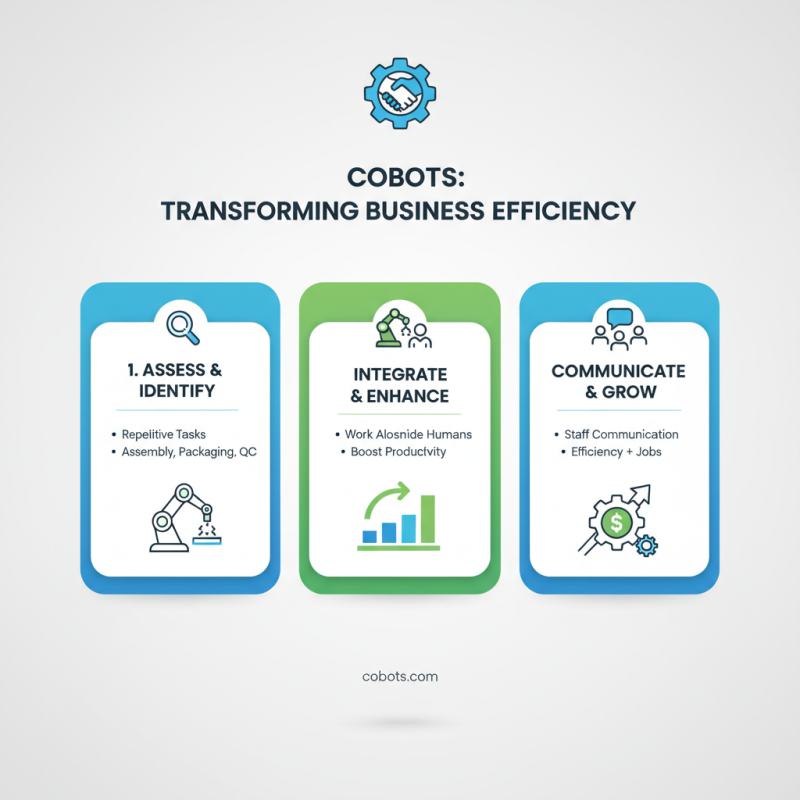
Integrating cobots into your workflow can transform your business efficiency. Start by assessing the areas where automation can make a real impact. Identify repetitive tasks that consume valuable time. This includes assembly, packaging, or quality control. Cobots can work alongside your team, enhancing productivity without replacing jobs. However, it's essential to communicate these changes effectively to your staff.
Training is crucial for a smooth transition. Employees should feel comfortable interacting with cobots. Provide hands-on workshops. These sessions build confidence and familiarity. Monitor the integration process closely. Gather feedback regularly to understand any challenges your team faces. There might be initial friction or resistance. Embrace this feedback to refine your approach and improve collaboration.
Lastly, keep an open mind about the outcome. Not every task will be perfectly suited for cobots. Performance may vary. It’s okay to pivot as needed and reassess your strategies. This continuous improvement mindset fosters an environment where both human workers and cobots can thrive. Emphasizing adaptability ensures that technology serves your unique workflow effectively.
Measuring the Impact of Cobots on Business Efficiency and Productivity
Cobots, or collaborative robots, have been transforming various industries. They offer the potential to significantly enhance business efficiency and productivity. Recent data shows that integrating cobots can reduce operational costs. Companies experience faster production times and fewer errors in task execution. Workers, when paired with cobots, often report a more engaging work environment.
However, the integration of cobots is not without challenges. Some employees may feel threatened by these machines. Resistance to change can lead to a dip in overall morale. It's essential to address these concerns through training and education. If employees see cobots as allies, productivity can skyrocket.
Measuring the impact of cobots requires clear metrics. Tracking efficiency, output, and employee satisfaction can reveal insights. The improvements may not always be immediate. Sometimes, cobots take time to align with existing processes. Finding the right balance between technology and human labor is crucial for success.