How to Choose the Best Sheet Extruder?

Choosing the right Sheet Extruder can shape product quality, operating costs, and long-term production stability. A machine may look impressive in a brochure, yet perform poorly with your actual resin, sheet thickness, or production speed. Real selection begins with your material and daily process requirements.

Experienced operators usually examine screw design, barrel heating, die control, cooling rolls, haul-off accuracy, and winding performance. These details affect thickness variation, surface finish, edge stability, and waste. For example, a poorly balanced die can create a thicker center section, even when the display shows a steady output. Small temperature differences can also leave visible marks on a clear sheet.

Start with the resin.

This guide explains how to compare extruder capacity, plasticizing performance, automation, maintenance access, and energy use. It also considers supplier expertise, installation support, spare parts, and practical testing before purchase. A factory trial using your own material is more reliable than a generic sample produced under ideal conditions. Ask for production data, not only promised output.

No machine fits every application perfectly. That matters.

A high-output line may be unnecessary for a small workshop, while an undersized system can overwork its components. My assessment may also change after reviewing humidity, recycled content, color changes, and operator skill. These factors are easy to overlook during early planning. Careful comparison, documented trials, and honest feedback from current users can lead to a more dependable Sheet Extruder choice.
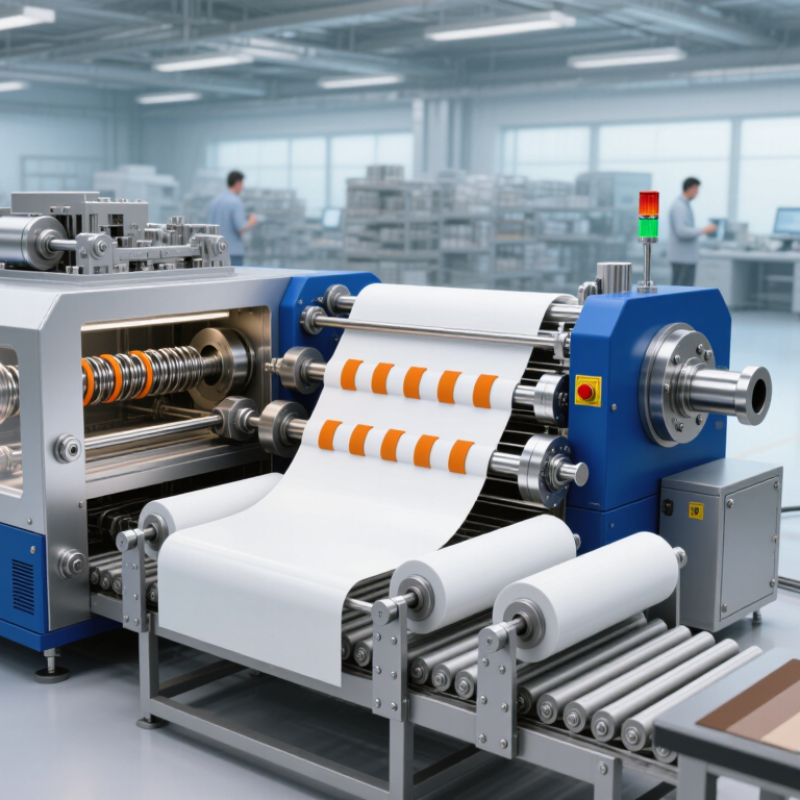
How to Choose the Best Sheet Extruder?

Defining Your Sheet Extrusion Requirements

Choosing the Best Sheet Extruder: Defining Your Sheet Extrusion Requirements

A suitable sheet extruder begins with the material, not the machine catalog. Identify the polymer, additives, moisture sensitivity, and expected recycled content. Different materials require different temperature stability and screw designs. Record the target sheet width, thickness range, and acceptable thickness variation. A 2-millimeter sheet needs tighter control than a protective liner.

Be specific about production demands. Measure kilograms per hour, operating hours, startup frequency, and planned expansion. Include the die type, cooling method, haul-off speed, and cutting system. In practical trials, uneven cooling can create more waste than a weak extruder. A stable melt temperature matters, but so does consistent pressure at the die.

Small details matter.

I once treated maximum output as the main selection criterion. That estimate was too optimistic because cleaning time and material changes reduced actual production. A realistic requirement should include these interruptions. Ask for documented test data, energy consumption, temperature accuracy, and thickness results using comparable materials. Check whether operators can adjust settings safely and whether maintenance access is practical. The best specification may still need revision after pilot testing, especially when additives or recycled materials behave differently than expected.

How to Choose the Best Sheet Extruder? — Defining Your Sheet Extrusion Requirements

Material selection is a key starting point when defining sheet extrusion requirements. The chart shows typical melt-processing temperature windows for commonly extruded sheet materials. Select an extruder with suitable heating capacity, temperature control, screw design, and cooling performance for the material and production range you plan to use.

Comparing Extruder Types and Processing Technologies

How to Choose the Best Sheet Extruder?

Choosing a sheet extruder starts with the material, not the machine catalogue. A single-screw extruder suits stable, uniform resins and offers simpler operation. A twin-screw extruder handles blending, fillers, and recycled feedstock more effectively. It also provides stronger mixing and better devolatilisation. That choice matters. The OECD Global Plastics Outlook reported that only 9% of global plastic waste was recycled in 2019, so recycling capability deserves serious attention.

Processing technology changes the final sheet. A flat-die cast line can deliver accurate thickness, rapid cooling, and a smooth surface. It works well for packaging and technical sheets requiring tight tolerances.

Calendering may offer excellent surface control for selected polymers, but it usually demands careful temperature coordination between several rolls. For recycled material, melt filtration, automatic screen changing, and controlled drying can prevent black specks, bubbles, and brittle edges.

Measure the melt.

The 2024 PlasticsEurope report recorded global plastics production at 413.8 million tonnes in 2023. That scale increases pressure for efficient and repeatable processing.

In practice, I would compare output stability, energy use, screw design, cooling capacity, and cleaning time. A larger motor does not guarantee better sheets. I have seen impressive specifications fail when moisture control was overlooked. My own choice would remain provisional until trials confirm thickness variation, impact strength, and surface quality under real production conditions.

Evaluating Material Compatibility and Production Capacity

How to Choose the Best Sheet Extruder?

Material compatibility should guide the machine choice, not brochure output. Polypropylene, polyethylene, PET, ABS, and PVC need different screw designs, temperature profiles, and filtration systems.

PET, for example, demands strict moisture control before melting. Even small moisture levels can reduce sheet strength and clarity. PVC requires careful thermal management because overheating can damage the material.

The OECD reported that global plastic waste reached 353 million tonnes in 2019, while only 9% was recycled. This increases interest in recycled feedstocks, but recycled pellets often vary in moisture, contamination, and melt flow.

A sheet extruder should therefore offer stable feeding, strong melt filtration, and adjustable processing zones. Production capacity must be tested with the actual formulation. A machine rated for 800 kilograms per hour may produce far less with recycled material, narrow sheets, or frequent screen changes.

I have seen capacity calculations look convincing on paper, then fail during continuous production. That mistake is expensive.

Tips:

Request a trial using your real material blend. Measure kilograms per hour, sheet thickness variation, energy use, and scrap rate. Check whether the extruder can maintain stable pressure during filter changes.

The PlasticsEurope Plastics—The Fast Facts 2024 report estimated global plastics production at 413.8 million tonnes in 2023. Capacity matters, but consistency matters more. A slower line with fewer defects may deliver better annual output.

Assessing Machine Quality, Controls, and Energy Efficiency

How to Choose the Best Sheet Extruder?

A reliable sheet extruder begins with measurable machine quality. Inspect frame rigidity, barrel insulation, screw wear, and die temperature stability. During testing, record thickness variation across the sheet width. A practical target is often within ±2%, but material and thickness can change this result. Do not trust a brochure alone. Ask for factory acceptance data, maintenance records, and a sample run using your intended polymer. The European Commission’s Best Available Techniques Reference Document for Plastics Manufacturing identifies heating, drives, and cooling as important energy and process-control areas.

Controls should make problems visible, not merely look modern. Check whether the system logs melt pressure, motor load, temperature zones, and line speed. Closed-loop thickness control can reduce operator correction, although poor calibration still creates waste. Energy performance deserves equal attention. The International Energy Agency reported that industry used about 37% of global final energy in 2022. A sheet line may consume roughly 0.3–0.8 kWh per kilogram, depending on resin, output, heating, and cooling. Treat that range cautiously. Your actual audit matters more.

Tips: Request a measured kWh/kg trial at several throughputs. Compare idle energy, not only production energy. Check whether heaters switch off safely during pauses. Review alarm history with operators. Their practical experience may expose weaknesses missed by engineers. I would also challenge unusually low energy claims; they may reflect ideal settings, not daily production.

Selecting a Reliable Supplier and Calculating Total Costs

Choosing the best sheet extruder starts with the supplier, not the purchase price. PlasticsEurope reported global plastics production of 413.8 million tonnes in 2023. That scale increases pressure on manufacturers to control energy, waste, and downtime. Ask suppliers for documented output, energy consumption, commissioning records, and references from similar sheet applications. A polished brochure is not evidence.

Calculate total cost of ownership over five to ten years. Include the machine, die, chiller, installation, operator training, spare parts, electricity, labor, maintenance, scrap, and production losses during breakdowns. For example, a 180 kW extruder running 6,000 hours annually consumes about 1.08 million kWh before downstream equipment. Use your local electricity tariff, not a supplier’s estimate. The International Energy Agency’s Energy Efficiency 2023 report also highlights industrial efficiency as a major route for reducing energy demand.

Service details matter. Check response times, remote diagnostics, technician availability, and critical-part stock. A low-cost machine can become expensive after two idle weeks. Request a line trial using your actual resin, thickness, width, and recycled content. Measure melt stability and sheet flatness. Ask for written acceptance limits.

The calculation will not be perfect. Resin prices change. Scrap data may be optimistic. I would add a realistic contingency for downtime and installation delays, then compare suppliers using the same assumptions. The cheapest quotation often wins attention, but the most reliable cost model usually wins the project.

How to Choose the Best Sheet Extruder? - Selecting a Reliable Supplier and Calculating Total Costs
Evaluation Area Metric Compact Line Standard Line High-Throughput Line Selection Guidance
1. Production and Technical Fit
Material range Typical thermoplastics PP, PE, PS, ABS PP, PE, PS, ABS, PET blends PP, PE, PS, ABS, PET blends Confirm screw design, drying requirements, and melt-temperature limits for the exact resin.
Maximum sheet width Usable sheet width 1,000 mm 1,500 mm 2,000 mm Choose a die width at least 5–10% wider than the required finished sheet width.
Output capacity Nominal output 250 kg/h 500 kg/h 900 kg/h Use a realistic operating load of approximately 70–85% of the quoted maximum output.
Sheet thickness Typical operating range 0.5–6.0 mm 0.5–8.0 mm 0.8–12.0 mm Request thickness-tolerance data at the target width, resin, speed, and gauge.
Installed electrical load Extruder and auxiliary equipment 90 kW 180 kW 315 kW Check transformer, cooling-water, compressed-air, and ventilation capacity before ordering.
Expected specific energy use Electricity per kilogram of sheet 0.12 kWh/kg 0.18 kWh/kg 0.22 kWh/kg Verify through a production trial because actual energy use depends on resin, thickness, and line speed.
2. Supplier Reliability Checks
Factory acceptance test Recommended requirement Required Required Required Run the buyer's material and target thickness before shipment; record output, tolerance, and energy data.
Performance guarantee Recommended contract coverage Output and thickness tolerance Output, tolerance, and uptime Output, tolerance, uptime, and energy Write measurable acceptance criteria into the purchase contract rather than relying on general specifications.
Warranty period Typical commercial benchmark 12 months 12–18 months 18–24 months Clarify whether warranty starts at shipment, commissioning, or successful acceptance.
Spare-parts support Recommended availability Critical parts stocked Critical parts plus wear parts Critical parts plus wear parts and drive modules Request a recommended two-year spare-parts list, prices, lead times, and part numbers.
Technical service Recommended response time 48 hours 24–48 hours 24 hours Confirm remote diagnostics, commissioning support, training, and local service coverage.
Documentation Required deliverables Manuals, drawings, electrical diagrams Manuals, drawings, electrical diagrams, software backup Full documentation, software backup, maintenance schedule Documentation should be supplied in the operating team's working language.
3. Capital Cost Estimate in USD
Extrusion line purchase price Extruder, die, rollers, haul-off, winder, and controls $145,000 $285,000 $520,000 Compare equivalent scope; exclude-only quotations can appear cheaper while omitting essential auxiliaries.
Installation and commissioning Mechanical, electrical, testing, and training allowance $18,000 $32,000 $55,000 Obtain a fixed installation scope and identify travel, accommodation, and civil-work exclusions.
Initial tooling and wear parts Dies, screen packs, knives, filters, and start-up parts $25,000 $45,000 $75,000 Include the die and calibration tooling needed for the customer's actual product range.
Estimated initial investment $188,000 $362,000 $650,000 Initial investment equals line price plus installation and initial tooling.
4. Five-Year Total Cost of Ownership
Operating basis Planned production time 4,000 h/year 4,000 h/year 4,000 h/year Production volume is calculated from nominal output multiplied by annual operating hours.
Five-year production volume Nominal output × 4,000 h/year × 5 years 5,000,000 kg 10,000,000 kg 18,000,000 kg Actual sellable volume will be lower if downtime, changeovers, or scrap are significant.
Electricity cost Specific energy × production volume × $0.10/kWh $60,000 $180,000 $396,000 Uses an electricity planning rate of $0.10 per kWh; replace it with the local industrial tariff.
Direct labor cost Operators, supervision, and routine line handling $250,000 $350,000 $450,000 Assumes labor costs over five years and should be adjusted for local wages and shift structure.
Preventive maintenance Estimated annual maintenance at approximately 4% of line price $29,000 $57,000 $104,000 Includes routine service labor and standard maintenance materials, excluding major rebuilds.
Additional spare parts Wear parts and unplanned replacement allowance $20,000 $35,000 $60,000 Confirm expected screw, barrel, die-lip, roller, heater, sensor, and drive-component life.
Estimated five-year total cost of ownership $547,000 $984,000 $1,660,000 Includes initial investment, electricity, labor, preventive maintenance, and additional spare parts.
Estimated total cost per kilogram $0.109/kg $0.098/kg $0.092/kg Higher-capacity lines generally reduce unit cost when sufficient demand keeps utilization high.
5. Recommended Decision Rules
Best fit for limited demand Target utilization below approximately 1,000 tonnes per year Suitable May be oversized Usually oversized Select the compact line if lower capital exposure is more important than minimum unit cost.
Best fit for stable medium demand Approximately 1,500–2,500 tonnes per year Capacity limited Suitable May be oversized The standard line often provides a balanced combination of capacity, flexibility, and cost.
Best fit for continuous high demand More than approximately 3,000 tonnes per year Capacity limited Capacity limited Suitable Select the high-throughput line only when demand supports high utilization and adequate staffing.
Planning note: Cost figures are industry-style budgeting benchmarks in USD, excluding freight, import duty, taxes, building work, financing, resin, packaging, scrap, and revenue losses during downtime. Obtain at least three technically equivalent quotations and validate all performance and cost assumptions through a material trial and written acceptance test.
Scroll to Top