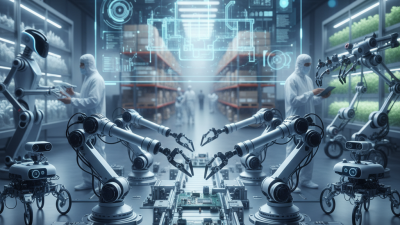
Top Lab Robotics Innovations Transforming Scientific Research?
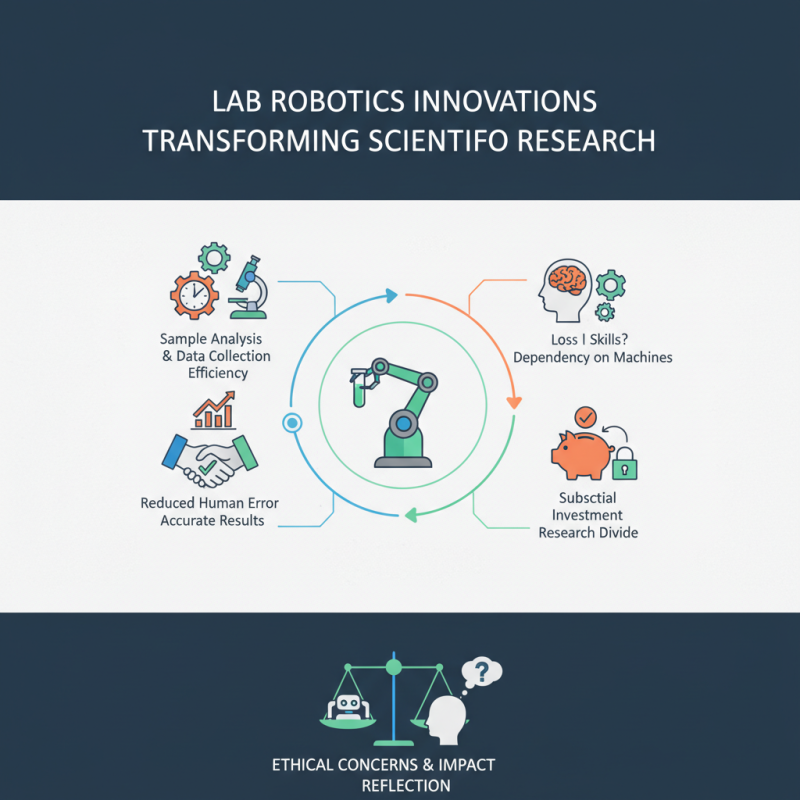
Lab robotics has revolutionized scientific research in recent years. These innovations streamline processes that were once tedious and time-consuming. Tasks such as sample analysis and data collection have become more efficient.
Automation in laboratories reduces human error. This is crucial for accurate results. However, reliance on lab robotics raises questions. Are we losing essential skills? Researchers might become too dependent on machines.
The integration of lab robotics also demands substantial investment. Not every institution can afford these technologies. This creates a divide in research capabilities. Additionally, ethical concerns about automation in scientific inquiry need addressing. As we embrace these advancements, it’s vital to reflect on their impact.
Recent Advancements in Lab Robotics for Scientific Research
Recent advancements in lab robotics are fundamentally changing scientific research. Automated systems streamline procedures that once required hours of manual work. According to a report by an industry-leading research firm, lab robotics can increase lab efficiency by up to 40%. This boost allows scientists to focus on analysis rather than repetitive tasks.
In addition, data management has improved significantly. Modern robotic systems integrate seamlessly with data analytics tools. This integration enhances accuracy and reduces errors in handling samples. However, not all labs have adapted to these technologies. Some still rely on traditional methods, facing challenges like inefficiency and human error.
Cost remains a concern for many facilities. While robotics can save time and resources, initial investments are high. Many research institutions struggle to balance budgets and innovation. The potential for transformation is clear. Yet, the transition to fully automated systems requires careful consideration and planning.
Key Technologies Driving Lab Robotics Innovations
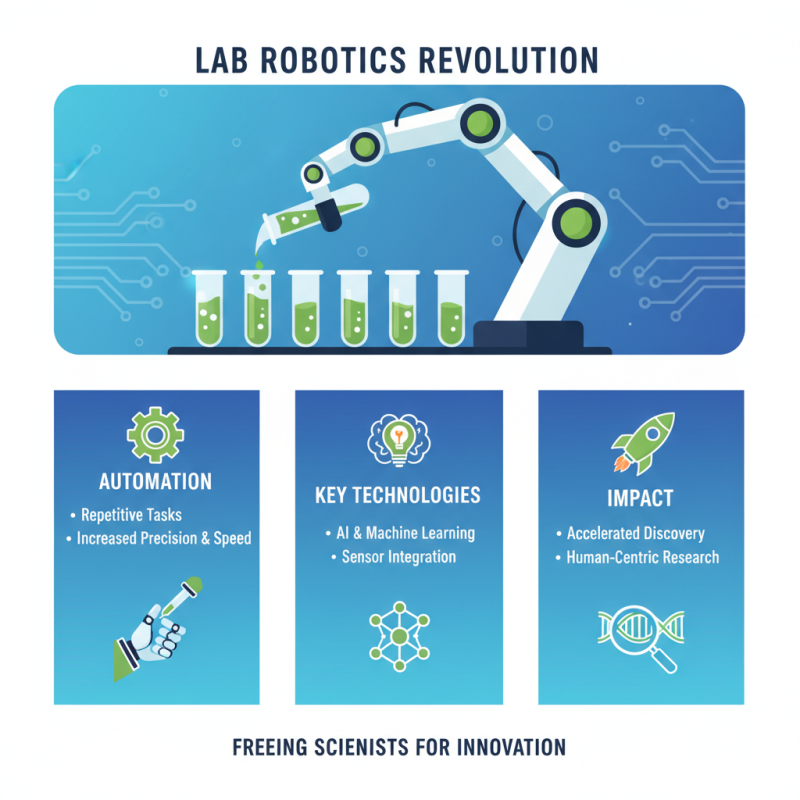
The world of lab robotics is evolving rapidly. Several key technologies are driving this revolution. For instance, automation is reshaping how experiments are conducted. Robots can now perform tasks with precision and speed that surpass human ability. They handle repetitive processes, freeing scientists to focus on creativity and innovation.
Artificial intelligence (AI) is another pivotal force. Machine learning algorithms can analyze vast datasets, uncovering patterns that humans might miss. This capability accelerates research significantly. However, reliance on AI raises questions. How can researchers ensure the accuracy of AI-generated insights? These concerns must be addressed.
Another area of innovation is in robotics design. Flexible and modular robotic systems allow for customization. Researchers can adapt their setups to diverse experiments with ease. Nevertheless, the complexity of these systems can lead to challenges. Training personnel to operate advanced robotics is essential yet often overlooked. The balance between automation and human oversight is delicate.
Impact of Automation on Laboratory Efficiency and Accuracy
Automation is reshaping laboratories through enhanced efficiency. Recent reports suggest that automation can improve lab efficiency by up to 50%. This is significant when you consider the demanding pace of scientific research today. Automated systems reduce human error, leading to more accurate results. However, reliance on these systems can raise concerns about oversight in experimentation.
Implementing robotic solutions can streamline repetitive tasks. For instance, sample processing time can be cut down drastically. Many facilities witness a 40% reduction in manual handling time. Still, the transition is not always seamless. Technicians may struggle to adapt to new technologies. There’s a learning curve involved, and sometimes workflow interruptions occur during implementation.
Moreover, while accuracy tends to improve, there are instances where automation can introduce new types of errors. Data integrity may be compromised if systems go uncalibrated. Continuous monitoring and adjustment become necessary. Even with high-tech tools, the human element is still critical in validating results, ensuring that automation complements rather than replaces skilled personnel in research settings.
Case Studies of Successful Lab Robotics Applications
The integration of robotics in laboratories is revolutionizing scientific research. Automated systems streamline processes, allowing scientists to focus on innovation. For instance, high-throughput screening has enabled rapid drug discovery. Instead of manual sample handling, robotic arms efficiently manage complex tasks.
One intriguing case involved a lab that struggled with repetitive testing. They adopted a robotic solution that reduced human error. However, initial setbacks arose when programming errors led to incorrect results. Over time, adjustments improved accuracy. Scientists learned the value of patience and fine-tuning their technology.
Another example showcased a robotics system for biological assays. While it increased throughput, some researchers felt disconnected from the process. They missed the hands-on approach that often sparks new ideas. Balancing automation with human insight is a challenge worth exploring. Understanding when to wield these tools will define future laboratory dynamics.
Future Trends in Lab Robotics Development and Research Integration
The future of lab robotics is evolving rapidly. Innovations are emerging that streamline processes in scientific research. According to a recent report from the International Federation of Robotics, the global market for lab automation is projected to grow by over 18% annually. This surge signifies a strong focus on efficiency in laboratories.
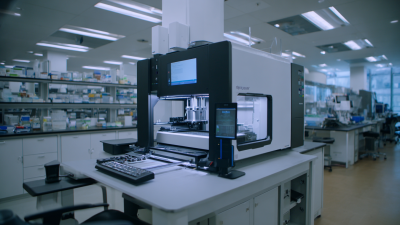
Integrating robotics into research offers notable advantages. Robots can perform repetitive tasks faster and with higher accuracy. For instance, automated liquid handling systems minimize human error in sample preparation. However, there are challenges. Many scientists worry about the high costs of implementing robotic systems. The initial investment can be daunting for smaller labs.
Moreover, the integration process is not always seamless. Many labs face compatibility issues with existing systems. Robotic technology must align with current workflows. As automation continues to advance, training personnel becomes essential. Adaptability will determine success in adopting these innovations. Research institutions need to balance costs while embracing new technologies.