Why Laboratory Robotics is Revolutionizing Scientific Research and Automation?
The rapid advancement of technology has significantly transformed various sectors, with scientific research experiencing one of the most profound changes through the integration of laboratory robotics. This innovative field blends automation with complex scientific processes, enabling researchers to enhance efficiency, accuracy, and reproducibility in their experiments. By leveraging laboratory robotics, scientists can automate routine, labor-intensive tasks, allowing them to focus on high-level analysis and creative problem-solving, ultimately accelerating the pace of discovery.
Laboratory robotics embodies a paradigm shift in how experiments are designed and executed. The precise control and sophisticated algorithms of robotic systems minimize human error, ensuring that data collection and processing are both reliable and reproducible. These systems not only optimize workflow but also facilitate the handling of large datasets and high-throughput experiments that are increasingly essential in contemporary research environments. As laboratory robotics continue to develop, they promise to redefine not only the dynamics of laboratory settings but also the very nature of scientific inquiry, paving the way for breakthroughs across diverse fields, from biotechnology to materials science.
The Evolution of Laboratory Robotics in Scientific Research
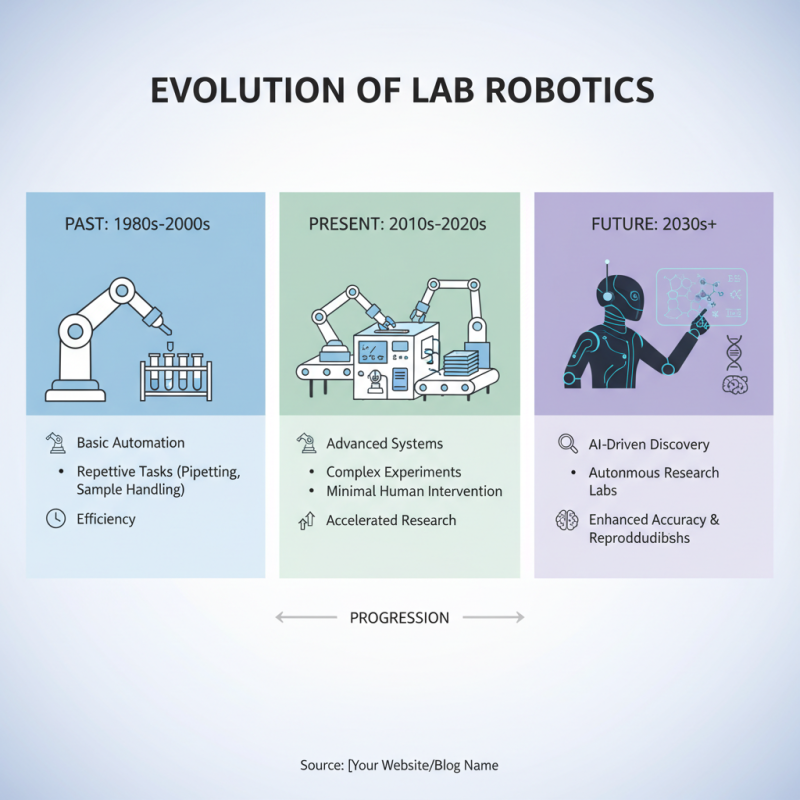
The evolution of laboratory robotics has significantly transformed the landscape of scientific research. Initially, laboratory automation was limited to basic tasks, primarily focusing on enhancing efficiency in repetitive processes like pipetting and sample handling. Over the years, advancements in robotics technology have led to the development of sophisticated systems capable of performing complex experiments with minimal human intervention. This evolution has not only accelerated the pace of research but has also improved accuracy and reproducibility in scientific results.
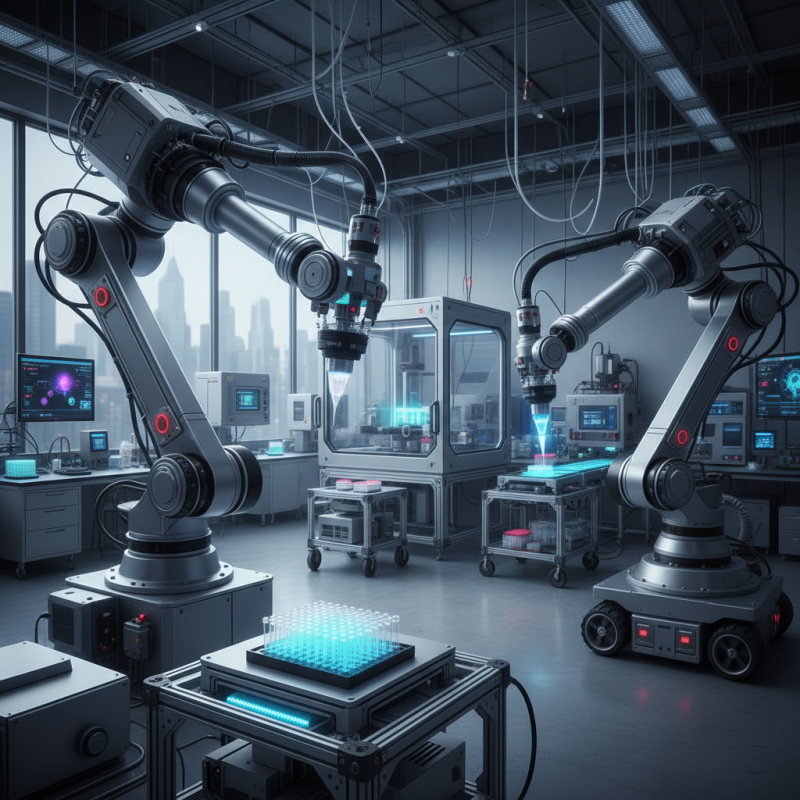
Modern laboratory robots are equipped with advanced sensors, artificial intelligence, and machine learning algorithms, allowing them to adapt to various conditions and make real-time decisions. This adaptability is crucial as scientific research often involves unpredictable variables. As these robots continue to evolve, they are capable of integrating with other laboratory instruments, creating an interconnected ecosystem that streamlines workflows across multiple processes. Consequently, researchers are now able to focus on higher-level analysis and creative problem-solving, significantly enhancing the overall quality and output of scientific research in disciplines ranging from genomics to pharmaceuticals.
Key Technologies Driving Laboratory Robotics Innovation
Laboratory robotics is transforming the landscape of scientific research and automation through the integration of advanced technologies. Key innovations driving this revolution include artificial intelligence (AI), machine learning algorithms, and sophisticated sensor technologies. According to a report by MarketsandMarkets, the laboratory automation market is projected to grow from USD 3.5 billion in 2020 to over USD 6.5 billion by 2025, highlighting the increasing adoption of robotic systems in laboratories. AI, particularly, enhances data analysis capabilities, allowing for faster and more accurate interpretations of experimental results, which is crucial in fields like genomics and drug discovery.
Moreover, the advent of miniaturized and highly precise robotic systems enables researchers to perform high-throughput screening of compounds, dramatically accelerating the pace of discovery. For instance, advancements in microfluidics and robotics allow for the automation of complex biological assays, reducing human error and improving reproducibility. A study by Grand View Research estimates that the global lab automation market will witness a CAGR of 7.5% from 2021 to 2028, underscoring the growing reliance on automation for efficiency and precision in laboratory workflows. By harnessing these technologies, laboratories can optimize their processes, drive innovation, and meet the escalating demands of scientific research.
Impact of Laboratory Robotics on Research Efficiency and Accuracy
Laboratory robotics is fundamentally transforming the landscape of scientific research, enhancing not only the efficiency of workflows but also the accuracy of results. A report by the International Federation of Robotics indicates that the adoption of automation in laboratories can reduce human error by up to 90%, allowing researchers to focus on analytical aspects rather than repetitive tasks. High-throughput robotic systems enable rapid experimentation and sampling, resulting in a significant increase in throughput. For instance, laboratories that have implemented robotic automation have reported productivity gains of 30-50%, enabling them to conduct a greater number of experiments in shorter timeframes.
Implementing laboratory robotics optimizes resource utilization and minimizes cross-contamination risks, which are critical in fields such as pharmaceuticals and biotechnology. A study from the Journal of Automation in Science and Engineering highlights how robotic systems improve reagent management and sample handling, leading to a marked decrease in variability and enhancing the reliability of experimental outcomes. This heightened precision is vital, especially in clinical research where data integrity can directly influence patient safety and treatment efficacy.
**Tips:** When considering the integration of laboratory robotics, start by evaluating specific areas where automation can address bottlenecks in your workflow. Additionally, invest in training for staff to ensure they are well-versed in both the technology and its applications, as human oversight remains essential for optimal results. Regularly review performance metrics to assess the impact of robotic systems on your research activities, allowing for continuous improvement.
Applications of Laboratory Robotics Across Different Scientific Disciplines
Laboratory robotics is making significant strides across various scientific disciplines, primarily through its capacity to enhance efficiency and precision. In the realm of molecular biology, robotic systems are employed for high-throughput screening of compounds, enabling researchers to rapidly identify potential drug candidates. By automating repetitive tasks such as pipetting, mixing, and sample analysis, laboratories can process large datasets, leading to accelerated discovery times and reduced human error. This automation frees scientists to focus on more complex and creative aspects of their research.
In chemistry, laboratory robotics facilitates the synthesis of chemical compounds with unprecedented accuracy and reproducibility. Automated systems can carry out intricate reactions while monitoring conditions in real-time, streamlining the process of experimentation. This reduces not only the time required for trial and error but also enhances safety measures by minimizing human exposure to hazardous substances. Furthermore, in environmental science, robotic technologies are employed for sample collection and analysis from diverse ecosystems, providing invaluable data for understanding climate change and ecological dynamics. The versatility of laboratory robotics across these disciplines demonstrates its transformative potential in the quest for scientific advancement.
Why Laboratory Robotics is Revolutionizing Scientific Research and Automation?
| Scientific Discipline |
Applications |
Key Benefits |
| Biotechnology |
Automated DNA sequencing, protein crystallization |
Increased throughput, consistency in results |
| Pharmaceutical |
High-throughput screening, liquid handling |
Faster drug discovery, reduced human error |
| Environmental Science |
Sample analysis, pollutant detection |
Improved accuracy, real-time monitoring |
| Clinical Research |
Patient sample processing, assay automation |
Enhanced efficiency, standardized protocols |
| Materials Science |
Automated synthesis, characterization |
Resource optimization, innovative material development |
Future Trends and Challenges in Laboratory Robotics Automation
Laboratory robotics is poised to shape the future of scientific research and automation, building on rapid advancements in artificial intelligence and machine learning. A recent report by International Data Corporation (IDC) projects that the market for laboratory automation technologies will grow to $6.5 billion by 2025, highlighting a significant shift towards automated workflows in research labs. This growth is driven by the need for increased efficiency, accuracy, and productivity as researchers tackle ever-more complex scientific questions in fields such as genomics, pharmaceuticals, and materials science.
As we look toward the future, several trends are surfacing in laboratory robotics. One key trend is the integration of robotic systems with advanced data analytics platforms, enabling robust real-time analysis and decision-making capabilities. Enhanced collaboration between human researchers and robotic systems is also expected to evolve, allowing for more sophisticated experiments that can adapt in real time based on live data feedback. However, significant challenges remain, such as the high initial costs of automation systems, ensuring compatibility with existing technologies, and training personnel to work effectively alongside robotic counterparts.
Tips: When considering the implementation of laboratory robotics, it's crucial to evaluate the scalability of the technology and its potential ROI over time. Collaborating with technology specialists during the integration phase can help mitigate compatibility issues and streamline onboarding processes. Additionally, fostering a culture of adaptability within research teams can enhance the successful adoption of these advanced automated systems.
Growth of Laboratory Robotics in Scientific Research (2018-2023)
This chart illustrates the growth in laboratory robotics utilization across various research sectors from 2018 to 2023, showing the increasing reliance on automation in scientific research.