What Is Logistics Robotics and How Does It Work?
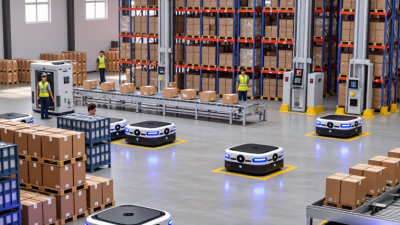
Logistics robotics combines mobile robots, robotic arms, sensors, software, and warehouse data. These systems move inventory, sort parcels, lift containers, and support order picking. Their purpose is practical: reduce unnecessary walking while improving speed, accuracy, and workplace consistency.
Mick Mountz, founder of Kiva Systems, described the central idea clearly: “Instead of workers walking around a warehouse looking for products, the products come to the workers.” That principle explains how many modern logistics robotics systems operate. A warehouse management system assigns a task. Fleet-control software chooses a route. Autonomous mobile robots then navigate marked aisles, scan locations, and carry shelves or totes to a workstation. At the station, a worker verifies the item, while cameras and barcode scanners help prevent mistakes. Some facilities also use robotic arms for palletizing, depalletizing, or parcel sorting.
The process looks smooth on a screen. Real warehouses are less predictable. Dust can affect sensors, batteries require charging, and a misplaced carton may interrupt a carefully planned route. Human judgment remains essential when products vary in shape, packaging, or condition. Reliable deployment therefore requires site testing, employee training, maintenance records, and measurable safety procedures. Companies should compare picking accuracy, travel time, downtime, and total operating cost before expanding a pilot project.
The technology is impressive, but not magical. Logistics robotics works best when software, equipment, and people are designed as one system. Performance also depends on clean data and realistic expectations. A faster robot cannot repair a disorganized warehouse.
Defining Logistics Robotics and Its Role in Modern Supply Chains
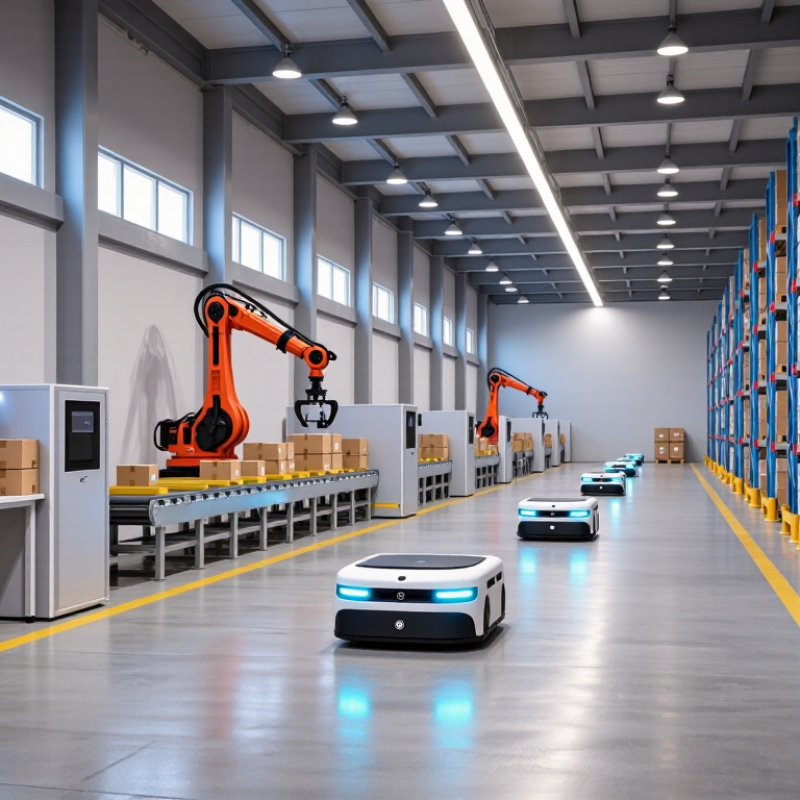
Logistics robotics refers to machines that move, store, sort, or handle goods across supply chain operations. These systems include autonomous mobile robots, robotic arms, automated storage equipment, and intelligent conveyors. Their role is practical: reduce repetitive handling, improve inventory visibility, and help workers manage fluctuating order volumes.
On a warehouse floor, a mobile robot may carry a shelf to a picking station. Sensors map aisles, while software assigns routes and adjusts them around people. Robotic arms can identify package sizes, grip products, and place them into cartons.
The International Federation of Robotics reported approximately 113,000 professional service robots sold for transportation and logistics in 2023, showing strong operational demand. MHI’s 2024 industry report also found that 55% of supply chain leaders planned to increase technology and innovation investment.
The benefits are measurable, but implementation is not effortless. A poorly mapped facility can create delays instead of removing them. Weak product data can also confuse picking systems.
That happens.
Human oversight remains necessary for exceptions, maintenance, safety checks, and unusual packaging. In my experience, the best results come from matching automation with a specific bottleneck, such as long walking distances or inconsistent sorting. Full automation may sound efficient, yet it can reduce flexibility when product ranges change quickly.
Logistics robotics works best as a coordinated layer within the supply chain, not as a replacement for every human decision.
Core Technologies That Enable Logistics Robots
What Is Logistics Robotics and How Does It Work?
Core Technologies That Enable Logistics Robots
Logistics robots combine sensing, software, motion control, and warehouse data. Their work begins with perception. Cameras, lidar, barcode readers, and wheel encoders help a robot locate shelves, pallets, workers, and obstacles. A small error matters. A misplaced tote can delay several downstream orders.
Artificial intelligence interprets these signals. Machine-learning models classify packages, estimate empty spaces, and recognize unusual movement. Meanwhile, simultaneous localization and mapping helps mobile robots build warehouse maps. Fleet-management software then assigns tasks, controls traffic, and adjusts routes when an aisle becomes blocked. The robot does not simply “follow instructions.” It continuously reacts to changing conditions.
Connectivity is equally important. Warehouse-management and warehouse-control systems exchange inventory, order, and location data through application programming interfaces. This connection allows a robot to retrieve the correct container and update stock records quickly.
MHI’s 2024 Annual Industry Report found that 55% of surveyed supply-chain professionals planned to increase technology investment. The International Federation of Robotics reported 541,302 industrial robots installed globally in 2023, showing the wider automation momentum.
Safety technology remains essential. Depth sensors, speed limits, emergency stops, and protected operating zones reduce collision risks. Yet autonomy is not perfect. Reflective packaging can confuse cameras, while dust may weaken sensor performance. Human oversight still improves reliability, especially during peak seasons. In real warehouses, the best system is often not the most advanced one. It is the one workers can understand, maintain, and trust.
How Logistics Robots Perform Tasks Step by Step
What Is Logistics Robotics and How Does It Work?
A logistics robot begins when warehouse software sends it a task. The task may involve moving a tote, collecting items, or checking inventory. Sensors read floor markers, shelf locations, nearby workers, and temporary obstacles. Its control system compares this information with a digital warehouse map. Then it selects a safe route and adjusts speed around people or equipment. Small decisions happen continuously.
At the storage area, the robot identifies the correct shelf and confirms its position. A camera or scanner reads the item label and checks the product shape. Robotic arms use measured pressure to lift packages without crushing them. The system records the quantity, location, and task status. If the item differs from the order, the robot pauses and requests human inspection. Otherwise, it carries the load to a packing station or transfer point.
The handoff is not automatic magic. A worker may scan the package, confirm its condition, and release the next task. After repeated trips, the robot reports battery levels and returns for charging when needed. Some systems learn better routes from traffic patterns, but learning does not remove risk. Dust, poor lighting, or a damaged label can still cause errors. Human oversight remains essential, especially when a robot handles fragile goods or enters a busy work area. It works well, but not perfectly.
Major Types of Robots Used in Warehousing and Distribution
What Is Logistics Robotics and How Does It Work?
Logistics robotics combines sensors, software, and machines to move, store, pick, and sort goods. Autonomous mobile robots carry shelves or totes across warehouse floors. They use cameras, laser scanners, maps, and fleet software to avoid people and obstacles. Automated guided vehicles follow fixed routes, magnetic paths, or floor markers. They remain useful where traffic patterns rarely change. However, rigid routes can become a weakness during seasonal demand.
Robotic arms handle repetitive picking, palletizing, and depalletizing tasks. Vision systems identify an item’s shape, position, and barcode before the gripper moves. Robotic storage and retrieval systems place pallets or containers inside tall racks. Sortation robots direct parcels toward different shipping lanes. Conveyor systems often connect these machines with scanning stations and warehouse management software. Each robot performs one role well. Few perform every role well.
The International Federation of Robotics reported 542,076 industrial robots installed globally in 2023, with more than 4.28 million operating worldwide in World Robotics 2024. This figure includes manufacturing robots, not only warehouse systems. The DHL Robotics Trend Report also identified robotics as a growing priority among logistics professionals. Yet deployment is not frictionless. A robot can move quickly and still create congestion. Poor item data, narrow aisles, or weak worker training can reduce real gains. Human judgment remains necessary when packaging is damaged, inventory is unusual, or the system makes a wrong assumption.
| Robot Type | Primary Warehouse Function | How It Works | Typical Navigation or Control Method | Typical Load or Capacity | Best-Suited Operations | Main Advantages | Common Limitations |
|---|---|---|---|---|---|---|---|
| Automated Guided Vehicle (AGV) | Move pallets, carts, containers, or production materials between fixed locations. | Follows predefined routes and automatically stops, starts, turns, loads, or unloads according to programmed instructions. | Magnetic tape, buried wires, reflective markers, laser guidance, or fixed optical paths. | Approximately 500 kg to more than 3,000 kg, depending on vehicle design. | Repetitive pallet transport, production-to-storage movement, and predictable internal routes. | Reliable, orderly, and suitable for repetitive heavy-load transport. | Route changes may require infrastructure updates; generally less flexible than autonomous mobile robots. |
| Autonomous Mobile Robot (AMR) | Transport totes, cartons, shelves, or pallets across dynamic warehouse environments. | Uses onboard sensors and software to create or interpret a map, select routes, avoid obstacles, and adjust movement in real time. | LiDAR, cameras, inertial sensors, wheel encoders, simultaneous localization and mapping, and fleet-management software. | Approximately 50 kg to 1,500 kg for common indoor transport models. | Goods-to-person delivery, order consolidation, replenishment, and flexible point-to-point transport. | Flexible deployment, dynamic obstacle avoidance, and relatively limited fixed infrastructure. | Requires reliable wireless connectivity, charging management, and clear safety procedures around people. |
| Autonomous Shelf-Moving Robot | Lift and carry storage racks or shelving units to workstations. | Moves beneath a rack, raises it with an integrated lifting mechanism, and delivers it to a designated picking or replenishment station. | Two-dimensional warehouse mapping, visual markers, LiDAR, cameras, and centralized traffic control. | Often approximately 300 kg to 1,500 kg per rack, depending on rack size and floor conditions. | High-volume e-commerce picking and dense storage layouts. | Reduces walking distance, supports high storage density, and improves workstation productivity. | Requires compatible racks, carefully designed floors, and dedicated workstations. |
| Automated Storage and Retrieval System Crane | Store and retrieve pallets or bins from high-density storage locations. | A mast-mounted crane travels through storage aisles and uses a load-handling device to place or retrieve inventory. | Rail guidance, barcode or RFID identification, position sensors, warehouse-control software, and inventory-management integration. | Commonly handles bins from about 20 kg to 50 kg or pallets from about 500 kg to 1,500 kg. | High-bay pallet storage, buffer storage, and controlled-temperature facilities. | Excellent vertical space utilization, accurate inventory locations, and high repeatability. | High installation cost, limited flexibility after construction, and dependence on accurate inventory data. |
| Shuttle Storage Robot | Move totes, cartons, or pallets horizontally within storage channels. | A powered shuttle travels along rails inside a rack channel and transfers loads to or from lifts, conveyors, or transfer cars. | Rail-based positioning, barcode or RFID identification, sensors, and warehouse-control software. | Typically about 30 kg to 1,500 kg, depending on whether the system handles totes, cartons, or pallets. | High-throughput storage, buffer lanes, case storage, and pallet warehouses. | High throughput, good storage density, and efficient use of deep-lane storage. | Usually optimized for specific rack layouts and may require lifts or conveyors for vertical movement. |
| Robotic Picking Arm | Pick, place, pack, depalletize, or palletize individual items and cases. | A multi-joint arm uses sensors and end-of-arm tooling to identify an object, calculate a grip, and move it to a target position. | Machine vision, depth cameras, force sensing, motion planning, and robotic-control software. | Often approximately 5 kg to 50 kg at the tool, with heavier capacities available for palletizing applications. | Piece picking, case handling, depalletizing, palletizing, and repetitive packing tasks. | Consistent cycle performance, reduced ergonomic strain, and operation in structured work cells. | Irregular, fragile, reflective, or tightly packed items can be difficult to grasp reliably. |
| Automated Sortation Robot | Sort parcels, cartons, or items into destination lanes, containers, or orders. | Reads item identification, carries or diverts the item, and deposits it into the correct chute, bin, tote, or outbound container. | Barcode scanners, cameras, conveyor controls, wireless communication, and warehouse-management integration. | Commonly handles parcels and cartons from less than 1 kg to approximately 30 kg. | Order fulfillment, parcel distribution, returns processing, and outbound shipping. | Supports high sorting rates, accurate destination assignment, and flexible lane allocation. | Performance depends on barcode quality, item dimensions, induction consistency, and downstream capacity. |
| Conveyor-Integrated Robot | Transfer cartons, totes, trays, and packages between processing stations. | Uses powered rollers, belts, lifts, or robotic transfer units to move loads along defined material-flow paths. | Photoelectric sensors, encoders, programmable logic controllers, barcode readers, and warehouse-control systems. | Usually approximately 5 kg to 100 kg per carton or tote, depending on conveyor configuration. | Receiving, put-away, picking, packing, sortation, and shipping interfaces. | High continuous throughput and predictable material flow. | Less adaptable to major layout changes and can create a single point of failure if poorly segmented. |
| Inventory-Scanning Robot | Capture inventory location, quantity, and identification data. | Travels through aisles and scans labels, barcodes, RFID tags, or shelf contents while comparing observations with inventory records. | Mobile navigation, cameras, barcode readers, RFID readers, and inventory-management software. | Not normally rated for material transport; its primary payload is scanning and sensing equipment. | Cycle counting, location verification, stock discrepancy detection, and shelf auditing. | Improves data frequency, reduces manual counting, and identifies inventory exceptions. | Scanning quality can be affected by occlusion, damaged labels, poor lighting, and crowded aisles. |
| Autonomous Forklift | Pick up, transport, and place palletized loads with limited human intervention. | Identifies pallets and storage locations, aligns its forks, lifts the load, and follows a scheduled route or task sequence. | LiDAR, cameras, safety scanners, inertial sensors, and fleet-management software. | Commonly approximately 1,000 kg to 2,500 kg, depending on forklift class and operating height. | Pallet receiving, put-away, replenishment, staging, and trailer loading or unloading. | Automates repetitive heavy-load movement and can operate continuously within defined safety zones. | Needs suitable aisle widths, floor conditions, pallet standards, and strict pedestrian-safety controls. |
| Aerial Inventory Drone | Inspect elevated storage locations and collect inventory or facility data. | Flies through designated areas, captures images or identification data, and uploads results to inventory or inspection software. | Indoor positioning, cameras, barcode or RFID readers, inertial measurement units, and geofencing. | Usually carries a lightweight sensing payload rather than commercial inventory. | High-bay audits, barcode verification, facility inspection, and hard-to-reach location checks. | Reduces ladder or lift use and can inspect elevated locations quickly. | Requires flight-risk controls, suitable airspace, battery management, and reliable identification visibility. |
Benefits, Limitations, and Future Developments of Logistics Robotics
Logistics robotics combines mobile machines, robotic arms, sensors, and warehouse software. These systems move containers, sort parcels, lift shelves, or support loading tasks. Cameras and distance sensors read floor markings, obstacles, and package positions. Software then assigns routes and adjusts movement in real time. In a busy warehouse, this can reduce walking time and keep repetitive work more consistent.
The main benefit is measurable productivity. Robots can operate during long shifts and move heavy loads with fewer strain-related injuries. They also improve inventory accuracy when connected to scanning systems. A misplaced carton becomes easier to locate. However, automation is not effortless. Installation costs can be substantial, especially for older buildings with uneven floors. Sensors may fail around dust, reflective wrapping, or crowded aisles. Human supervision remains necessary.
Future systems will likely use better vision, safer human-robot coordination, and more flexible gripping tools. Smaller facilities may adopt modular robots that require less construction and simpler software. Data analysis could predict equipment wear before a breakdown stops production. Yet speed should not be the only goal. Poorly planned automation can create bottlenecks, frustrate workers, and shift problems elsewhere. A practical evaluation should measure downtime, maintenance, safety, and employee workload over several months. Early results can look impressive, but seasonal demand may reveal weaknesses. Even advanced robots still need clear procedures, reliable power, and people who understand when to intervene.
Related Posts
-
Top 10 Logistics Robotics Companies for Global Buyers
-
How to Maximize Efficiency with AMR Robots in Your Business Operations
-
How to Choose the Best AMR Robot for Your Warehouse Operations
-
Maximizing Efficiency with Warehouse Robotics in the Era of Supply Chain Disruption
-

China Best Autonomous Robot Innovations and Their Future Impact?
-
2025 Top Trends in Agile Robotics: Transforming Industries with Innovation