What Is a Shuttering Magnet and How Does It Work?
On a precast concrete floor, a formwork rail must stay firmly in place while concrete is poured and cured. A Shuttering Magnet helps secure that rail to a steel casting table. It does not hold the concrete directly. That distinction is easy to overlook. It matters.
In common designs, the unit contains permanent magnets inside a protective steel housing and a mechanism for switching the magnetic force. When activated, magnetic flux passes through the base and into the steel table, clamping the attached formwork adapter in position. When released, the mechanism reduces the external holding force, allowing workers to reposition or remove the assembly. The exact mechanism varies by model, so product instructions should guide setup and release.
Think of the assembly on a busy production floor: a steel rail aligned against a marked edge, a magnet seated beneath it, and a button pressed before the pour. A secure connection helps limit movement, but it cannot correct poor alignment or damaged equipment. Surface conditions matter, too. Dust, dried concrete, gaps, and uneven contact can reduce holding performance. A magnet may look simple from above, yet its safe, reliable use depends on the table, adapter, load, and maintenance. This guide explains how the device works, what its main parts do, and which practical checks deserve attention before use. Some details are easy to miss until a rail shifts. That is worth remembering.
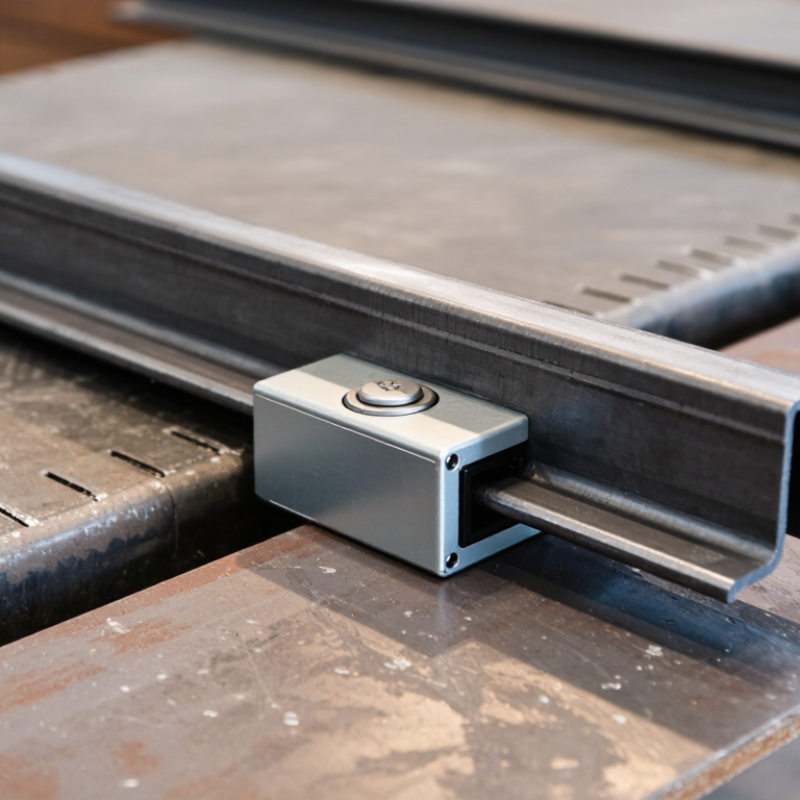
What a Shuttering Magnet Is and Where It Is Used
A shuttering magnet is a reusable magnetic fixing unit that holds steel side forms against a steel casting bed. Operators position the form, engage the magnet, and check that the profile sits flush before pouring concrete. Many units use a release lever to switch off the holding force after curing. No drilling is needed. Typical uses include precast wall panels, floor slabs, beams, stairs, and other concrete elements made in controlled factory settings.
Grand View Research estimated the global precast-concrete market at USD 139.2 billion in 2023. That figure describes the wider market, not shuttering-magnet sales, but it reflects the scale of factory-made concrete production. In practice, magnets help crews adjust form layouts quickly and avoid repeatedly fastening forms to the casting bed. Their performance still depends on clean, flat contact surfaces, correct magnet placement, and the formwork design. A magnet alone cannot compensate for a weak or poorly braced shutter.
Tips: Wipe away concrete residue and metal filings before each setup. Check the magnet’s rated holding force against the form design and expected pour conditions. Small details matter. Even a thin layer of debris can reduce contact, and vibration may expose a setup that looked secure. Rechecking the layout is worthwhile.
Main Components of a Shuttering Magnet
A shuttering magnet is built around a steel housing that holds a permanent magnet assembly. The housing protects the internal parts and provides a flat surface for contact with the steel formwork. Magnetic force passes through the contact face, helping hold the unit in position during concrete casting. Small details matter.
Many designs include a push-button or lever that shifts the magnet assembly to switch the holding force on or off. When released, the magnet grips the formwork; when actuated, its magnetic circuit changes, making removal easier. The exact mechanism varies between models, so operators should follow the manufacturer’s instructions rather than assume every release works alike. Some units also have threaded holes or replaceable adapters for attaching rails and other formwork elements. These fittings need to match the application and be firmly secured. Concrete residue, rust, or a small gap can reduce contact and weaken the hold. A magnet may appear sound while performing poorly. Regular inspection helps catch that mismatch before casting, though inspection alone cannot compensate for incorrect positioning or unsuitable equipment.
How a Shuttering Magnet Secures Formwork
A shuttering magnet secures formwork by clamping a steel side rail to a precast casting table. Inside the unit, a switchable magnetic circuit directs magnetic flux through its contact face. When switched on, the magnet holds the rail against the table, resisting movement as fresh concrete is placed. The result is a cleaner setup without drilling or welding. Small details matter: a slightly lifted corner or a smear of concrete can reduce contact and allow the rail to shift.
The magnet’s holding force is not the same as the formwork’s safe capacity. ACI 347R-14, Guide to Formwork for Concrete, explains that fresh-concrete pressure depends on factors such as placement rate, concrete temperature, and mixture properties. Crews should use project-specific pressure calculations and verify that the magnet, rail, and table can handle the expected load. A magnet can feel secure before it is fully seated. That is easy to overlook during a fast setup.
Tips: Clean the table and magnet face, then check that the unit sits flat. Test the rail by hand before pouring, and recheck alignment after the first concrete reaches the form.
What Is a Shuttering Magnet and How Does It Work? - How a Shuttering Magnet Secures Formwork | Aspect | How It Works | Practical Detail |
| Basic purpose | A shuttering magnet holds steel formwork in position on a steel casting bed during precast concrete production. | It provides a removable fixing method without relying on drilled holes or permanent welding to the bed. |
| Main components | A typical unit contains a magnetic assembly, a steel housing, a contact face and a mechanism for switching or releasing the magnetic force. | Designs vary; some systems use a lever or button, while others use a purpose-made release tool. |
| Magnetic circuit | When activated, the magnet directs magnetic flux through its contact face and the ferromagnetic steel bed, creating an attractive holding force. | The bed must be suitable magnetic steel; a non-magnetic surface will not provide the intended magnetic hold. |
| Setting the formwork | The operator positions the formwork and magnet on the casting bed, then activates the magnet so the unit clamps the formwork in place. | A flat, clean contact area helps the magnet seat properly. Concrete residue, debris or a gap can reduce effective holding force. |
| Holding during casting | The magnetic attraction resists movement of the shuttering while concrete is placed and consolidated. | The required number and placement of magnets depend on the formwork layout, concrete pressure and the system’s rated capacity. |
| Releasing the magnet | Operating the release mechanism changes the magnetic circuit or separates the magnet from the bed, reducing the holding force so the formwork can be moved. | Use the release method specified for the magnet design; do not assume all units operate in the same way. |
| Capacity and safe use | A rated holding force is established under specified test conditions and does not by itself describe every force acting on formwork during casting. | Follow the equipment documentation and site procedures, inspect magnets before use, and account for the actual formwork and casting conditions. |
Steps for Installing and Releasing the Magnet
Before installation, clean the steel casting bed and the magnet’s contact surface. Remove concrete crumbs, oil, and loose scale; even a thin layer can reduce grip. Check the housing and release mechanism for visible damage. Place the shuttering profile at its marked position, then set the magnet flat against the bed. Engage its lever or button according to the unit’s instructions. You should feel firm contact, not a tilted or rocking fit. Give the profile a careful hand check before pouring concrete.
Tips: Keep fingers clear of pinch points. Test the setup with a gentle pull, and confirm adjacent magnets are spaced as specified for the formwork. Don’t assume one magnet suits every panel. A quick check can prevent costly movement during casting.
After curing, clear loose concrete around the magnet and profile. Use the designated release lever or tool to disengage the magnetic force, then lift the unit without striking its casing. If it resists, stop and check for concrete buildup or an incompletely released mechanism. Prying hard against the bed may damage the magnet or surface. I’ve found that rushed removal is where small mistakes happen; a little patience helps. Wipe the contact face before storage, and keep the release tool with the magnet.
Factors That Affect Performance and Service Life
A shuttering magnet holds steel formwork against a casting bed through a magnetic base and a mechanical release. Its actual holding force depends on contact, not just the rating stamped on the unit. Dried cement paste, rust, paint, or a slightly warped plate creates an air gap and reduces magnetic coupling. Small gaps matter. Shear, vibration, and uneven loading can also shift a magnet, even when its vertical pull rating looks sufficient.
Service life depends on heat, moisture, impact, and cleaning habits. ACI 347R-14 bases form-pressure calculations on fresh-concrete properties and placement conditions; normal-weight concrete is roughly 2,400 kg/m³. That is a concrete-load reference, not a magnet-capacity figure. Faster placement or greater lift depth can increase pressure on the form system. ASTM A977/A977M tests permanent-magnet material properties, but a material test does not represent a magnet mounted on a real, dirty casting bed. Inspect the release button and spring for sticking, and remove slurry before it hardens. One routine check is easy to miss: compare the magnet’s seating face with the bed under side lighting. Pitting or a bent edge can leave a persistent gap. Ratings still need judgment. A field test under the actual panel and surface conditions is more useful than relying on a catalogue number alone.
Heat can reduce a shuttering magnet’s holding force and, above a material’s temperature limit, may cause irreversible loss of magnetization. The ranges shown are broad typical limits for magnet materials, not ratings for a complete shuttering-magnet assembly; the specific grade and manufacturer’s datasheet determine the actual limit. Air gaps, dirt, misalignment, corrosion, and impact can also affect performance and service life.

