

What Are the Top Agile Robotics Companies in China?
China’s robotics sector is moving beyond fixed industrial arms and simple automation cells. Agile robotics now connects mobility, sensing, machine learning, and safe physical interaction. This shift matters in factories, hospitals, warehouses, and research laboratories. It also makes company comparisons more difficult.
This guide examines leading Chinese companies developing agile robotics platforms and embodied intelligent machines. Names such as Unitree, UBTECH, Fourier Intelligence, and AgiBot often appear in industry discussions. However, visibility does not always equal technical leadership. A credible assessment should examine product maturity, control performance, manufacturing scale, software capability, safety design, and customer deployment. Demonstrations can look impressive. Reliable operation under dust, uneven floors, changing loads, or repeated impacts matters more.
Evidence remains uneven. Some companies publish detailed specifications, while others reveal limited field data. That limitation deserves attention. The analysis therefore considers public product information, technical demonstrations, partnerships, investment signals, and reported commercial use. It also distinguishes humanoid prototypes from robots already serving measurable workplace needs. Readers should treat the rankings as a practical starting point, not a permanent verdict. Markets change quickly. Hardware improves, funding cycles fluctuate, and ambitious claims sometimes exceed verified results. The strongest companies will need to prove more than movement. They must deliver dependable systems, clear maintenance plans, responsible data practices, and measurable value for customers. Performance in a controlled showroom is only one piece of the story. Real factories provide the harder test.
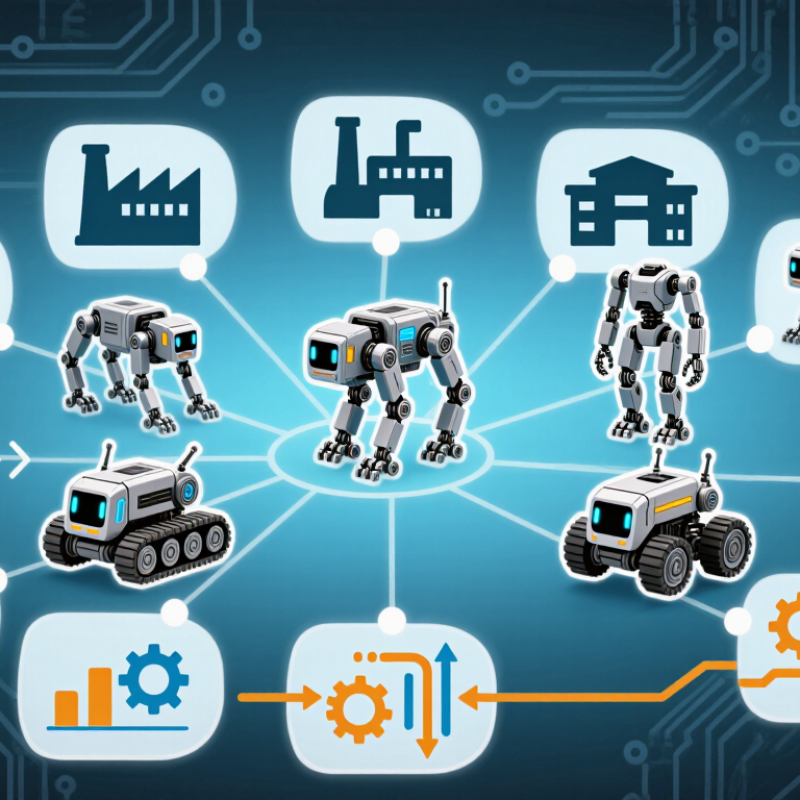
Definition and Role of Agile Robotics in China
Agile robotics in China refers to machines that sense changing environments, move safely, and adjust tasks without fixed programming. They may combine mobile platforms, robotic arms, machine vision, and force control. The boundary remains fuzzy. I would not call every mobile robot agile.
The role is expanding from repetitive factory work to mixed production, warehouse handling, inspection, and assisted care. According to the International Federation of Robotics’ World Robotics 2024 report, China installed 276,288 industrial robots in 2023, representing about 51% of global installations. Its manufacturing robot density reached 470 units per 10,000 employees. These figures show strong deployment capacity, but they do not automatically prove agility. A flexible machine must still recover from misplaced parts, changing lighting, and human movement.
For evaluating leading Chinese companies, buyers should examine real operating evidence rather than impressive demonstrations. Useful indicators include task-change time, grasping accuracy, recovery rates, safety incidents, and performance across different factories. The China Robot Industry Alliance has also highlighted growing demand for intelligent robots in manufacturing and service scenarios. Yet reliable field data remains uneven. Some trials work well for weeks, then struggle with dust, clutter, or unfamiliar objects. That weakness matters. Agile robotics will need stronger testing standards, better worker training, and clearer reporting before adoption becomes routine.
What Are the Top Agile Robotics Companies in China? - Definition and Role of Agile Robotics in China
| Anonymous Provider Category | Core Agile Robotics Capability | Typical Role in China | Representative Deployment Areas | Commercial Readiness | Relevant Public Market Evidence |
|---|---|---|---|---|---|
| Industrial Mobile-Manipulation Provider | Combines autonomous mobile platforms with robotic arms, machine vision, navigation, and task-level software. | Flexible automation for mixed production lines and material-handling processes that change more frequently than traditional fixed automation. | Automotive components, electronics, warehousing, machine tending, inspection, and intralogistics. | Pilot projects to repeatable factory deployments; integration quality and safety validation are key purchase factors. | China installed 276,288 industrial robots in 2023, accounting for about 51% of global installations, according to the International Federation of Robotics. |
| Collaborative Robot Provider | Produces force-sensitive robotic arms designed for human-robot collaboration, rapid redeployment, and relatively compact work cells. | Supports small-batch manufacturing, labor-intensive processes, and applications where operators and robots share workspaces under validated safety conditions. | Assembly, screwdriving, dispensing, packaging, quality inspection, polishing, and laboratory automation. | Commercially established, although end-of-arm tooling, programming, cycle time, and safety assessment vary by application. | China has been the world’s largest annual industrial-robot installation market since 2013, creating a large base for collaborative and flexible automation. |
| Autonomous Mobile Robot Provider | Uses simultaneous localization and mapping, fleet management, obstacle avoidance, and dynamic route planning. | Automates internal transport while allowing facilities to modify routes, storage layouts, and production schedules with less fixed infrastructure. | Distribution centers, factories, hospitals, airports, retail facilities, and commercial buildings. | High in structured indoor environments; performance depends on traffic management, mapping reliability, and warehouse-management integration. | China’s logistics and manufacturing scale provides a substantial domestic test bed for fleet-based automation and high-throughput material movement. |
| Humanoid and General-Purpose Robotics Provider | Develops bipedal or multi-purpose platforms intended to perform several tasks through perception, dexterous manipulation, and adaptive software. | Targets labor-intensive, ergonomically difficult, or highly variable tasks that are difficult to automate with single-purpose machinery. | Manufacturing assistance, intralogistics, inspection, education, research, and selected service environments. | Primarily emerging and demonstration-led; reliability, safety, energy use, dexterity, and total cost of ownership remain important barriers. | China’s national robotics strategy identifies intelligent robotics as a strategic technology area and supports development across components, machines, and applications. |
| Service and Commercial Robotics Provider | Applies autonomous navigation, computer vision, speech or touch interfaces, and cloud-connected fleet operations outside conventional factories. | Improves service consistency and reduces repetitive human work in public-facing or facility-management environments. | Cleaning, food delivery, hotel operations, healthcare support, security patrols, and public-facility services. | Commercially deployed in controlled environments; adoption depends on regulations, customer traffic, maintenance, and service reliability. | China’s large urban population, dense commercial infrastructure, and strong electronics supply chain support rapid testing of service-robot applications. |
| Robotics Software and Systems-Integration Provider | Provides robot operating software, digital twins, vision systems, simulation, fleet orchestration, data analytics, and production-line integration. | Connects robots with enterprise systems, manufacturing execution systems, warehouse systems, sensors, and safety infrastructure. | Smart factories, multi-robot cells, logistics networks, predictive maintenance, quality control, and production analytics. | Essential across deployment stages; project scalability depends on interoperability, cybersecurity, data quality, and engineering capability. | China’s industrial policy emphasizes intelligent manufacturing, digital transformation, and stronger domestic capabilities in core robotics components and software. |
| Key Evaluation Dimension | Flexibility, autonomy, safety, perception, manipulation, and ease of reprogramming. | Measures whether a solution can adapt to changing products, layouts, workflows, and labor conditions. | Best-fit sectors include manufacturing, logistics, healthcare, hospitality, retail, agriculture, and public services. | Compare deployment references, uptime, integration time, maintenance needs, training requirements, and total cost of ownership. | Agile robotics is defined by adaptable hardware and software rather than by a single robot shape or application category. |
Note: Company names and brand-specific performance data are intentionally omitted. Market references are based on publicly reported information from the International Federation of Robotics and China’s national intelligent-manufacturing and robotics policy framework.
Related Posts
-
Top Agile Robotics Manufacturers for Global Buyers
-
What Are China Best Robotics and Automation Suppliers?
-
2025 How to Implement Agile Robotics for Enhanced Automation Efficiency
-
How to Choose Robotics and Automation Suppliers?
-

The Future of Robotics Automation Transforming Industries with Data Driven Innovations
-
How to Implement Agile Robotics in Your Business?