Top 5 Coiling and Packing Machines You Need to Know?
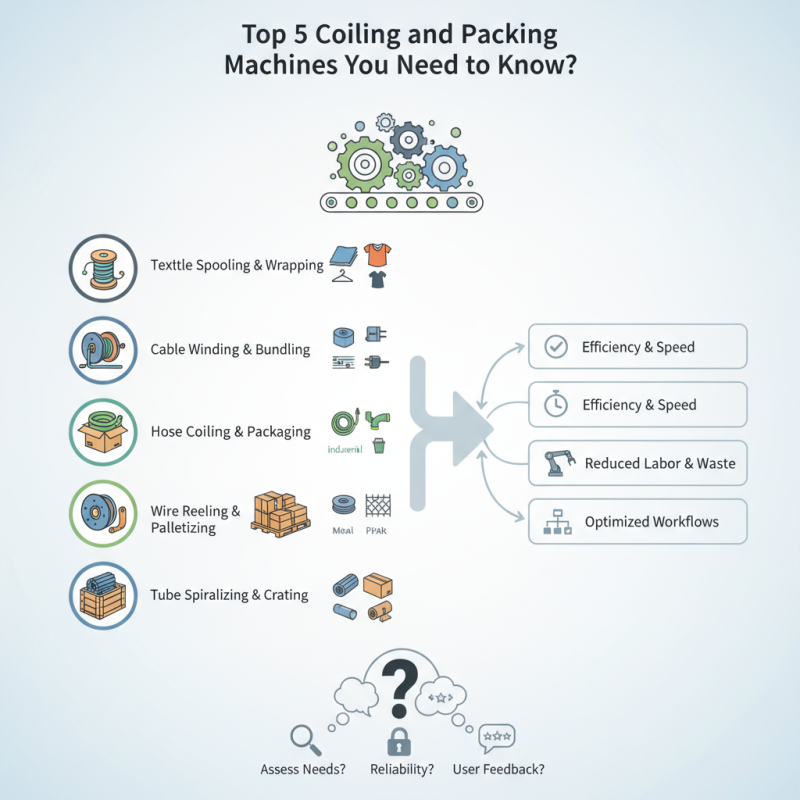
In today's fast-paced production environment, efficiency is key. Coiling and Packing Machines play a crucial role in optimizing workflows. These machines streamline processes for various industries, from textiles to cables. They help in neatly organizing products, reducing manual labor, and minimizing waste. When manufacturers seek productivity, coiling and packing machines often top their lists.
Understanding the top options available can be overwhelming. It is essential to assess the specific needs of your production line. Different coiling and packing machines offer unique features. Some are tailored for speed, while others focus on flexibility. Choosing the right machine can improve both speed and accuracy. However, not every machine suits every application.
As you explore the best machines, consider your needs carefully. Some machines might promise too much. Are they reliable? Will they meet your demands? It's vital to reflect on performance and user feedback before making a decision. Picking the wrong coiling and packing machine can lead to complications. Therefore, understanding your requirements is crucial.
Overview of Coiling and Packing Machines
Coiling and packing machines are essential in various industries. They streamline processes, reduce labor costs, and enhance efficiency. A recent industry report reveals that over 30% of manufacturing facilities are adopting automation for these tasks. This shift is driven by the need for speed and reliability.
These machines typically handle delicate materials like cables or films. They wrap products neatly, ensuring protection during storage and transportation. However, not all machines are created equal. Some may struggle with different material types, leading to waste. This reflects a gap in the industry's ability to adapt to diverse needs.
Maintaining these machines can be challenging. Regular checks are vital to avoid costly downtimes. Interestingly, around 25% of companies report operational issues due to neglect. This highlights the importance of proper training for staff. Investing in employee education can prevent such hurdles and enhance overall productivity.
Top 5 Coiling and Packing Machines You Need to Know
| Machine Model | Type | Max Coil Diameter (mm) | Packing Speed (units/min) | Weight (kg) |
| C-Pack 2000 | Automatic | 300 | 25 | 150 |
| WinderPro 500 | Semi-Automatic | 250 | 15 | 120 |
| WrapMaster 1000 | Automatic | 400 | 30 | 200 |
| CoilPack 300 | Manual | 220 | 10 | 90 |
| WrapTight 800 | Automatic | 350 | 20 | 175 |
Key Features to Consider in Coiling and Packing Machines
Coiling and packing machines are essential for many industries. When choosing a machine, certain features are crucial. Look for machines with versatility. They should adapt to various materials and sizes easily. This flexibility can save time and increase efficiency.
Speed is also a key factor. Machines should operate swiftly to keep up with production demands. However, be cautious. Sometimes, faster machines can compromise quality. It's important to find a balance that suits your needs.
Another notable feature is ease of operation. User-friendly controls make a significant difference. Staff training can be minimized with intuitive designs. This leads to fewer errors and maintenance issues down the line.
Tips: Always consider the machine’s energy efficiency. A machine that uses less power saves costs in the long run. Keep maintenance in mind as well. Regular upkeep ensures longevity and consistent performance. Reflecting on these aspects can lead to better investment decisions.
Top 5 Coiling Machines: Performance and Efficiency
Coiling machines are vital in many industries. Their performance and efficiency can significantly impact productivity. According to a recent industry report, optimizing coiling processes can increase throughput by up to 30%. A well-designed machine minimizes downtime and reduces waste, two crucial factors in competitive environments.
Many companies struggle to balance speed and precision. While faster machines seem appealing, they may compromise quality. Some reports indicate that poorly calibrated machines can lead to rejection rates as high as 15%. It’s essential to consider both aspects. The right machine can improve the overall efficiency of operations.
Flexibility is also a key factor. A machine that can handle various materials and sizes can be a game changer. Research suggests that adaptable coiling machines can reduce setup times by 25%. However, many users still find it challenging to integrate such systems seamlessly. There’s a need for improvement in training and support to maximize these machines' potential.
Leading Packing Machines: Enhancing Packaging Quality
In the fast-paced world of production, packing machines play a critical role. They enhance packaging quality significantly. This leads to better protection and preservation of products during transportation. These machines can reduce human error, which is a common issue in manual packing. However, not all machines perform equally. Selecting the right one can be challenging for many.
Advanced technology in packing machines often comes with a higher cost. This can be a major concern for small businesses. Investing in these machines may lead to significant savings over time. For example, a packing machine that minimizes material waste can boost overall efficiency. On the flip side, relying solely on machines may overlook creative packaging design.
The truth is, some machines miss the mark when it comes to flexibility. Different products require different packing methods. A machine failing to adapt can hinder productivity. Finding the perfect balance between automation and human touch is essential. It's a dynamic field that demands constant reflection and adjustment. Embracing innovation while evaluating its limitations can lead to sustainable growth.
Top 5 Coiling and Packing Machines
Comparative Analysis of the Best Coiling and Packing Machines
Coiling and packing machines play a crucial role in various industries. They enhance efficiency by streamlining the packaging process. A well-designed machine can save time and reduce labor costs. Features like speed, precision, and ease of use are vital when selecting these machines. Additionally, the size and weight of the products being coiled influence the machine choice.
Some machines are versatile and handle different materials. However, not all models are equally effective with every type of product. Users may find frustration when a machine is not compatible with specific packaging needs. This can lead to wasted time and resources. A comparative analysis of various options is essential for making an informed decision.
Quality machine performance depends on maintenance and operator skill. Machines that malfunction can slow production. Regular upkeep can mitigate this issue. Potential buyers should consider user reviews and industry recommendations. They may help in identifying the best solutions for unique packaging challenges. Simplifying choices can sometimes overlook factors that impact long-term satisfaction.