
China Top Confocal Raman Spectroscopy Suppliers?
Choosing among China’s top Confocal Raman Spectroscopy suppliers requires more than comparing prices or laser wavelengths. Buyers should examine optical resolution, spectral stability, mapping speed, software usability, and after-sales support. A microscope may look impressive on a showroom table. Its real value appears during repeated measurements on uneven films, dark powders, or delicate biological samples.
Industry reports show sustained demand for Raman technologies. Grand View Research estimated the global Raman spectroscopy market at approximately USD 1.03 billion in 2023. It also projected continued growth through 2030. MarketsandMarkets published a different forecast, reflecting varied market definitions and research methods. These estimates include portable, macro, micro, and confocal systems. Therefore, they should guide research, not replace technical verification.
As Raman spectroscopy pioneer C. V. Raman observed, “The colour of the sea is blue because of the scattering of light.” His statement reflects the physical foundation behind modern chemical identification. Today, Confocal Raman Spectroscopy adds spatial filtering and depth selectivity to that principle. Leading Chinese suppliers increasingly offer automated stages, multiple laser options, three-dimensional imaging, and application-specific accessories. Some provide stronger local service than international brands. Others may have limited independent validation or fewer long-term installations.
This guide compares suppliers through measurable evidence, including published specifications, laboratory demonstrations, user feedback, certifications, and response times. No single ranking is perfect. A lower-cost system can become expensive when calibration, training, or replacement parts are delayed. Buyers should request raw spectra and test samples before making a final decision.
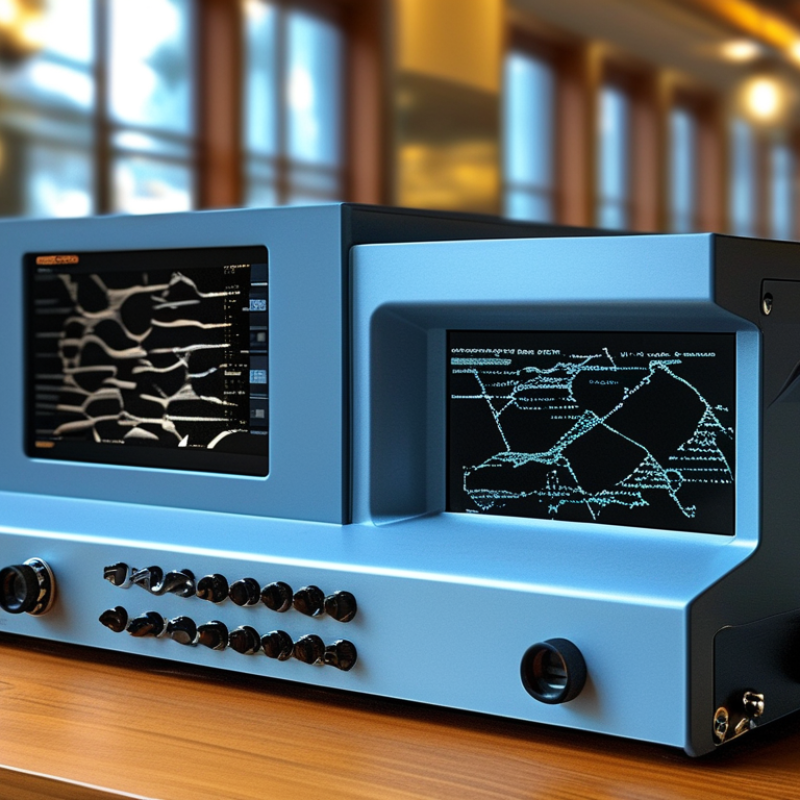
What Is Confocal Raman Spectroscopy?
Confocal Raman spectroscopy is a non-destructive method for studying materials through scattered laser light. A laser illuminates a tiny point on the sample surface. Most light returns unchanged, but a small portion shifts in wavelength. These shifts reveal molecular vibrations and chemical composition.
A confocal optical system rejects light from outside the focal plane. This creates sharper images and improves depth information. In practical testing, users can examine particles, coatings, crystals, and biological sections. A Raman microscope may map a sample point by point, producing a chemical image with visible boundaries. The method often works without cutting or staining the sample. However, dark materials can absorb the laser and produce heat. Fluorescence may also hide weak Raman signals. Real laboratory results are not always as clean as product demonstrations suggest.
Tips: Choose the laser wavelength carefully. Lower power can protect sensitive samples. Check calibration with a known reference material before testing. Ask suppliers in China about spectral resolution, mapping speed, detector cooling, and local technical support. Request raw data from comparable samples, not only polished images. A useful system should match your material, sample size, and daily workflow. My own preference is simple operation, because complicated software can quietly reduce measurement consistency. Always verify performance with your specimens before making a purchase.
How Confocal Raman Spectroscopy Works
Confocal Raman spectroscopy combines chemical identification with precise spatial control. A laser is focused onto a small area of the sample. Most light scatters without changing its energy. A tiny portion shifts in wavelength after interacting with molecular vibrations. This shift forms a Raman spectrum, like a chemical fingerprint.
The confocal system adds a pinhole before the detector. Light from the focal plane passes through it, while out-of-focus light is reduced. The result is sharper imaging and better depth discrimination. By moving the focus through a transparent layer, an operator can build a depth profile. By scanning across a surface, the system can create a chemical map. The process sounds simple, but alignment matters greatly.
In practical laboratory work, clean optics and stable calibration are essential. A glass reference standard can check whether peak positions remain accurate. Fluorescence may hide weak Raman signals, especially in colored or organic samples. Laser power also requires care because local heating can alter delicate materials.
Suppliers in China should provide clear specifications, application support, and measurable calibration data. Low price alone cannot prove performance. I would also question impressive resolution claims without test conditions. That doubt is useful. Confocal Raman spectroscopy is powerful, yet the final result still depends on focusing, sample preparation, operator judgment, and honest measurement limits.
Key Applications of Confocal Raman Systems in China
China Top Confocal Raman Spectroscopy Suppliers?
Confocal Raman systems are increasingly useful in China’s battery, semiconductor, pharmaceutical, and advanced materials sectors. The IEA’s Global EV Outlook 2024 reports that China represented over 60% of global electric car sales in 2023. This scale creates strong demand for mapping electrode materials, identifying solid-state phases, and checking coating uniformity across battery cells. A confocal Raman microscope can examine particles only a few micrometres wide, often without cutting the sample.
The sample decides. In semiconductor research, Raman mapping helps evaluate silicon stress, thin-film thickness, crystal quality, and heat distribution. For polymers and photovoltaic materials, depth-resolved scans reveal additives, degradation, and layer defects. China’s National Bureau of Statistics reported R&D expenditure of approximately RMB 3.33 trillion in 2023, equal to 2.64% of GDP. This investment supports wider use in universities, pilot lines, and industrial laboratories, where repeatable measurements matter more than impressive images.
Pharmaceutical teams also use confocal Raman analysis to distinguish ingredients, inspect tablets, and study crystallinity without extensive preparation. However, fluorescence can overwhelm weak Raman signals, especially in biological or colored samples. Better software cannot always solve poor optical alignment. I would not treat every sharp spectrum as proof of a reliable result. Supplier evaluation should include wavelength options, confocal performance, calibration stability, spectral libraries, service response, and operator training. These practical details often determine whether a system becomes a daily tool or an expensive instrument cabinet.
Leading China-Based Confocal Raman Spectroscopy Suppliers
China-based confocal Raman spectroscopy suppliers are attracting laboratories that need flexible analysis without excessive equipment costs. Leading suppliers typically provide systems for pharmaceuticals, materials research, semiconductors, geology, and quality control. Their instruments may support several laser wavelengths, microscopic imaging, automated mapping, and non-destructive sample testing.
Practical evaluation should go beyond a bright demonstration sample. Ask suppliers for calibration records, spectral resolution data, detector specifications, and test results from materials similar to yours. A reliable technical team should explain fluorescence problems, laser safety, sample heating, and baseline correction clearly. Installation training also matters. Small details matter.
Service quality can separate a capable supplier from an ordinary one. Confirm response times, spare-parts availability, software updates, warranty terms, and remote support arrangements. Request a live demonstration using a difficult sample, not only a clean standard. In my view, the best China-based suppliers combine optical engineering with application support and careful documentation. Still, no system solves every measurement problem. Some promises may sound impressive but remain vague under real laboratory conditions. Independent verification is worth the extra effort.
How to Evaluate and Select a Chinese Supplier
China Top Confocal Raman Spectroscopy Suppliers?
How to Evaluate and Select a Chinese Supplier
Selecting a Chinese supplier requires more than comparing prices and polished product images. Ask for detailed specifications, including spectral range, laser wavelength, resolution, detector type, mapping accuracy, and maximum sample size. The figures should match your application, not merely appear impressive.
Request a live demonstration using a sample similar to yours. Observe the baseline stability, fluorescence handling, focusing process, and software workflow. A reliable supplier should explain calibration procedures and provide traceable test records. Check factory quality controls, inspection reports, user references, installation support, and response times. Certificates are useful, but they do not replace technical evidence. Speak with the engineers who will support your system.
I have found that small details often reveal operational strength. Can the supplier explain a weak Raman peak without guessing? Can they deliver replacement parts with clear lead times? Ask about training, warranty exclusions, data export, and cybersecurity controls. A site visit can help verify assembly areas and testing equipment, although one visit cannot prove long-term consistency. That limitation matters. A perfect demonstration may hide difficult samples, so request raw spectra and repeatability results from several runs. Keep written requirements and acceptance criteria before signing. Price should remain important, but unstable performance can cost more than the initial saving.