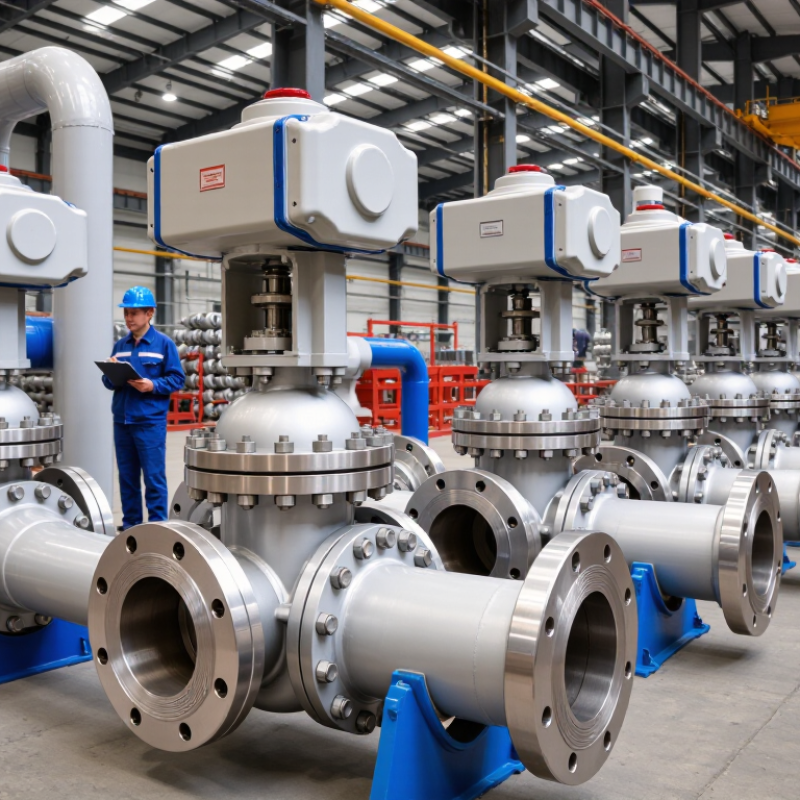
China Top Electric Gate Valve Manufacturers Suppliers?

China has become a major manufacturing base for industrial valves, including Electric Gate Valve systems used in water treatment, power generation, oil and gas, and chemical processing. The opportunity is substantial. Fortune Business Insights reported that the global industrial valves market reached approximately USD 77 billion in 2023, with continued growth expected through 2032. Automation, aging pipelines, and stricter process control requirements are supporting this demand.

The details matter. A dependable Chinese supplier should demonstrate production experience, material traceability, pressure-testing records, and actuator compatibility. Relevant references may include API 600, API 6D, ASME B16.34, ISO 5210, and IEC 60529, depending on the application. Buyers should also review body materials, sealing design, torque calculations, enclosure protection, and emergency operating procedures. A polished website is not enough.

Reports from Grand View Research and MarketsandMarkets also identify automation and infrastructure investment as important drivers in the industrial valve sector. However, market reports cannot replace factory verification. No ranking is perfect. Supplier quality may vary between production batches, and published specifications sometimes require closer review. Factory audits, sample testing, customer references, and independent inspection can reduce that uncertainty. This guide examines leading China Electric Gate Valve manufacturers and suppliers through practical criteria, including engineering capability, certifications, customization, export experience, delivery performance, and after-sales support. The strongest supplier is not always the largest. It is the one that can provide consistent documentation, stable operation, and measurable technical accountability in the field.

China Top Electric Gate Valve Manufacturers Suppliers?

What Are Electric Gate Valves and How Do They Work?

Electric gate valves control liquid or gas flow through a motor-driven wedge or slab. Unlike manual valves, they respond to electrical signals from a control panel, remote station, or process automation system. When the motor receives an opening command, it rotates a stem through a gearbox. The stem lifts the gate from the passage. Flow begins with limited resistance. A closing signal reverses the movement and seats the gate tightly.

These valves work best in pipelines that need full flow or complete shutoff. They are common in water treatment, power facilities, chemical processing, and industrial utility systems. They are not ideal for constant throttling. Partial opening can damage the gate and create unstable flow. Limit switches stop the motor at fully open and closed positions. Torque protection can prevent damage when debris blocks the gate. A reliable installation also needs correct voltage, enclosure protection, and compatible sealing materials.

Selection requires more than checking pipe size. Engineers should review pressure, temperature, fluid composition, operating frequency, and available control signals. A valve supplier should provide pressure ratings, wiring diagrams, test records, and maintenance guidance. Field experience shows that alignment errors often cause premature leakage. Even a well-built valve can perform poorly when the actuator is oversized or poorly calibrated. I would also verify emergency operation requirements before ordering. Small details matter. Regular inspection should include bolts, limit switches, stem condition, and unusual motor noise. Mistakes still happen, especially when site conditions differ from the original design.

Why Choose Electric Gate Valve Manufacturers in China?

Choosing electric gate valve manufacturers in China can offer practical advantages beyond lower purchase prices. Many factories combine casting, machining, actuator assembly, and testing within one production system. This structure can simplify communication when a valve needs a modified flange, voltage, or sealing material. Experienced exporters also understand project documents, including drawings, inspection records, and packing lists. That matters when equipment moves between countries.

A capable manufacturer should show measurable process control, not just polished catalogs. Ask for material certificates, pressure-test results, torque records, and actuator protection ratings. On a serious production line, technicians inspect stem alignment and closing travel before shipment. Traceable batch numbers can connect a finished valve to its raw material and test data. Factory audits, sample testing, and clear warranty terms provide useful protection for buyers. These details support reliable decisions.

Cost remains relevant, but it should not control every choice. A cheaper valve may create delays through poor wiring instructions or inconsistent limit-switch settings. I have seen specifications look complete while a small temperature detail remained unclear. That is where careful technical questions prevent expensive corrections. Chinese manufacturers can become strong partners when they welcome inspection and document limitations honestly. No supplier is perfect. The better ones respond quickly, correct defects, and improve the next production batch.

Why Choose Electric Gate Valve Manufacturers in China?

China accounted for approximately 31.6% of global manufacturing value added in 2022, significantly more than other major manufacturing economies. This industrial scale supports broad component availability, mature metalworking capabilities, extensive supplier networks, and competitive production capacity for electric gate valve projects.

Source: UNIDO industrial statistics, 2022; figures are rounded estimates and do not represent individual companies or brands.

How to Evaluate China’s Leading Valve Manufacturers and Suppliers?

How to Evaluate China’s Leading Valve Manufacturers and Suppliers?

China’s electric gate valve sector serves power, water, chemical, and process industries. Grand View Research valued the global industrial valves market at about USD 78.7 billion in 2023. This scale creates opportunity, but also makes supplier screening essential. A polished website is not proof.

Start with engineering evidence. Ask for material certificates, pressure-test records, torque calculations, and serial-number traceability. Confirm compliance with API 600, ASME B16.34, ISO 5210, and relevant electrical safety requirements. The actuator should provide enough closing torque without damaging the stem or seat. Request IP ratings, insulation data, wiring diagrams, and emergency operating procedures. Data matters.

Factory capability deserves direct attention. Check machining equipment, calibration records, welding controls, and final inspection areas. Review sample valves under realistic pressure and temperature conditions. A supplier that shares failure analysis may be more reliable than one offering the lowest quotation. Delivery history, spare-part availability, warranty terms, and technical response time should enter the comparison. The checklist is never perfect. I would still leave room for uncertainty, because testing one model cannot prove every future batch. According to ISO 9001 quality principles, documented processes and corrective actions matter more than attractive promises. Compare total ownership cost, not purchase price alone.

Which Industries Use Electric Gate Valves?

Electric gate valves serve industries that need reliable, remote isolation of pipelines. Water treatment plants use them on raw-water lines, filtration systems, and treated-water outlets. Operators can close a valve from a control room when a pump trips or a pipeline requires maintenance. Clear position feedback also reduces uncertainty during inspections.

Power stations use electric gate valves around boiler feedwater, cooling-water, and ash-handling systems. These valves support large pipes where manual operation would be slow or unsafe. In chemical processing facilities, they isolate storage tanks and transfer lines. However, material selection matters because corrosive fluids can damage the body, stem, or sealing surfaces. A suitable actuator also needs protection from heat, dust, and moisture.

Mining sites and municipal wastewater plants often install them in harsh, dirty environments. Electric operation helps control buried or elevated pipelines with limited access. Field maintenance teams should check travel limits, torque settings, wiring, and emergency operation regularly. A valve that closes correctly during commissioning may behave differently after months of vibration. That detail is easy to miss. Electric gate valves are usually designed for fully open or fully closed service, not continuous flow control. Using one for throttling can accelerate seat wear and create unstable flow. Careful sizing, documented testing, and realistic maintenance planning make the installation more dependable.

How to Select the Right Chinese Supplier for Your Project?

Choosing the right Chinese electric gate valve supplier requires more than comparing prices. MarketsandMarkets estimates the global industrial valves market could grow from about USD 78 billion in 2023 to nearly USD 98 billion by 2028. This growth attracts capable factories, but also inexperienced traders. Confirm whether the company manufactures valves or only resells them.

Start with the operating details. Provide pressure class, valve size, media, temperature, voltage, enclosure rating, and required materials. Ask for drawings, actuator torque calculations, hydrostatic test records, and leakage results. A suitable supplier should explain standards such as API 600, API 598, IEC 60529, or the relevant national specifications. ISO’s 2023 Survey records more than one million ISO 9001 certificates worldwide. Certification helps, but it does not replace product inspection.

Request a live factory audit, production photos, and references from similar applications. Check machining capacity, casting traceability, assembly controls, and spare-parts availability. Test one sample under realistic conditions before approving a bulk order. Confirm lead time in writing, including actuator programming and export packaging. A low quotation may hide weak documentation or inconsistent components. That shortcut is tempting, but it is too simplistic. I would also verify payment terms, warranty response time, and technical support across time zones. No checklist is perfect; project risks should be reviewed again after the first sample test.

China Top Electric Gate Valve Manufacturers Suppliers? - How to Select the Right Chinese Supplier for Your Project?

Selection Dimension Typical Options or Requirements Common Project Applications What the Supplier Should Confirm Recommended Priority
Valve Type Resilient-seated gate valve, metal-seated gate valve, wedge gate valve, parallel-slide gate valve, or slab gate valve. Water distribution, industrial utilities, power generation, oil and gas, chemical processing, and pipeline isolation. Provide the construction drawing, flow direction, seat design, bonnet type, stem design, and maintenance requirements. High
Nominal Size Common project sizes include DN50 to DN1200, with larger sizes available for specific applications. Small process lines, municipal water networks, cooling-water systems, and transmission pipelines. Confirm DN or NPS size, face-to-face dimension, flange drilling, lifting weight, and transportation limitations. High
Pressure Rating Typical ratings include PN10, PN16, PN25, PN40 and ASME Class 150 or Class 300. Low-pressure water service, general industrial service, steam systems, and hydrocarbon pipelines. Match the rating to the applicable standard and verify pressure-temperature limits rather than relying only on the nominal rating. High
Body Material Ductile iron, carbon steel, stainless steel, or cast alloy steel. Common material designations include EN-GJS-400-15, ASTM A216 WCB, and ASTM A351 CF8M. Ductile iron for water service; carbon steel for general industrial service; stainless steel for corrosive or hygienic environments. Submit material certificates, chemical composition, mechanical properties, casting or forging details, and corrosion allowance where applicable. High
Trim and Seat Material Stainless-steel trim, hard-faced metal seats, EPDM, NBR, PTFE, or other project-approved sealing materials. Water, air, oil, gas, steam, abrasive media, and chemically aggressive fluids. Confirm compatibility with fluid temperature, pressure, concentration, solids content, and required shut-off performance. High
Operating Temperature Typical service ranges vary from approximately -29°C to 200°C or higher, depending on body, seat, packing, and actuator materials. Ambient water service, chilled water, hot water, steam, and process applications. Provide pressure-temperature tables and identify the limiting component, including elastomers, packing, lubricant, and actuator enclosure. High
Electric Actuator Output Selected according to valve breakaway torque, running torque, seating torque, stem thrust, safety factor, and operating frequency. Remote isolation, automated water treatment, power plants, process plants, and pipeline control systems. Submit torque or thrust calculations, actuator sizing sheets, duty classification, travel time, manual override details, and mounting interface. High
Power Supply Common configurations include 24 VDC, 110 VAC, 220 VAC, and 380/400 VAC, subject to the project electrical design. Building services, municipal systems, industrial plants, and high-power valve applications. Confirm voltage, frequency, starting current, phase configuration, cable entries, grounding, and control-circuit requirements. High
Control and Feedback Open/close control, local control station, position indication, limit switches, torque switches, analog position feedback, or fieldbus communication. Basic remote isolation through to fully integrated process automation systems. Confirm control logic, fail position, interlocks, feedback signals, communication protocol, and compatibility with the plant control system. High
Enclosure Protection Common requirements include IP65, IP66, or IP68, depending on installation conditions and actuator design. Indoor plants, outdoor installations, wastewater facilities, coastal sites, and flood-prone locations. Request enclosure test evidence and verify resistance to dust, water jets, temporary immersion, humidity, and site-specific corrosion. High
Applicable Standards Potential standards include API 600, API 6D, ASME B16.34, EN 1074, EN 1171, ISO 5210, ISO 5211, and relevant Chinese GB/T standards. Industrial, pipeline, municipal, waterworks, and international EPC projects. Specify the exact edition and scope of each standard; confirm that the valve, actuator, flange, testing, and documentation comply as a complete package. High
Pressure Testing Hydrostatic shell testing and seat testing are normally required; test pressure and hold time depend on the governing standard and pressure class. All safety-critical isolation and process applications. Request test procedures, calibrated gauge records, test certificates, leakage acceptance criteria, and inspection records. High
Quality Documentation Material certificates, dimensional reports, pressure-test reports, coating records, actuator test reports, inspection plans, and certificates of conformity. Projects requiring traceability, third-party inspection, or regulated procurement. Agree on the documentation index before production and define whether documents must be supplied in English and digitally or in hard copy. High
Factory Inspection In-process inspection, final visual inspection, dimensional inspection, functional testing, and optional witness inspection by the purchaser or an independent agency. Large-diameter valves, critical services, public infrastructure, and EPC contracts. Confirm inspection notification time, inspection hold points, sampling requirements, nonconformance handling, and final release procedure. Medium
Coating and Corrosion Protection Epoxy coating, fusion-bonded epoxy, painted carbon steel, stainless-steel surfaces, or project-specified protective systems. Buried pipelines, marine environments, wastewater treatment, and outdoor industrial installations. Specify surface preparation, coating thickness, holiday testing, adhesion testing, color, repair method, and environmental exposure category. Medium
Lead Time Production time depends on size, material, actuator configuration, testing, customization, and order quantity; standard items are generally faster than engineered packages. Planned maintenance, new construction, emergency replacement, and phased projects. Request a manufacturing schedule with drawing approval, raw-material procurement, machining, assembly, testing, inspection, packing, and dispatch milestones. Medium
Export Packaging Moisture protection, flange covers, rust prevention, shock-resistant packing, wooden cases, and container-loading plans. Sea freight, long-distance transport, humid climates, and project cargo shipments. Confirm packing dimensions, gross weight, lifting points, spare-parts packaging, preservation period, and marking requirements. Medium
After-Sales Support Installation instructions, commissioning guidance, spare-parts lists, troubleshooting support, warranty terms, and technical response time. Remote sites, continuous-process plants, and projects with strict maintenance requirements. Define warranty coverage, exclusions, spare-parts availability, service contact channels, and procedures for actuator or valve failure. Medium
Supplier Verification Business registration, manufacturing capability, quality-management certification, production equipment, inspection facilities, and relevant project references. All procurement categories, especially safety-critical or high-value projects. Verify certificates directly, conduct a remote or on-site audit, review nonconformance history, and compare actual factory capability with submitted documents. High
Commercial Evaluation Total cost should include valve, actuator, control accessories, testing, documentation, packaging, freight, spare parts, and lifecycle maintenance. Competitive bidding, EPC procurement, framework purchasing, and long-term replacement programs. Compare technically equivalent offers using the same specification, delivery term, inspection scope, warranty, payment terms, and spare-parts requirements. High
Important: The values above are commonly used selection benchmarks and should not be treated as a specific supplier’s guaranteed product range. Final requirements must be confirmed against the project specification, applicable standards, fluid data, pressure-temperature conditions, and approved technical drawings.

Article Source:

Scroll to Top