Top 10 Food Packaging Inspection Companies for Global Buyers

For global buyers, Food Packaging Inspection is more than a final check at the end of a production line. It can help reveal weak seals, unreadable date codes, incorrect fill weights, and damaged packs before products leave the facility. Frank Yiannas, a food-safety expert and former FDA Deputy Commissioner, has put the wider principle simply: “Food safety is a shared responsibility.” Inspection supports that responsibility, but it cannot replace sound processes or trained staff.

The companies in this guide are assessed through practical buyer considerations: inspection technologies, service coverage, integration support, and experience with different packaging formats. A camera may catch a blurred label; an X-ray system may detect certain foreign objects; a checkweigher can flag inconsistent portions. Each tool has limits. Buyers should ask about test procedures, calibration, reporting, and how equipment performs at their actual line speed. Not every line is alike.

The right provider depends on the product, packaging material, factory conditions, and destination markets. A supplier with a broad global network may suit one buyer, while another may value responsive local service more. Details matter. This shortlist is a starting point, not a universal ranking: company capabilities and regional support can change. Use it to frame questions, then verify claims against your own samples, operating conditions, and quality requirements.
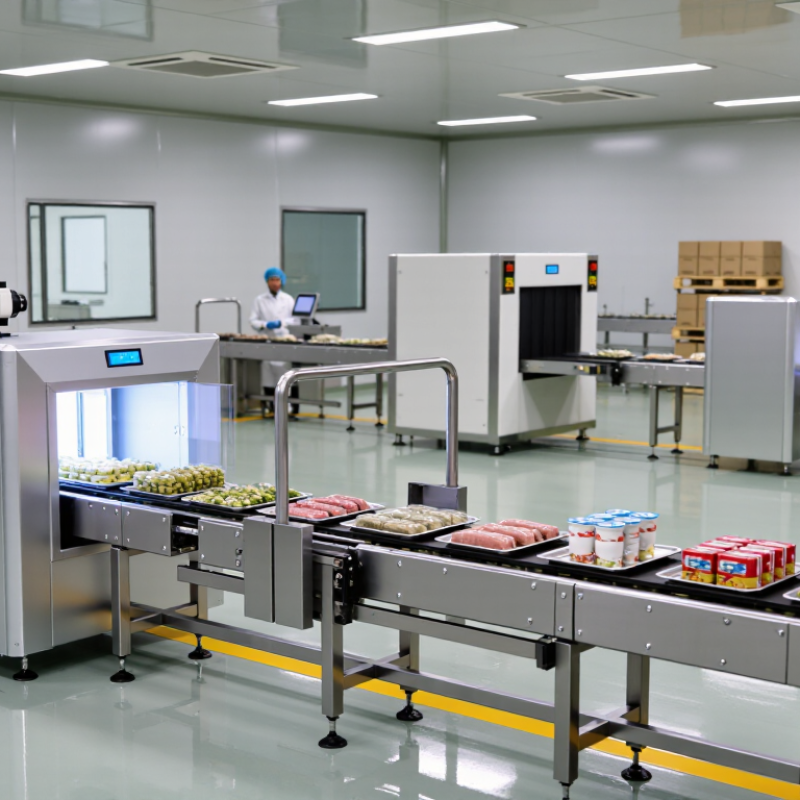
Top 10 Food Packaging Inspection Companies for Global Buyers

What Food Packaging Inspection Companies Do and Why Global Buyers Need Them

Food packaging inspection companies help buyers verify that a package protects food, matches its specification, and arrives ready for sale. Their work may include checking seal strength, leak resistance, label placement, print readability, package dimensions, and visible damage. On a production line, inspectors can examine sample packs or use automated systems to flag defects such as a crooked label or an incomplete seal. The details matter. A small seal channel can let air or moisture in.

The stakes extend beyond appearance. The FAO’s 2023 report, The State of Food and Agriculture, estimates that 13.2% of food is lost between harvest and retail. Packaging is only one factor, but weak packs and poor handling can contribute to avoidable losses. The World Health Organization estimates that unsafe food causes 600 million illnesses and 420,000 deaths each year. Inspection cannot prevent every food-safety problem; it can help identify packaging faults before products move farther through the supply chain.

For global buyers, independent inspection can provide clearer evidence across factories, suppliers, and shipments. A useful report records the inspection method, sample size, defect types, and photographs—not just a pass or fail. Buyers should also check whether the inspection matches the product’s risks and packaging materials. A checklist helps, but it is not a substitute for sound judgment. Some defects are easy to measure; others need careful review.

Key Criteria for Evaluating Food Packaging Inspection Companies

When evaluating food packaging inspection companies, global buyers should examine evidence, not polished promises. The UNEP Food Waste Index Report 2024 estimates that 1.05 billion tonnes of food were wasted in 2022. Packaging defects can worsen this loss through leaks, weak seals, or unclear date coding. Ask for defect samples, detection limits, and false-rejection data.

Technical competence matters. Confirm whether inspectors use calibrated vision systems, seal-strength testing, metal detection, and oxygen analysis. Their laboratories should follow ISO/IEC 17025 principles, with traceable equipment records and repeatable test methods. The FAO reports that 13.2% of food is lost after harvest and before retail. This makes practical inspection experience essential, especially for temperature-sensitive goods and flexible films. Require inspectors to explain sampling frequency, batch release rules, and corrective-action timing.

Traceability should be visible in every report. A reliable provider records the lot number, production time, sample location, test method, operator, and image evidence. Audit reports should distinguish critical, major, and minor defects. Look for documented training and independent verification. No checklist is perfect. Even experienced teams may miss defects when lighting, film color, or line speed changes. Buyers should therefore request a controlled trial before signing a long contract. Performance should be measured again after installation, not accepted once.

Top 10 Food Packaging Inspection Companies for International Buyers

For international buyers, the top 10 food packaging inspection companies should offer more than a standard visual check. They need practical experience with cartons, flexible films, glass jars, cans, and molded containers. Reliable inspectors examine seal strength, print clarity, dimensions, odor, moisture resistance, and food-contact surfaces. Small defects can become expensive problems during long ocean shipments.

A qualified inspection company should use documented sampling plans and calibrated equipment. Its reports should include photographs, batch numbers, factory details, test methods, and clear pass-or-fail results. International buyers should also check whether the company understands destination-market packaging rules, labeling controls, migration testing, and storage conditions. Ask how inspectors protect samples from contamination. Ask who reviews unusual findings. These details matter.

Clear evidence builds trust. Strong providers maintain auditor training records, laboratory partnerships, and traceable chains of custody. They should explain limitations instead of promising perfect certainty. That is important. Packaging performance can change with temperature, humidity, transport vibration, or supplier adjustments. In my experience, a rushed inspection may miss weak seals hidden inside a clean-looking carton. Buyers should compare response times, technical depth, report quality, and corrective-action support across all ten candidates. Price alone is a poor filter. A cheaper report can cost more after rejected shipments, damaged goods, or repeated production. One weakness remains: even careful inspections represent a sample, not every package. Regular testing and supplier communication are still necessary.

Services, Technologies, and Industries Covered by Each Company

Food packaging inspection providers differ less by headline claims than by the defects they can reliably detect.

Across ten supplier profiles, common services include line audits, equipment integration, validation support, and operator training. Technologies range from metal detection and X-ray imaging to checkweighing, vision inspection, and seal testing.

A chilled-meal line may need to catch a missing tray, a weak seal, and a metal fragment at different points. One system rarely solves every problem.

Coverage also varies by product and production environment.

Fresh produce operations often prioritize foreign-material detection and package integrity; dairy and ready-meal plants may add fill-level, label, and closure checks.

Bakery lines need inspection that handles high speeds and irregular shapes.

FAO reported that 13.2% of food was lost after harvest and before retail in 2021, a reminder that damage and process variation matter beyond the inspection station.

The WHO estimates that contaminated food causes about 600 million illnesses each year.

These figures describe broader food-system challenges, not the impact of inspection equipment alone.

Buyers should compare detection limits using their actual product, packaging, line speed, and cleaning routine.

Ask for documented test conditions and follow-up service details.

Small details matter.

A glossy pouch or dense product can complicate imaging, while frequent format changes can slow checks.

Provider claims still need verification on the production floor.

How Global Buyers Can Select the Right Inspection Partner

How Global Buyers Can Select the Right Inspection Partner

Food packaging inspections protect more than appearance. They help control contamination, seal failures, migration risks, and traceability gaps. The World Health Organization estimates that 600 million people become ill from contaminated food each year, with 420,000 deaths worldwide. This makes inspection quality a supply-chain decision, not a purchasing formality.

Global buyers should check whether an inspection company follows ISO/IEC 17020 for inspection bodies and uses ISO/IEC 17025-accredited laboratories when testing materials. Ask for sample reports, inspector qualifications, calibration records, and conflict-of-interest controls. The right partner should understand Codex food hygiene principles, destination-market requirements, and packaging details such as seal strength, drop resistance, printing accuracy, and material composition. A generic checklist is rarely enough.

Look closely at field execution. Can inspectors verify production conditions, retain photographs, and report defects with measurable evidence? Can they communicate clearly across time zones? A fast report is useful. An accurate report is essential. The lower-cost option may still become expensive after a rejected shipment, delayed customs clearance, or customer complaint. Yet inspection cannot remove every risk; sampling remains limited, and factory conditions can change after the visit. Buyers should review the partner’s corrective-action follow-up, not only its inspection price. According to the WHO’s global foodborne disease burden report, prevention depends on controls across the entire food chain. That principle also applies to packaging.

Top 10 Food Packaging Inspection Companies for Global Buyers - How Global Buyers Can Select the Right Inspection Partner

This capability comparison is a practical selection guide, not a ranking of named companies. The standards and regulations listed may apply differently depending on the packaging material, product, destination market, and test method.

No. Inspection capability Typical scope Relevant reference What global buyers should verify
1 Food-contact regulatory review Reviews packaging composition and intended use against applicable food-contact requirements. U.S. FDA regulations in 21 CFR Parts 174–178; EU Regulation (EC) No 1935/2004. Confirm the review covers the destination market, food type, contact conditions, and intended use.
2 Plastic packaging migration testing Assesses applicable overall and specific migration from plastic food-contact materials under defined test conditions. Commission Regulation (EU) No 10/2011, where applicable. Check that simulants, time, temperature, and test scope reflect the actual packaging use.
3 Laboratory competence and test reporting Provides testing through a laboratory with documented competence for the relevant methods. ISO/IEC 17025:2017. Verify the laboratory’s current accreditation scope includes the specific test methods requested.
4 Inspection-body competence Conducts independent inspections, including defined product or process checks. ISO/IEC 17020:2012. Ask whether the inspection activity and operating locations fall within the relevant accreditation scope.
5 Packaging GMP assessment Reviews good manufacturing practices relevant to materials and articles intended to contact food. Commission Regulation (EC) No 2023/2006, where applicable. Confirm the audit checklist addresses the relevant production steps and documented controls.
6 Seal strength and package integrity Tests seal strength or screens for leaks using methods suitable for the package design. ASTM F88/F88M for seal strength; ASTM F2096 for internal pressurization bubble leak testing, where suitable. Agree on the test method, sampling plan, acceptance limits, and package-specific limitations before testing.
7 Barrier-property testing Measures oxygen or water-vapor transmission through packaging materials. ASTM D3985 for oxygen transmission; ASTM F1249 for water-vapor transmission. Check test conditions, specimen preparation, and whether results represent the finished package or a material sample.
8 Distribution and mechanical testing Evaluates package response to handling and distribution stresses such as drops, compression, or vibration. ASTM D5276, ASTM D642, and ASTM D999, as applicable to the package and test objective. Ensure the test sequence and load conditions reflect the intended shipping and handling environment.
9 Artwork, labeling, and traceability checks Compares printed packaging with approved artwork and checks specified codes, identifiers, and production records. Buyer-approved artwork and applicable destination-market labeling requirements. Provide the current artwork, acceptance checklist, language requirements, and coding rules in advance.
10 Sampling plans and actionable reporting Defines sample selection and reports observations, test results, nonconformities, and supporting evidence. ISO 2859-1 provides sampling schemes indexed by acceptance quality limit (AQL) for inspection by attributes. Agree on lot definition, inspection level, AQL, defect classification, report timing, and escalation process.
Scroll to Top