

7 Best Robotics Automation Systems for Global Buyers?
Choosing the right robotics automation system can reshape a factory’s daily rhythm. It can reduce repetitive handling, improve consistency, and give skilled workers more time for complex tasks. Yet global buyers face a crowded market, different safety expectations, and uneven local support.
This guide introduces seven leading robotics automation systems for manufacturers, distributors, and engineering teams worldwide. Each option is considered through practical criteria, including payload, reach, programming effort, integration quality, maintenance access, and total ownership cost. A robot that performs beautifully in a Japanese electronics plant may struggle in a smaller European workshop. Context matters.
Real purchasing decisions rarely depend on specifications alone. A clean demonstration cell may hide difficult cable routing, slow changeovers, or expensive replacement parts. That detail matters. Buyers should examine cycle-time records, software usability, operator training, warranty terms, and nearby technical service. Installation experience also reveals problems that brochures often omit.
The systems discussed here represent different strengths rather than one universal winner. Some suit high-speed assembly. Others support welding, palletizing, inspection, or flexible material handling. Their value depends on production volume, floor space, workforce skills, and future expansion plans. Even experienced teams can misjudge integration costs.
This overview aims to provide a balanced starting point, not a final purchasing decision. Verify current specifications with manufacturers and independent integrators before signing a contract. A careful comparison today can prevent months of downtime tomorrow.
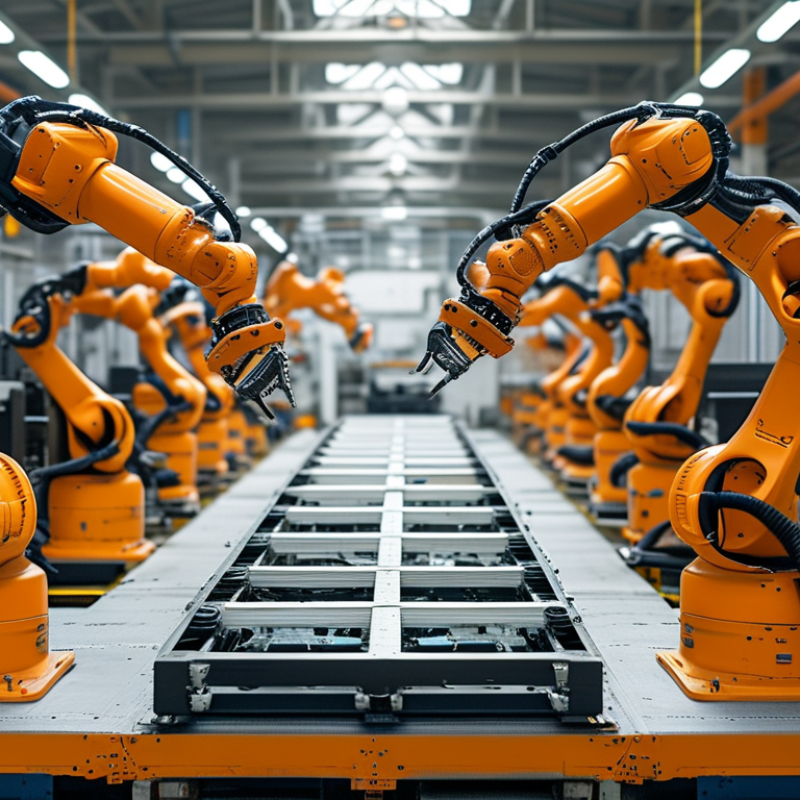
Industrial Robotics Baseline: 541,302 Units Installed Worldwide in 2023 (IFR)
The global robotics baseline is substantial: 541,302 industrial robots were installed worldwide in 2023. The figure comes from the International Federation of Robotics’ World Robotics 2024 report. It represented a small annual decline of about 2%, yet the installed operational stock reached approximately 4.28 million units.
That scale changes how global buyers should compare automation systems. Articulated robots suit welding, assembly, and material handling. SCARA systems support fast, precise small-part work. Delta robots handle lightweight picking at high speed. Cartesian systems remain practical for structured production lines. Collaborative robots can support flexible tasks, while mobile robots improve internal material movement. Vision-guided systems add inspection and locating functions.
The numbers need careful reading. Installation volume does not equal production success. A factory may purchase advanced equipment and still lose output through poor integration, weak operator training, or unstable data links. I have seen equipment look impressive during demonstrations, then slow down beside real packaging materials. That gap matters.
Regional demand also differs. IFR reported that Asia received roughly 70% of new industrial robot installations in 2023, with Europe and the Americas following. Buyers should examine local service coverage, spare-part access, safety validation, and software compatibility. Total cost includes downtime. It also includes adaptation.
For a reliable shortlist, compare cycle time, payload, reach, accuracy, energy use, and recovery procedures under realistic conditions. The best system is rarely the most sophisticated one. It is the one that remains useful after the factory floor gets messy.
7 Best Robotics Automation Systems for Global Buyers? - Industrial Robotics Baseline: 541,302 Units Installed Worldwide in 2023 (IFR)
A practical comparison of widely adopted industrial robot system architectures
| Rank | Robotics Automation System | Typical Configuration | Common Payload Range | Primary Applications | Key Strength | Best Fit for Global Buyers |
|---|---|---|---|---|---|---|
| 1 | Six-Axis Articulated Robot Cell | Six rotary joints with an end-of-arm tool, safety enclosure, controller and programmable workcell | Approximately 3–500 kg, depending on robot class | Welding, assembly, machine tending, painting, handling and palletizing | Highest overall flexibility for complex three-dimensional motion | Manufacturers requiring one adaptable platform for multiple processes |
| 2 | Collaborative Robot Workstation | Force- and speed-monitored robotic arm deployed near personnel, usually with integrated tooling and vision | Approximately 3–30 kg | Screwdriving, inspection, packaging, light assembly and machine tending | Fast deployment and convenient changeover for small or variable batches | Small and medium-sized plants with limited floor space or frequent product changes |
| 3 | SCARA Assembly System | Four-axis selective-compliance arm mounted above a fixture, conveyor or precision assembly station | Approximately 1–20 kg | High-speed assembly, insertion, dispensing, packaging and electronic component handling | High repeatability and rapid horizontal motion in compact cells | Electronics, consumer products, medical-device and precision assembly lines |
| 4 | Delta Pick-and-Place System | Parallel-link overhead robot integrated with conveyor tracking, vision and hygienic or product-specific tooling | Typically below 15 kg per arm | Food packaging, sorting, kitting, pharmaceutical handling and consumer-goods packing | Very high cycle rates for lightweight products | High-volume lines where speed, hygiene and accurate product placement are critical |
| 5 | Cartesian Gantry System | Three or more linear axes arranged in X, Y and Z coordinates, often combined with a rotary wrist or custom tooling | Approximately 1–1,000 kg, based on frame and axis design | Palletizing, dispensing, machining, large-part handling, cutting and 3D printing | Scalable work envelopes and straightforward linear-axis programming | Large workpieces, long travel distances and applications needing rigid positioning |
| 6 | Autonomous Mobile Robot System | Self-navigating mobile base using mapping, sensors and fleet software; may include a lifting deck or robotic arm | Approximately 100–3,000 kg of transported load | Material transport, line replenishment, warehouse movement and work-in-progress logistics | Flexible route changes without extensive fixed conveyor infrastructure | Factories and distribution centers with changing layouts or multi-zone workflows |
| 7 | Palletizing and Depalletizing Cell | Robot arm or gantry with layer forming, conveyors, pallet dispensers, safety systems and load stabilization | Approximately 20–500 kg, depending on product and pallet pattern | Case packing, bag handling, warehouse staging and end-of-line pallet formation | Consistent stacking quality and reduced manual handling of repetitive heavy loads | Food, beverage, chemicals, building materials and general manufacturing operations |
Related Posts
-
Why Robotics Automation is the Future of Manufacturing and Workplaces
-

Top 10 Must Have Robotics Products for Every Tech Enthusiast
-
10 Essential Tips for Choosing the Right AMR Robot for Your Business
-

Rethink Robot Tips for Global Buyers to Enhance Efficiency
-

2025 Top Trends in Agile Robotics: Transforming Industries with Innovation
-
Best Robotics Products to Buy in 2026 for Global Buyers?