Top Trends in Laboratory Robotics for 2026 What to Expect
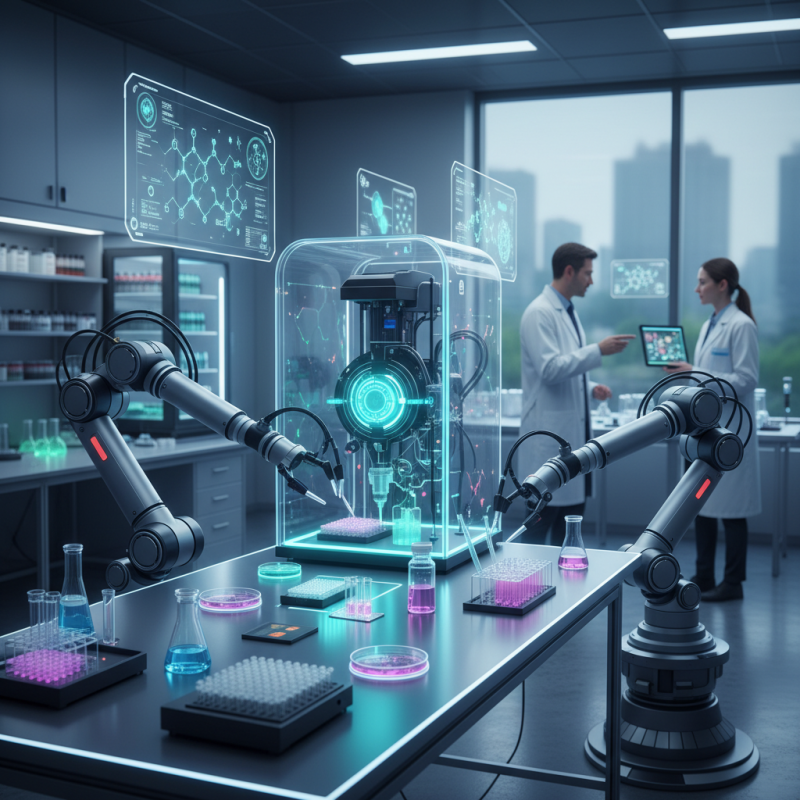
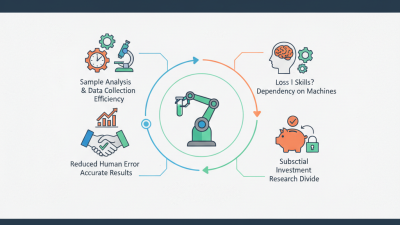
As we look towards 2026, laboratory robotics promises to revolutionize research and development. The integration of advanced automation in labs enhances efficiency and accuracy. This evolution impacts various fields, including pharmaceuticals, biotechnology, and environmental science.
Rapid advancements in artificial intelligence drive innovations in laboratory robotics. Machines are becoming smarter, adapting to tasks with greater precision. However, this progress brings challenges. Concerns about job displacement and ethical considerations require attention.
Moreover, the diversity of applications in laboratory robotics is notable. From drug discovery to quality control, robots streamline processes and reduce human error. Yet, the journey is not without hurdles. Adapting to new technologies may prove difficult for some laboratories. Continued dialogue around these issues is crucial for successful implementation.
Key Innovations in Laboratory Robotics for Enhanced Automation
Laboratory robotics is rapidly evolving, and innovations are shaping the future of automation. One major trend is the integration of AI and machine learning into robotic systems. According to a recent report, up to 38% of laboratories plan to adopt AI technologies by 2026. This shift allows robots to learn from data, optimizing processes and reducing human error.
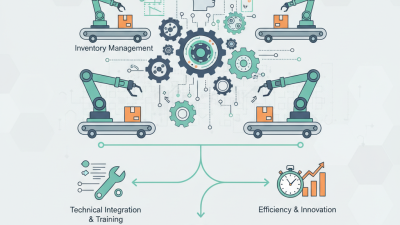
Another significant innovation is modular robotics. These robots can be reconfigured for different tasks, enhancing efficiency. Industry data shows that modular systems can reduce operational costs by 25%. However, this shift demands a skilled workforce to manage complex systems. Many laboratories face challenges in training staff, resulting in a gap in operational efficiency.
Moreover, advancements in liquid handling robotics are crucial. With precision rates exceeding 99%, these systems improve experimental reproducibility. Yet, the reliance on automated systems introduces potential risks. Failures or malfunctions could lead to significant setbacks. Labs must find a balance between automation and human oversight. Acknowledging these challenges is vital for achieving enhanced productivity in laboratory settings.
Top Trends in Laboratory Robotics for 2026
This bar chart illustrates the expected growth trends in various laboratory robotics features by 2026, focusing on key innovations that will enhance automation in laboratory settings.
Advancements in AI and Machine Learning in Lab Robotics
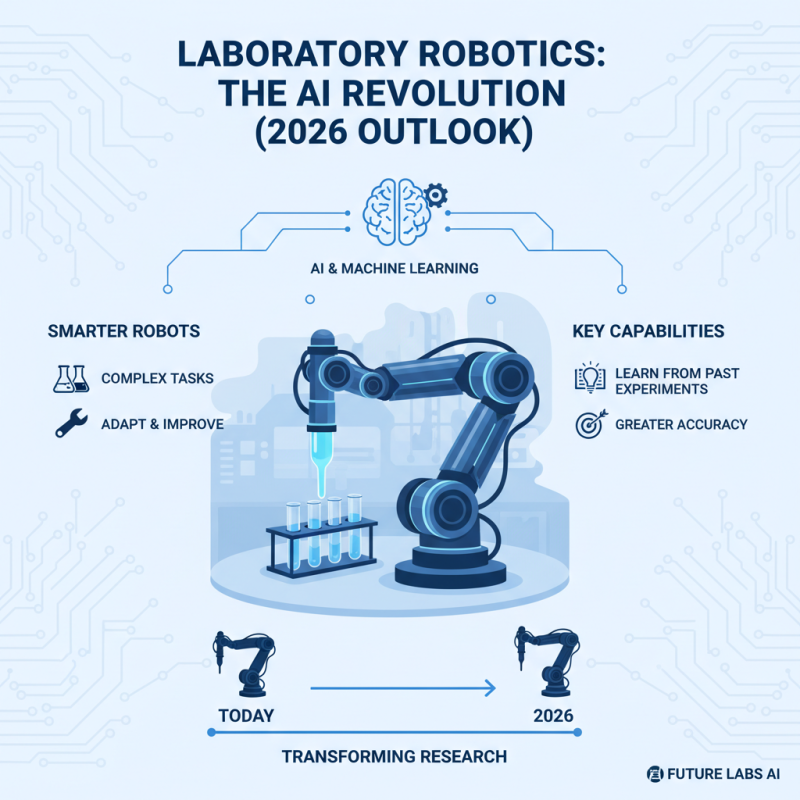
Advancements in AI and machine learning are dramatically transforming laboratory robotics. By 2026, we can expect smarter robots capable of performing complex tasks. Machine learning algorithms will enable robots to adapt and improve their performance over time. They might learn from past experiments, fine-tuning their methods for greater accuracy.
In many labs, these technologies will streamline workflows. Imagine robots that can predict the outcome of experiments before they begin. This predictive capability can save time and reduce costs. However, the implementation of these technologies does come with challenges. Often, the integration of AI requires extensive training data. Not all labs have access to the necessary resources, leading to unequal advancement.
Human oversight remains essential. Fully automated systems may still struggle with unexpected variables. A human touch is crucial in validating outcomes. The balance between AI efficiency and human intuition will drive innovation. As we look towards 2026, the collaboration between humans and intelligent machines will shape the future of research in laboratories.
Trends in Collaborative Robots and Human-Robot Interaction
The field of laboratory robotics is evolving rapidly. In 2026, one major trend will be improved human-robot interaction. Collaborative robots, often known as cobots, are designed to work alongside humans. They will enhance productivity by taking over repetitive tasks. This will allow researchers to focus on more complex projects.
Tips: When integrating cobots, ensure clear communication between humans and machines. Training staff is crucial for seamless interactions.
Another key change is the design of user-friendly interfaces. These interfaces will make robots more approachable. Users will find it easier to interact with robots and access their functions. Increased adaptability of cobots will be vital. This means they can be used in various settings without extensive programming.
Tips: Encourage feedback from users. This can help refine robot responses and improve overall efficiency.
Overall, the shift towards collaborative robots will not come without challenges. Team dynamics will need to adapt to include these new members. Robots will not replace humans but will change the way humans work. Embracing this change will be essential for success in laboratory settings.
Top Trends in Laboratory Robotics for 2026
| Trend |
Description |
Impact on Laboratories |
Expected Advancements |
| Collaborative Robots (Cobots) |
Increased integration of robots that work alongside human operators. |
Enhanced productivity and safety in laboratory settings. |
More intuitive user interfaces and programming simplicity. |
| AI-Driven Automation |
Utilization of artificial intelligence for data analysis and laboratory processes. |
Faster results and improved accuracy in experiments. |
Real-time data analysis and predictive modeling capabilities. |
| Remote Monitoring and Control |
Increased capabilities for remote operation of laboratory robots. |
Greater flexibility and efficiency in laboratory management. |
Development of secure cloud-based platforms for operation. |
| Enhanced Human-Robot Collaboration |
Focus on improving interactions and task sharing between humans and robots. |
More effective teamwork leading to innovative research outcomes. |
Increased use of sensors and feedback systems to enhance communication. |
| Sustainability in Robotics |
Development of eco-friendly robotic systems for laboratory use. |
Reduction of the environmental impact of laboratory operations. |
Introduction of energy-efficient technologies and materials. |
Impact of Miniaturization on Laboratory Robot Design and Efficiency
The trend of miniaturization in laboratory robotics is reshaping the field significantly. Smaller robots enhance efficiency and reduce operational costs. According to a recent report, miniaturized devices can perform tasks 30% faster than their larger counterparts. Precision is also improved, allowing for more accurate results in experiments.
As laboratory robots shrink in size, manufacturers face challenges. Designing robots that remain effective while minimizing footprints is not easy. The integration of advanced sensors and smaller components increases complexity. A study showed that 25% of labs reported issues with maintenance and repairs for miniaturized equipment.
Despite these obstacles, the advantages are clear. Mini robots not only save space but also reduce energy consumption by 40%. This can lead to lower operational costs over time. Labs must reflect on the balance between miniaturization and reliability. Adopting smaller robots could enhance productivity, but each lab must evaluate its specific needs and operational limits.
Future Applications of Robotics in Drug Discovery and Research Automation
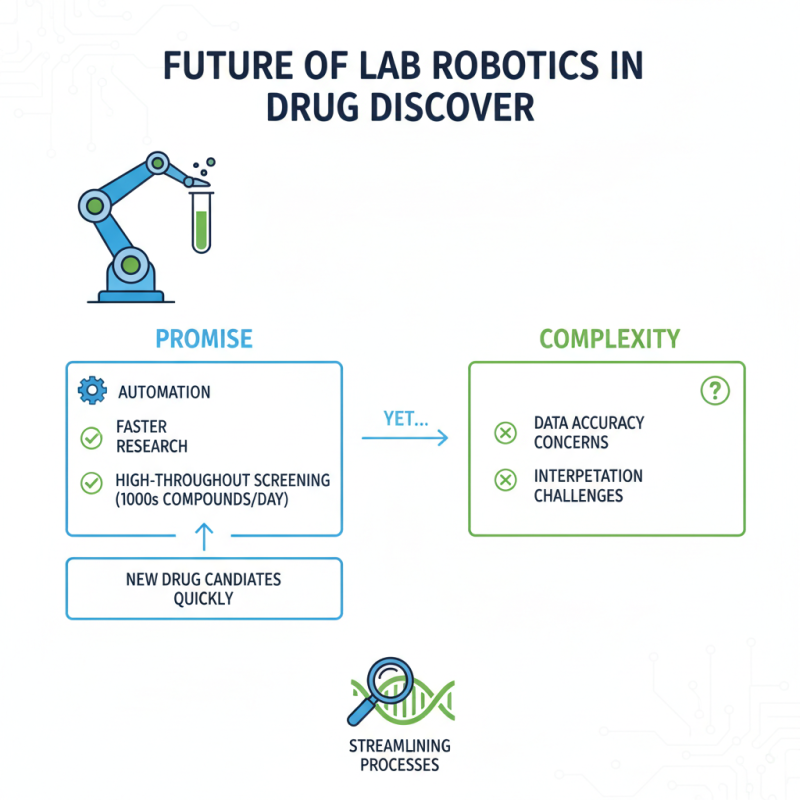
The future of laboratory robotics in drug discovery is promising yet complex. Automation will streamline processes, making research faster. For instance, robots can handle high-throughput screening. They can analyze thousands of compounds in a day. This efficiency might lead to new drug candidates quickly. However, it raises questions about data accuracy and interpretation.
Robots in research automation will also enhance reproducibility. Researchers often face inconsistencies in experiments. With robotic systems, standardization can improve results. Yet, reliance on machines may overlook the nuances of biological systems. Complex interactions may not be captured. This could hinder our understanding of drug mechanisms.
In laboratory settings, the integration of AI will be crucial. AI can help in predicting outcomes and optimizing workflows. Nevertheless, there are challenges in training and trust. Researchers may remain skeptical of algorithms. Balancing human insight with robotic efficiency will be essential. The potential is huge, but caution is warranted as we forge ahead.