What Are the Best Home Robotics from China?

China has become a serious force in home robotics, especially in robotic vacuum cleaners, mops, lawn machines, and window cleaners. Brands such as Roborock, Ecovacs, Dreame, and Narwal compete through stronger navigation, quieter motors, and increasingly automated maintenance.

The International Federation of Robotics reported 5.1 million consumer service robots sold worldwide in 2023. Domestic-task robots represented the largest category. The same report noted that professional service robot sales exceeded 205,000 units, showing broader acceptance of autonomous machines. Marina Bill, President of the International Federation of Robotics, said, “Service robots are becoming increasingly important in our daily lives.” That shift is visible in ordinary homes: a robot maps a hallway, lifts its mop, and returns to a dock before breakfast.

Yet “best” does not mean most expensive. Roborock may appeal to buyers wanting advanced mapping and powerful cleaning. Ecovacs offers a broad product range, including window-cleaning systems. Dreame often pushes premium features at competitive prices. Narwal is known for hands-off mopping systems. These strengths can change quickly.

Real experience still matters. A glossy specification cannot reveal whether a dock smells after two weeks, or whether an app remains stable after updates. Independent testing from Consumer Reports, RTINGS, and regional technology laboratories adds useful evidence, but no test covers every home. Buyers should compare navigation accuracy, repair support, replacement parts, privacy controls, and long-term ownership costs. China’s home robotics industry is impressive, but it is not flawless. That is precisely why careful comparison remains necessary.
What Are the Best Home Robotics from China?

What Defines a Home Robot Made in China?

What Are the Best Home Robotics from China?

What Defines a Home Robot Made in China?

A home robot made in China is defined by more than final assembly. It may combine local mechanical engineering, battery production, sensors, software, and factory testing. This integration can shorten repair cycles and reduce production costs. But cheaper does not automatically mean better. Look closely.

A reliable evaluation checks performance beyond a showroom floor. Can the robot recognize a dark rug, a dropped sock, or a narrow doorway? Does it stop safely near stairs? Are privacy settings clear, and are updates delivered securely? Good documentation should explain electrical safety, radio functions, data handling, and maintenance requirements. A trustworthy design admits its limits instead of promising perfect independence.

Chinese home robotics also reflects dense regional supply networks. Motors, cameras, chips, plastics, and packaging may come from nearby specialist manufacturers. This proximity supports fast improvements, but it can complicate long-term support. A strong product should offer readable instructions, replaceable wear parts, and reachable service channels. Some machines still depend too heavily on phone apps. That is a weakness worth admitting. A robot may map a room beautifully, yet struggle with a loose cable. I would rather see honest performance in a cluttered hallway than a flawless product video.

What Are the Best Home Robotics from China?

What Defines a Home Robot Made in China?

A capable home robot is defined by more than its country of assembly. This benchmark gives the greatest weight to practical household usefulness, dependable autonomy, privacy protection, safety, and long-term software support.

The percentages represent an editorial evaluation framework for comparing home-robot products. They are not company, brand, sales, or market-share data.

Which Features Matter When Comparing Home Robotics?

When comparing home robotics, start with the task, not the futuristic appearance.

A floor-cleaning machine should map rooms accurately, avoid cables, and return to its dock without repeated rescue. For social or care support, clear speech, adjustable volume, and dependable reminders matter more than a moving face. Test it. Observe whether it understands accents, background noise, and ordinary requests. A polished demonstration can hide awkward daily behavior.

Safety deserves careful attention.

Look for obstacle detection, gentle movement, emergency stopping, and secure operation around children or pets. The robot should explain alerts clearly instead of displaying confusing symbols. Battery life also needs practical testing. A device may claim long endurance, yet thick carpets, stairs, or frequent camera use can reduce it.

In my experience, small failures become frustrating when the machine cannot recover independently.

Privacy features should be visible and understandable.

Check where recordings are processed, how data is deleted, and whether microphones or cameras can be disabled. Reliable software updates, repair options, replaceable parts, and responsive customer support affect long-term value. Compare noise levels at night, not only in a showroom.

Also consider accessibility, including voice control, readable settings, and easy physical controls.

I would not trust a robot that performs impressively once but requires constant supervision at home. Some convenience claims need more evidence.

Leading Chinese Robots for Cleaning and Household Tasks

Chinese home robotics are moving beyond simple floor sweeping. The strongest options now combine vacuuming, mopping, navigation, and basic household monitoring. According to the International Federation of Robotics’ World Robotics 2024 report, nearly 20 million consumer service robots were sold worldwide in 2023. Domestic-task robots formed the largest category.

Chinese manufacturers benefit from dense urban housing and demanding cleaning routines. Their machines often use LiDAR, cameras, and floor sensors to map rooms accurately. Many can raise the mop on carpets, avoid cables, and return to a charging dock.

Some models wash their pads with warm water and empty dust automatically. IDC’s China Smart Home Device Quarterly Tracking Report also shows continued expansion in connected home equipment, supporting wider robot adoption.

Real homes remain less perfect. A robot may miss rice grains near a wall or drag a wet cloth across a loose rug. I would test edge cleaning, noise, maintenance, and app reliability before trusting marketing claims.

Smaller apartments need compact docks. Families with pets need stronger obstacle recognition and easier brush removal. Research from the IFR and market analysts indicates strong demand, but usage quality still depends on room layout, lighting, and daily maintenance.

Smart hardware helps. It does not replace judgment.

Chinese Robots for Education, Companionship, and Family Support

Chinese home robotics is moving beyond novelty toys. The International Federation of Robotics reported over 205,000 professional service robots sold worldwide in 2023. China also reached 470 industrial robots per 10,000 manufacturing workers, according to the IFR’s 2024 data. That manufacturing depth supports smaller home machines, although factory strength does not guarantee useful household design.

For education, compact robots can guide pronunciation, quiz vocabulary, and demonstrate simple coding. A child might place one beside a workbook and receive spoken feedback within seconds. The best systems should explain mistakes, not merely celebrate correct answers. Privacy also matters. Families should check microphone controls, data storage, and parental settings before regular use.

Companionship requires softer judgment. A robot can remind an older adult about water, medication schedules, or a video call. It can notice unusual inactivity through approved sensors, but it cannot replace human care. The IFR identifies domestic and social interaction as important service-robot applications, yet its market data cannot measure emotional trust. That gap is real. Some children may lose interest quickly, while older users may find speech recognition frustrating. Hands-on testing at home remains more reliable than promotional demonstrations.

How to Choose the Right Chinese Home Robot for Your Needs

Choosing a Chinese home robot starts with your daily routine, not its feature list. A robot vacuum suits homes with hard floors, pet hair, and narrow furniture gaps. A social robot may help with reminders, language practice, or simple family interaction. Define the job clearly. Otherwise, impressive technology may become an expensive ornament.

Measure your rooms before buying. Check door thresholds, carpet thickness, staircase edges, and charging space. A mapping robot needs stable Wi-Fi and enough light for reliable navigation, depending on its sensors. Test whether the app supports your language and household accounts. Privacy also deserves attention. Read data settings, storage policies, and microphone controls carefully. Convenience should not require unlimited access to your home routines.

Look beyond the purchase price. Confirm replacement brushes, filters, batteries, and repair channels are available in your region. A low-cost robot becomes less attractive when one small part takes months to obtain. Check warranty terms in writing. Ask how firmware updates are delivered and whether basic functions remain available offline. Quiet operation matters in apartments, especially during evening cleaning.

Small details matter.

I would compare two or three models using the same room, debris, and schedule. Record missed corners, noise, charging behavior, and app failures. Reviews can be useful, but they often overlook long-term maintenance. My own judgment would remain cautious: navigation may improve after updates, yet updates can also introduce new problems. Choose dependable support over flashy demonstrations.

What Are the Best Home Robotics from China? - How to Choose the Right Chinese Home Robot for Your Needs
Robot Type Typical Core Functions Navigation or Control Typical Runtime or Coverage Typical Retail Range (USD) Best For Main Advantages Important Limitations Overall Suitability
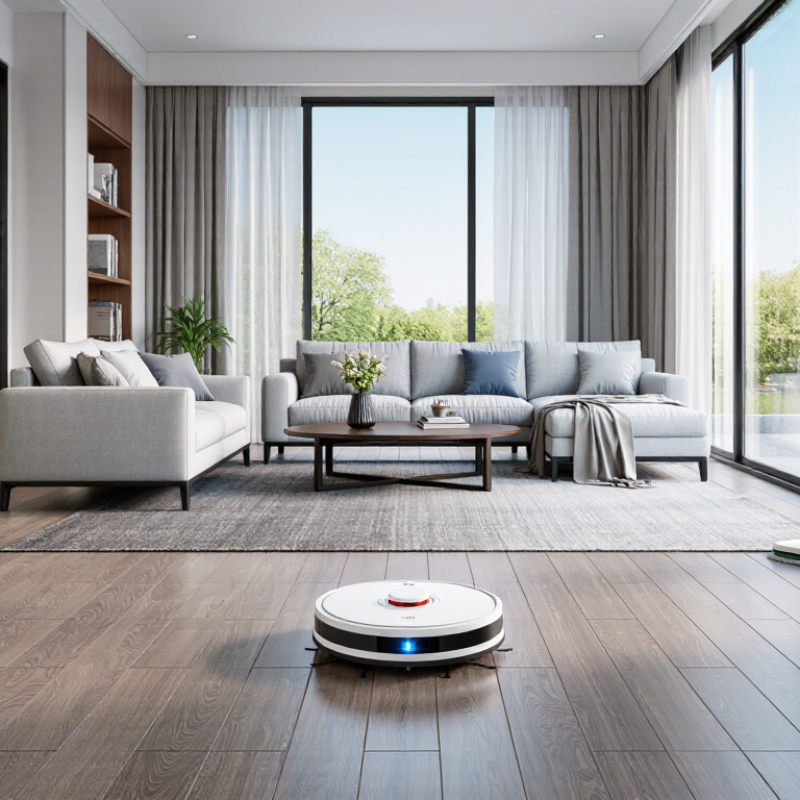
Robot Vacuum and Mop Automatic vacuuming, mopping, room mapping, scheduled cleaning, obstacle avoidance, and automatic return to the charging dock. Laser mapping, cameras, infrared sensors, mobile application, and voice-assistant integration on selected models. Approximately 90–200 minutes per charge; commonly suitable for 80–250 m², depending on floor type and cleaning mode. $250–$1,200 Busy households, hard floors, homes with pets, and users seeking regular automated cleaning. Strong automation, detailed maps, good coverage, and optional self-emptying or mop-washing docks. May struggle with cables, thresholds, dark surfaces, thick rugs, stairs, and heavily cluttered rooms. Mopping usually does not replace deep manual cleaning. ★★★★★
Window-Cleaning Robot Adheres to glass, moves across vertical windows, and wipes dust, fingerprints, and light water marks. Vacuum adhesion, edge detection, remote control, and a safety tether for use on exterior-facing glass. Usually 20–60 minutes of continuous operation; generally designed for smooth glass surfaces. $180–$600 Large glass panels, high windows, offices, and homes where manual exterior cleaning is difficult. Reduces the need for ladders and can provide consistent cleaning patterns on large smooth windows. Requires a power connection or charged battery, suitable glass, correct pad maintenance, and supervision. It cannot safely replace professional high-rise cleaning. ★★★★☆
Pool-Cleaning Robot Collects debris and algae from pool floors and, on some models, walls and the waterline. Internal motor, water-flow sensors, programmable cleaning cycles, and a detachable filter basket. Approximately 1.5–4 hours per cleaning cycle; coverage depends on pool shape, surface, and water conditions. $350–$1,500 Private swimming pools where routine debris removal is needed with limited manual effort. Works independently of the pool filtration system and can reduce routine brushing and vacuuming. Filters require frequent cleaning. Performance can be reduced by steps, irregular shapes, heavy debris, or very dirty water. ★★★★☆
Lawn-Mowing Robot Automatically trims grass, follows a defined boundary, returns to charge, and maintains a regular cutting schedule. Boundary wire or satellite-assisted positioning, collision sensors, slope detection, and mobile application control. Typically covers 300–2,000 m² per day, depending on battery capacity, grass growth, terrain, and boundary setup. $600–$3,000 Regularly maintained lawns with clear boundaries and relatively moderate slopes. Quiet operation, scheduled maintenance cutting, low grass clippings, and reduced weekly mowing work. Not suitable for tall weeds, very uneven terrain, loose gravel, steep slopes beyond its specification, or lawns with many obstacles. ★★★★☆
Companion and Interactive Robot Voice conversation, reminders, music or media control, simple games, educational activities, and basic home monitoring. Microphones, speakers, cameras on selected models, Wi-Fi connectivity, mobile applications, and cloud-based artificial intelligence features. Usually several hours to multiple days between charges, depending on display, movement, camera use, and interaction frequency. $150–$1,000 Children’s learning, elderly users who need reminders, and households seeking interactive entertainment. Engaging interaction, programmable routines, educational content, and convenient voice-based controls. It is not a medical device, caregiver, or security replacement. Cloud services, language support, privacy settings, and long-term software availability should be checked carefully. ★★★☆☆
Home Security Patrol Robot Remote room viewing, motion alerts, two-way communication, scheduled patrols, and basic environmental monitoring. Mobile application, cameras, microphones, wireless connectivity, motion detection, and autonomous or remote navigation on suitable floors. Approximately 2–8 hours of active movement or monitoring per charge; standby time may be considerably longer. $300–$1,500 Apartment monitoring, pet check-ins, remote communication, and basic indoor awareness. Provides mobile video access and can help users check rooms or communicate with family members remotely. Cannot guarantee security, may not navigate stairs or clutter, and requires careful review of data storage, encryption, microphones, cameras, and cloud policies. ★★★☆☆
Kitchen or Food-Service Robot Food delivery, tray transport, simple ingredient assistance, guided cooking tasks, or automated beverage preparation, depending on the design. Wheels, cameras or obstacle sensors, programmable routes, touch controls, and mobile or voice commands on selected models. Often 4–12 hours of intermittent operation; capacity is commonly limited by tray size, payload, and kitchen layout. $500–$3,000 Large homes, hospitality-style spaces, users with mobility limitations, and repetitive indoor delivery tasks. Can reduce repetitive carrying, support contactless delivery, and perform routine service tasks in open floor plans. Many models are niche products rather than fully autonomous kitchen workers. They generally cannot safely use sharp tools, open flames, or hot cookware without human supervision. ★★★☆☆
Smart Pet-Interaction Robot Remote pet viewing, treat dispensing, voice interaction, play routines, and activity monitoring. Camera, speaker, microphone, mobile application, remote driving, and programmable treat dispenser. Commonly 3–10 hours of active use; some stationary dispensers operate for weeks depending on battery and network settings. $80–$500 Pet owners who work away from home and want occasional interaction or feeding support. Supports remote check-ins, scheduled treats, and simple play without requiring a person to be present continuously. It does not replace walking, training, grooming, or veterinary care. Some pets may ignore the robot or damage moving parts. ★★★☆☆
Figures are typical market ranges for Chinese-made or China-manufactured home robotics and vary by configuration, region, taxes, software services, and accessories. Always verify local safety certification, warranty coverage, replacement parts, app language support, data privacy, and after-sales service before purchasing.
Scroll to Top