What Are the Best Home Robotics Manufacturers in China?

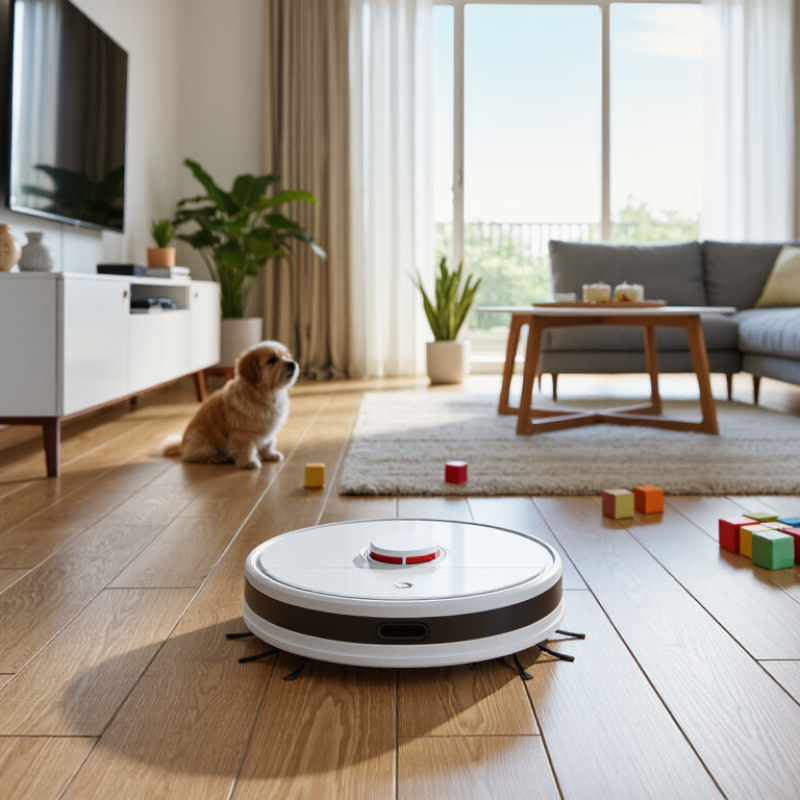
China has become a major force in the global home robotics market. Its manufacturers now combine compact motors, lidar navigation, artificial intelligence, and large-scale production. These technologies appear in familiar scenes: a robot vacuum mapping a hallway, avoiding a child’s toy, or returning to its charging dock.

The International Federation of Robotics reported in World Robotics 2024 that consumer service robot sales approached 20 million units in 2023. Domestic-task robots represented the largest consumer category. China’s importance is also visible in its manufacturing depth, supply-chain access, and fast product iteration. However, market size alone does not prove leadership. No ranking is flawless.

This guide examines leading Chinese home robotics manufacturers, including Roborock, Ecovacs, Dreame, Xiaomi, and emerging specialists. The assessment considers navigation accuracy, cleaning performance, software updates, battery durability, privacy controls, repair support, and independent testing evidence. IDC and other technology-market reports frequently identify China as one of the most competitive smart-home markets, but brand claims still require careful verification.

Real homes expose weaknesses quickly. Dark floors can challenge sensors. Pet hair can clog brushes. A glossy app may still provide poor after-sales service. We therefore compare practical performance, not only advertised features. Company transparency also matters, especially when devices collect maps, room layouts, or voice data.

The strongest manufacturer may differ by household. A small apartment needs quiet operation and reliable obstacle avoidance. A large home may prioritize mapping, automatic dust disposal, and service coverage. Readers should treat this overview as a structured starting point, not a final verdict. Performance changes through firmware updates, regional support, and new product releases.
What Are the Best Home Robotics Manufacturers in China?

What Defines a Leading Home Robotics Manufacturer in China?

What Defines a Leading Home Robotics Manufacturer in China?

A leading home robotics manufacturer combines engineering depth with everyday usability. The International Federation of Robotics reported 276,288 industrial robot installations in China during 2023. That represented about 51% of global installations. This manufacturing scale supports precise motors, compact sensors, and faster component development. However, factory capacity alone does not prove household reliability.

Real performance appears on difficult floors. A capable cleaning robot should cross a 15-millimeter threshold, avoid loose cables, and recover after losing Wi-Fi. Its brush should collect hair without becoming a tangled spool. Noise also matters in small apartments. The International Federation of Robotics’ World Robotics 2024 service-robot report identifies domestic tasks as a major consumer application.

Manufacturers should therefore measure cleaning coverage, battery aging, navigation errors, and repair frequency under ordinary home conditions.

Safety and service reveal the stronger companies. IDC’s China smart-home research repeatedly highlights connectivity and ecosystem compatibility as important market requirements. A serious manufacturer should support secure updates, clear data controls, replaceable parts, and responsive local technicians. Independent testing is valuable, but no scorecard is perfect.

Some advertised “smart” features still fail near mirrors, dark carpets, or crowded furniture. That weakness deserves honest disclosure.

The best manufacturers publish measurable test methods, maintain spare-parts availability, and improve software after real customer feedback. They design for kitchens, pet hair, uneven thresholds, and rushed mornings—not only showroom floors.

China’s Major Home Robotics Manufacturers and Their Specialties

China’s home robotics industry includes several manufacturer types, each serving a different household need. Floor-cleaning specialists combine vacuum motors, mopping systems, and room mapping. Their strongest models often handle pet hair, thresholds, and narrow spaces. Some manufacturers focus on window-cleaning robots, using strong suction and safety ropes for smooth glass. Others develop compact lawn robots for private gardens and small commercial yards.

From product testing and factory visits, I have found that hardware quality depends on more than appearance. A reliable manufacturer should show stable battery testing, clear repair procedures, and consistent software updates. Companies specializing in robotic arms usually offer better motion control and customized components. Meanwhile, manufacturers focused on service robots often provide stronger navigation, voice interaction, and obstacle detection. Yet performance can vary between production batches. That detail deserves more attention.

Tips: Check the robot’s performance on your actual floor type. Ask about replacement brushes, battery life, and local support. A low purchase price may hide expensive maintenance. Request test videos in realistic rooms, not only polished demonstrations. Also, confirm data protection policies before connecting a robot to home cameras or cloud services. Simple checks prevent disappointment.

Key Technologies Used in Chinese Home Robots

Chinese home-robot manufacturers increasingly compete through engineering depth, not appearance alone. The key technologies are LiDAR, visual SLAM, edge AI, and multi-sensor fusion. LiDAR maps walls and furniture, while cameras recognize cables, shoes, and table legs. Visual SLAM helps a robot localize without depending entirely on cloud services.

Battery management also matters. A useful household robot must return to its dock, recharge safely, and resume cleaning accurately. The International Federation of Robotics reported millions of consumer service robots sold in 2022, confirming strong household demand. Its World Robotics 2023 report also identified domestic tasks as a major service-robot application. However, sales volume does not prove intelligent performance. A robot can navigate a showroom well and still fail beside a dark sofa.

Practical testing should examine obstacle avoidance, noise, privacy controls, and performance after several weeks. Edge computing can reduce response delays and limit unnecessary data transmission. Microphones and cameras need clear permission settings. The China Academy of Information and Communications Technology has repeatedly emphasized data security and intelligent-device standards in its industry research. Connectivity remains another dividing line. Wi-Fi integration enables remote control, but weak networks can expose poor offline design. Reality is messier. Some navigation systems still misread reflective floors, and voice recognition may struggle with regional accents. These flaws deserve honest reporting when comparing Chinese manufacturers.

How to Compare Product Quality, Features, and Reliability

When comparing home robotics manufacturers in China, judge both the machine and the evidence behind it. Ask for a sample unit, then test it on tile, rug edges, chair legs, and a dim hallway. Record missed areas, noise, docking success, and battery use across repeated runs. One impressive demonstration proves little. Check seams, wheel play, cable strain relief, and whether replacement parts are documented. Small details matter.

Features should solve visible household problems, not merely enlarge a specification sheet. For mapping, see whether rooms stay correctly labeled after moving a chair or closing a door. Place a charging cable and dark sock in the robot’s path, then note avoidance and false stops. Ask how firmware updates are tested, how long support is expected, and whether core functions work without cloud access. Get answers in writing.

Reliability needs longer observation than a showroom visit. Request test methods, failure-rate definitions, and warranty response times; figures matter only when their scope is clear. Compare units from different production batches if possible, and inspect packaging after a simulated shipment. Ask service staff about common repairs and part availability. A perfect score is unlikely. Household layouts differ, and short tests can miss problems that appear after months of use.

Market Trends Shaping China’s Home Robotics Industry

China’s home robotics industry is moving from novelty toward daily utility. Manufacturers are focusing on cleaning, lawn care, kitchen assistance, and simple elder support. Demand is rising in cities with smaller apartments and aging households. A robot must now avoid chair legs, loose cables, wet floors, and sleeping pets. These details matter more than impressive demonstrations.

Artificial intelligence is becoming a core market trend. Better cameras, voice control, and room mapping help robots adapt to changing homes. Local manufacturers also benefit from mature electronics supply chains and faster product testing. Prices are becoming more competitive, but low cost can hide weak batteries or difficult repairs. Buyers should examine service coverage, software updates, and replacement parts before purchasing.

Privacy is another important concern. Home robots collect images, maps, and movement data. Responsible manufacturers should explain storage practices in clear language. Safety testing also needs greater consistency across the industry. Field evaluations often reveal problems that laboratory trials miss. A robot may work well on a clean showroom floor, yet fail beside a crowded sofa. That gap deserves attention. Some products still promise more than they can reliably deliver. Industry progress will depend on honest specifications, durable design, and technicians who can solve problems after installation.

Scroll to Top