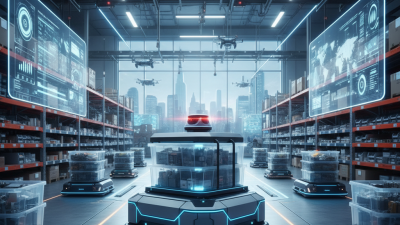
| Autonomous Vehicle |
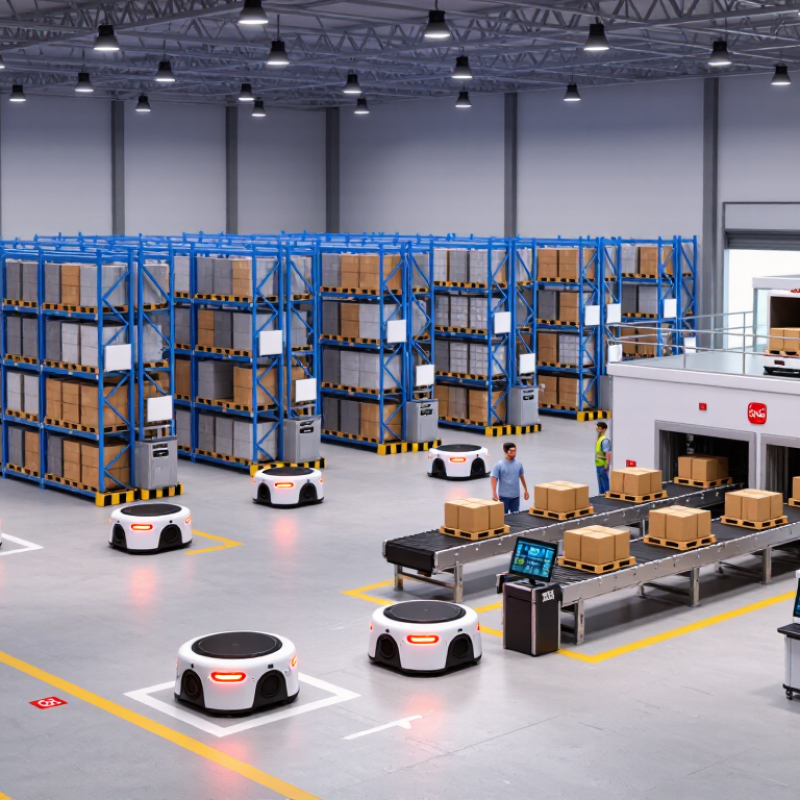
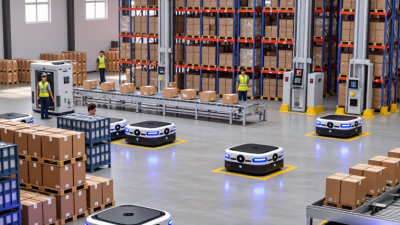
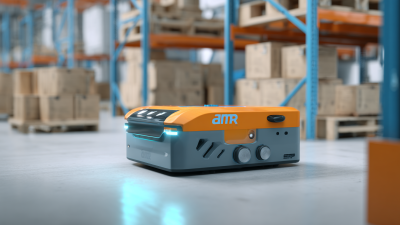
Autonomous Mobile Robots (AMRs) |
Warehouses, fulfillment centers, production areas, and mixed-use facilities where routes or layouts change regularly. |
Commonly supports approximately 100–1,500 kg per vehicle, depending on the configuration; throughput depends on distance, traffic, charging, and task design. |
Uses onboard sensors, digital maps, localization, and dynamic path planning to avoid people and obstacles. |
Medium |
Usually connects to a fleet manager and then to WMS, WES, MES, or order-management systems through APIs, webhooks, or middleware. |
Flexible routing, limited fixed infrastructure, scalable fleet size, and suitable for frequent process changes. |
Requires traffic management, charging planning, floor-quality checks, and clearly defined handoff points. |
Choose when flexibility and gradual expansion are more important than fixed, maximum-speed movement. |
| Autonomous Vehicle |
Automated Guided Vehicles (AGVs) |
Stable, repetitive material flows in manufacturing plants, warehouses, and cross-dock operations. |
Commonly supports approximately 500–5,000 kg or more, depending on the vehicle type and load-handling equipment. |
Often follows magnetic tape, markers, reflectors, wires, QR codes, or predefined routes. |
Medium to High |
Requires mission control, station signaling, safety interfaces, and connections to WMS, MES, PLC, or warehouse-control systems. |
Predictable operation, repeatable travel paths, and strong suitability for high-volume repetitive transport. |
Route changes can require physical or configuration changes; less adaptable than free-navigation systems. |
Choose when routes, pickup points, and production flows are stable and highly repeatable. |
| Storage Automation |
Automated Storage and Retrieval Systems (AS/RS) |
High-density storage, temperature-controlled facilities, pallet warehouses, and operations with predictable inventory locations. |
Can provide high vertical storage density; crane, shuttle, and cube-based designs vary significantly in load size and throughput. |
Uses fixed storage coordinates, cranes, shuttles, lifts, conveyors, and warehouse-control software. |
High |
Needs close coordination with WMS, warehouse-control software, conveyor controls, inventory records, and safety systems. |
Excellent space utilization, accurate inventory handling, and consistent high-volume performance. |
High capital cost, long implementation time, and lower flexibility after the physical system is installed. |
Choose when storage density, inventory accuracy, and long-term throughput justify infrastructure investment. |
| Sortation |
Automated Sortation Systems |
Parcel, e-commerce, distribution, and manufacturing operations with many destinations and repeatable item flows. |
Throughput varies by technology and item profile; many systems are designed for hundreds to several thousand items per hour. |
Uses conveyors, scanners, diverters, sortation logic, and destination rules. |
High |
Requires real-time item identification, routing rules, WCS or PLC connectivity, and reliable order or shipment data. |
Fast destination separation, repeatable routing, and reduced manual handling. |
Needs consistent item dimensions, barcode or RFID quality, and careful peak-volume planning. |
Choose when destination volume is high and product flow is standardized. |
| Physical Handling |
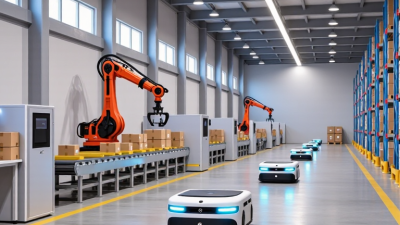
Robotic Picking and Depalletizing |
Case picking, pallet breakdown, pallet building, repetitive packing, and structured product presentation. |
Performance depends heavily on item shape, packaging, gripper type, vision quality, and required accuracy. |
Combines robotic motion control, machine vision, gripping tools, safety controls, and task software. |
Medium to High |
Usually integrates with WMS, WES, inventory data, production systems, vision systems, and equipment-control interfaces. |
Reduces repetitive manual work and can provide consistent handling for suitable product families. |
Irregular, soft, reflective, damaged, or tightly packed products may require additional engineering. |
Choose when product presentation is sufficiently standardized to support reliable gripping and verification. |
| Aerial Automation |
Indoor Autonomous Drones |
Cycle counting, visual inspection, high-bay verification, and locations that are difficult or unsafe to access manually. |
Best suited to data collection and inspection rather than heavy material transport; flight time is limited by battery capacity and payload. |
Uses onboard cameras, sensors, indoor localization, route planning, and predefined safety zones. |
Medium |
Needs inventory-system access, image or scan-data interfaces, wireless coverage, and facility safety procedures. |
Reduces ladder or lift usage, supports more frequent counting, and can collect data during low-activity periods. |
Payload and flight duration are limited; regulations, people movement, and facility geometry must be considered. |
Choose when inspection or inventory visibility is the main objective rather than transportation. |
| Control Platform |
Fleet Management System |
Operations using multiple autonomous vehicles, charging stations, work zones, or task priorities. |
Capacity depends on the number of vehicles, traffic rules, map size, wireless reliability, and task complexity. |
Assigns missions, manages traffic, monitors battery status, handles exceptions, and coordinates vehicle availability. |
Medium |
Should exchange task, location, status, alarm, and completion data with WMS, WES, MES, or orchestration software. |
Centralized visibility, coordinated traffic, utilization monitoring, and easier fleet expansion. |
May create a dependency on a specific control architecture if interfaces are not documented or standardized. |
Prioritize open APIs, event-based status updates, role-based access, audit logs, and offline recovery behavior. |
| Control Platform |
Warehouse Execution System (WES) |
Complex warehouses where labor, automation, orders, inventory, and equipment need coordinated real-time decisions. |
Improves task orchestration rather than providing a fixed capacity; results depend on process design and connected equipment. |
Balances orders, labor, work queues, automation capacity, replenishment, and exception handling. |
High |
Typically integrates with WMS, WCS, fleet managers, sorters, conveyors, labor systems, and order-management platforms. |
Provides cross-system orchestration and can reduce local optimization between separate automation systems. |
Requires accurate master data, strong process governance, and disciplined exception-management design. |
Prioritize when multiple automation types must work together under changing order profiles. |
| Business System |
Warehouse Management System (WMS) |
Inventory control, receiving, putaway, picking, replenishment, packing, and shipping processes. |
Controls inventory and work transactions; physical throughput depends on connected labor and automation resources. |
Uses inventory rules, locations, task creation, wave or batch logic, and shipment status. |
Medium to High |
Common interfaces include REST or SOAP APIs, message queues, file exchange, database integration, and EDI for selected trading processes. |
Provides inventory accuracy, traceability, process control, and standardized warehouse transactions. |
May not provide detailed real-time equipment control without WES, WCS, or fleet-management layers. |
Confirm support for real-time events, partial completion, task cancellation, and exception recovery. |
| Integration Method |
REST or GraphQL APIs |
Modern cloud or on-premises applications that need structured, near-real-time data exchange. |
Supports transactional and status communication; practical performance depends on authentication, rate limits, and network design. |
Request-response communication with defined resources, actions, authentication, and error handling. |
Medium |
Requires documented endpoints, data schemas, versioning, authentication, idempotency, and monitoring. |
Flexible, widely supported, and easier to test than many proprietary interfaces. |
Poorly designed synchronous calls can create delays or duplicate transactions during network interruptions. |
Use for master data, task creation, inventory updates, and operational commands when real-time control is appropriate. |
| Integration Method |
Event Streaming or Message Queues |
High-volume environments requiring asynchronous updates, decoupled systems, and resilient event processing. |
Suitable for large numbers of task, status, sensor, and exception events when retention and replay are configured correctly. |
Publishes events to topics or queues that authorized systems consume and process. |
Medium to High |
Requires event schemas, delivery guarantees, ordering rules, dead-letter handling, monitoring, and replay procedures. |
Reduces tight coupling, supports scalability, and improves resilience during temporary system outages. |
More difficult to troubleshoot without strong observability, correlation identifiers, and data-governance controls. |
Use for equipment status, task lifecycle events, alarms, telemetry, and other asynchronous operational data. |
| Integration Method |
Industrial Control Interfaces |
Conveyors, lifts, sorters, sensors, programmable controllers, safety devices, and fixed automation. |
Designed for deterministic equipment signals and control cycles; performance depends on the control architecture and network. |
Uses industrial protocols, discrete signals, controller logic, safety circuits, and equipment state models. |
High |
Requires documented I/O maps, state machines, safety validation, alarm handling, and coordinated commissioning. |
Reliable equipment control, clear machine states, and predictable behavior for fixed automation. |
Not intended to replace business-level inventory or order integration; changes can require specialist engineering. |
Use for machine-level control, while keeping business transactions in WMS, WES, or orchestration systems. |
| Integration Method |
EDI or Scheduled File Exchange |
Trading-partner transactions, legacy systems, batch-based warehouse processes, and environments with limited API capability. |
Well suited to periodic orders, shipment notices, invoices, and master-data exchanges rather than second-by-second control. |
Transfers structured files through agreed formats, schedules, acknowledgements, and validation rules. |
Low to Medium |
Needs mapping specifications, file validation, encryption, duplicate detection, acknowledgements, and reconciliation procedures. |
Compatible with many established enterprise and trading-partner processes. |
Higher latency, weaker real-time visibility, and greater risk of delays when files fail or mappings change. |
Use for batch or partner communication, not for time-critical autonomous equipment commands. |
| Integration Method |
Integration Platform or Middleware |
Organizations connecting multiple systems with different protocols, data models, and release schedules. |
Scales according to transaction volume, connector design, processing capacity, and operational monitoring. |
Transforms, routes, validates, enriches, retries, and monitors data between applications and equipment. |
Medium |
Should support API management, message handling, mapping, observability, secrets management, and version control. |
Reduces point-to-point interfaces and centralizes transformation and monitoring logic. |
Adds another operational layer and can become a bottleneck if ownership, testing, and capacity planning are weak. |
Prioritize when several automation systems must connect to existing enterprise applications without custom links everywhere. |