How to Choose a Rethink Robot for Your Business
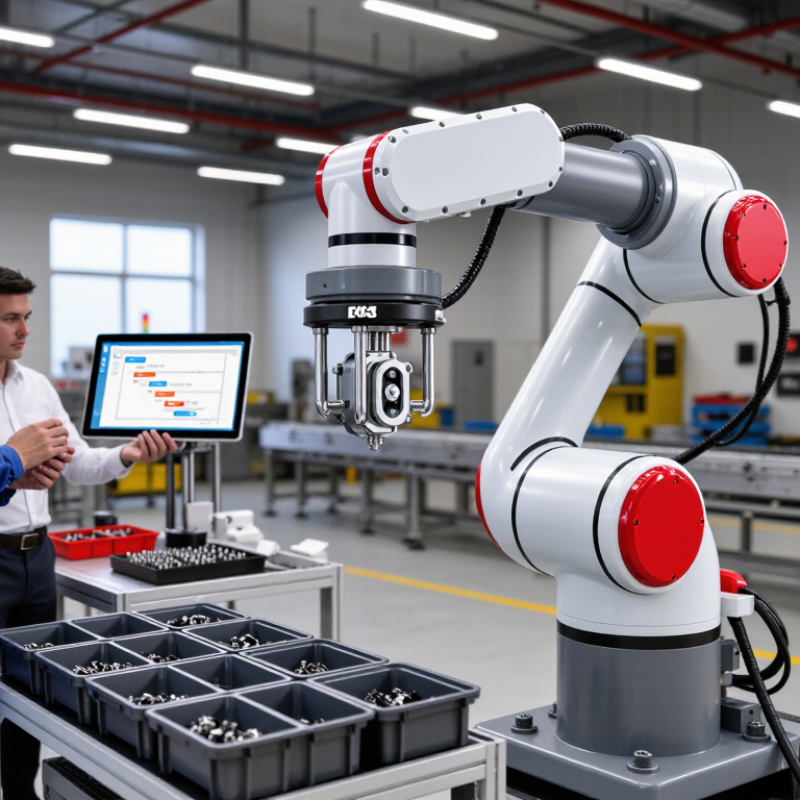
Choosing a rethink robot is not about buying the most impressive machine. It is about matching a robot to a repeatable task, the people nearby, and the realities of your production floor. Rodney Brooks, co-founder of Rethink Robotics, has observed, “The world is much more complicated than we think it is.” That reminder matters when a tidy product demo meets a crowded workstation, shifting parts, or an operator who needs clear access.
Start with the work itself. Note the part’s weight, the required reach, cycle time, and how often the task changes. Then assess the robot’s footprint, programming effort, interfaces, and compatibility with existing equipment. A rethink robot may suit a business seeking flexible automation, but suitability depends on the specific model and application. Check current availability, service coverage, software support, and integration requirements before making a purchase. Details matter.
Test the process with real parts, not only a polished demonstration. Watch how the robot handles a misaligned item, a brief stop, and a routine changeover. Ask operators what would make the system easier to use. Their answers can reveal problems a specification sheet misses. A spreadsheet helps, but it cannot capture every awkward reach or frustrating reset. I may be overvaluing neat metrics here; production work is messier than a checklist suggests. Compare expected labor savings and throughput gains with setup, maintenance, training, and downtime costs. A sensible choice is one your team can run, support, and improve—not simply one that looks capable in a video.
Identify the Tasks and Operating Conditions the Robot Must Handle
Before choosing a robot, describe the work in observable terms. Does it load parts, tend a machine, or move bins between stations? Record the part’s weight, dimensions, grip points, and typical cycle time. Include awkward cases, such as a slippery component or a bin that arrives slightly off-center. Small details matter. A task that looks simple in a demonstration may vary across a full shift.
Operating conditions shape the choice just as much as the task. Measure the available reach and note obstacles, aisle width, lighting, floor changes, and nearby people. Check how often the robot must stop, switch tools, or recover from a misaligned part. Consider dust, temperature, and washdown needs where relevant. A sunny, open test area can hide problems found beside a busy production line. I would not trust a single successful run as proof; test representative work over several cycles, then review failures and recovery time.
Tips: Make a short task checklist and observe the process during normal production. Keep a few real parts and fixtures for trials. Ask operators what interrupts the job most often. Their answer may change the plan.
Match Rethink Robot Capabilities to Your Business Requirements
Start with the task, not the robot. List the jobs you want automated, such as loading a press, moving trays, or tending a small assembly station. Measure the work area, including the distance between the robot base and each pickup point. Record the heaviest part, its shape, and how often it must move. These details help you compare reach, payload, repeatability, and cycle time with real production needs. Extra capacity can be useful, but it may add cost without improving the task.
The work environment matters just as much. Check floor space, lighting, nearby equipment, and how operators move around the cell. A collaborative design does not remove the need for a site-specific risk assessment. Consider who will set up the robot, adjust its programs, and handle routine maintenance. If those skills are limited, simpler programming and accessible support may outweigh a slightly faster cycle. Run a pilot on one representative task, then record missed picks, stoppages, and operator feedback. The first trial may expose assumptions you did not know you had.
Compare Payload, Reach, Precision, and Available Models
A Rethink robot should fit the task, not just the catalog photo. Start with payload: include the gripper, cables, and the heaviest part, then allow margin for movement. A five-kilogram component may demand more capacity once its weight sits far from the wrist. Check the full reach envelope, too. A robot that can reach a point may not reach it comfortably around a fixture or conveyor. Measure the actual cell.
Precision is not the same as repeatability. A robot may return consistently to a location, yet still miss a tight process tolerance. Test with the real tool, workpiece, speed, and approach angle. Watch a pick-and-place cycle beside the machine, not only in simulation. Small details matter: cable drag, vibration, and a crowded workbench can change results. They are easy to overlook.
Compare available models by payload, reach, mounting options, and controller or software compatibility. Model names and specifications can be confusing, and availability may change by region or over time. Request current technical documents and confirm the exact configuration with a qualified integrator. A spreadsheet helps, but it can hide awkward access or slow changeovers. I would leave room for a practical trial; the first layout is rarely perfect.
How to Choose a Collaborative Robot
Compare representative payload and reach values across common robot classes.
These values are illustrative comparison points, not specifications for particular models. Actual payload and reach vary by configuration. Repeatability is commonly specified separately and can be around ±0.02–0.1 mm; check the exact model’s published figure. Before choosing, confirm that the model is available in your region and can handle the workpiece, tooling, and required reach.
Assess Safety, Integration, Support, and Total Cost of Ownership
How to Choose a Rethink Robot for Your Business
Start with the workcell, not the brochure. Record the part’s weight, cycle time, reach, and how often operators enter the area. Check the robot, gripper, and surrounding equipment together; a safe arm can still create a pinch point. Ask for a documented risk assessment using your actual tools and tasks. Watch the stop response and restart process during a practical trial. Small details matter. A demo may not reveal awkward part placement or glare on a camera.
Integration deserves the same scrutiny. Confirm that the robot can exchange signals with your controller, sensors, and production software, then test recovery from a missed pick. Ask who handles commissioning, operator training, software updates, and urgent support. Get response times and spare-part availability in writing. Compare total cost of ownership, including installation, tooling, maintenance, training, energy, and downtime—not just purchase price. Estimate costs across the expected service life, and include planned line changes. A spreadsheet can make the decision seem cleaner than it is; real cycle times often shift once the cell is busy. Keep that uncertainty visible when comparing options.
Validate Your Choice Through a Pilot Deployment
A pilot deployment should test the work you expect the robot to perform, not an idealized demonstration. Choose one repeatable task, such as moving a loaded cart between two stations, and define the route, payload, and shift conditions. Keep the scope small. Record cycle time, completed trips, charging pauses, and human interventions across several days. A single smooth run proves very little.
Place the robot in the actual workspace, including its narrow turns, floor transitions, and busy handoff points. Ask operators to note where they slow down, wait, or step in. That matters. Compare the results with the current process, using the same workload and time window. Track how often the robot completes tasks without help, not just its best recorded speed. Check whether staff can understand alerts and restart normal work after a stoppage.
Some assumptions will be wrong. The mapped route may look clear on screen but become crowded during a shift change. Treat that as useful evidence, not a reason to hide the result. Adjust one factor at a time, then repeat the test. Before expanding, review maintenance needs, network reliability, training time, and the effort required to update routes. A pilot earns confidence through measured performance in ordinary conditions.
How to Choose a Rethink Robot for Your Business - Validate Your Choice Through a Pilot Deployment
Use this framework to compare collaborative robot options for a specific task. Pilot targets below are planning examples, not guaranteed performance; confirm them against your process, risk assessment, and supplier specifications.
| Evaluation Dimension | What to Check | Example Pilot Requirement | How to Validate | Decision Signal |
|---|---|---|---|---|
| 1. Match the Robot to the Work | ||||
| Task suitability | Identify the exact operation, such as machine tending, pick-and-place, packing, or repetitive assembly. Record the start and end points, part variation, and required handoffs. | Choose one repeatable task with clear inputs, outputs, and measurable cycle-time requirements. | Run representative parts through the complete task sequence, including normal changeovers and exception handling. | The robot completes the full task without adding unplanned manual steps. |
| Payload | Include the part, gripper, sensors, adapters, and any other end-of-arm tooling when checking the rated payload. | Keep the total moving load within the selected robot's published payload limit, with a margin appropriate to the application. | Weigh the complete tool-and-part assembly and test the heaviest expected part during the pilot. | No payload limit is exceeded, and motion remains stable throughout the task. |
| Reach and workspace | Check whether the robot can reach every required point, including approach paths, fixtures, trays, and machine interfaces. | Map the work area before installation and confirm that the planned robot location leaves room for operators and maintenance. | Test the full motion path with the actual layout; check for singularities, collisions, and unreachable points. | All required points are reachable without compromising the layout or safe access. |
| Cycle time | Compare the required takt time with the complete process cycle, including gripping, settling, machine interaction, and handoff time. | Set a cycle-time threshold based on the production requirement before the pilot begins. | Record cycle times across repeated runs and representative operating conditions, not just a single best-case cycle. | The measured cycle time meets the agreed requirement consistently. |
| Part and process variation | Consider differences in part size, position, surface, material, orientation, and incoming presentation. | Include normal variation and known edge cases in the pilot sample. | Test representative parts and document mispicks, retries, rejects, and required operator interventions. | Variation is handled within the agreed quality and intervention limits. |
| End-of-arm tooling | Check grip force, part access, tool weight, utility routing, changeover needs, and the effect of the tool on the robot's usable payload. | Use the intended production gripper or a functionally equivalent tool during the pilot. | Test grip reliability on actual parts and verify tool changes, sensing, and recovery from a failed grip. | The tool handles expected parts reliably and can be maintained or changed safely. |
| Programming and changeovers | Assess how the task is taught, adjusted, and recovered after a stop. Identify who will own routine program changes. | Have the intended production team complete at least one documented task adjustment. | Observe setup, changeover, restart, and recovery; record training time and support needed. | Designated staff can perform routine changes using approved procedures. |
| Safety and integration | Assess the full application, including tooling, workpieces, fixtures, machine interfaces, and operator access. A collaborative rating alone does not establish that an application is safe. | Complete an application-specific risk assessment before production use and define safeguarding and operating procedures. | Review foreseeable contact, pinch and crush points, stopping behavior, restart logic, and interactions with existing equipment. | Required risk controls are in place and accepted by the responsible safety stakeholders. |
| Reliability and support | Check maintenance needs, spare-part availability, service coverage, documentation, and escalation routes. | Agree on a support plan and record every stoppage and its cause during the pilot. | Track uptime, downtime, recovery time, and recurring faults over the agreed test period. | Observed support and recovery arrangements are suitable for the production environment. |
| 2. Validate the Choice Through a Pilot | ||||
| Pilot scope | Keep the test focused on one production task, one defined layout, and a representative set of parts. | A practical initial pilot may run for two to four weeks, adjusted for production schedule and process complexity. | Write down the test boundaries, owners, baseline, sample parts, acceptance criteria, and stop conditions before installation. | Results can be attributed to the selected task and compared with the existing process. |
| Baseline performance | Measure the current process before comparing it with the pilot. | Record current cycle time, output, labor hours, quality losses, stoppages, and changeover time where applicable. | Use the same definitions and measurement period for baseline and pilot data. | The comparison reflects like-for-like operating conditions. |
| Throughput and quality | Measure completed good parts rather than relying only on nominal robot cycle time. | Set minimum acceptable good-part output and maximum acceptable defect or intervention rates before the trial. | Log total cycles, accepted parts, rejected parts, retries, and manual interventions. | Output and quality meet the targets agreed by production and quality teams. |
| Availability and recovery | Determine how often the pilot is ready to perform its intended task and how quickly faults are resolved. | Define the availability calculation and the downtime categories to be tracked. | Record planned operating time, unplanned stops, fault causes, and time to recover. | Availability and recovery performance meet the site's operational requirements. |
| Operator acceptance | Include the people who will work near, operate, maintain, or support the system. | Provide role-specific instruction and collect feedback at the start, midpoint, and end of the pilot. | Track training completion, usability issues, safety concerns, and requested workflow changes. | Users can follow the procedures and raise issues through a clear support process. |
| Business case | Include the full cost of the deployment, not just the robot: tooling, integration, safety measures, training, maintenance, and downtime. | Calculate expected annual net benefit using measured pilot results and a stated production schedule. | Use: payback period = total initial investment ÷ annual net benefit. State assumptions and exclude unverified savings. | The business case meets the company's investment threshold under realistic assumptions. |
| Scale-up readiness | Identify changes needed for a permanent installation, additional shifts, or deployment to another station. | Document layout, interfaces, safety controls, maintenance tasks, training, and unresolved risks. | Hold a final review with operations, engineering, safety, maintenance, quality, and finance stakeholders. | Proceed only when acceptance criteria are met, risks have owners, and the production support plan is approved. |
Related Posts
-
2026 Best Cobot Robots for Global Buyers to Consider?
-
Why Choose Agile Robotics for Your Supply Chain?
-
Revolutionizing Research: The Impact of Lab Robotics on Scientific Discoveries
-
What is the Process to Create a Robot: A Step-by-Step Guide for Beginners
-
Why Robotics Lab is Essential for Future Innovations in Technology
-
How to Choose the Best Robotics Products for Your Needs?