2026 Best Robot AMR Manufacturers and Suppliers

The 2026 Best Robot AMR Manufacturers and Suppliers guide examines a fast-changing industrial market. Robot AMR systems now move totes, pallets, components, and medical supplies across complex facilities. They use sensors, mapping software, and fleet platforms to navigate without fixed tracks. Yet mobility alone does not prove business value.

Joseph Engelberger, widely regarded as the father of industrial robotics, once said, “I can’t define a robot, but I know one when I see one.” His observation remains useful today. A capable robot AMR must do more than move independently. It should manage traffic, avoid people, recover from interruptions, and support measurable workflow improvements. This guide compares manufacturers and suppliers through practical criteria, including payload capacity, navigation performance, safety functions, software integration, battery management, installation support, and after-sales service. It also considers deployment evidence, customer experience, warranty terms, and total cost of ownership. Real facilities matter. A warehouse with narrow aisles needs different equipment from a hospital or electronics plant.

No ranking can suit every operation. That is an important limitation. Product specifications may change, and supplier claims require independent verification. Some systems perform well in demonstrations but struggle during peak shifts. Others appear less impressive yet deliver reliable service for years. The strongest choices balance technical capability with support, training, spare parts, and transparent pricing. Readers should test shortlisted solutions in their own environment before signing a contract. The floor tells the truth. This guide offers informed direction, not a substitute for site validation.

2026 Best Robot AMR Manufacturers and Suppliers

Robot AMR Technology and Its Industrial Applications

Robot AMR Technology and Its Industrial Applications

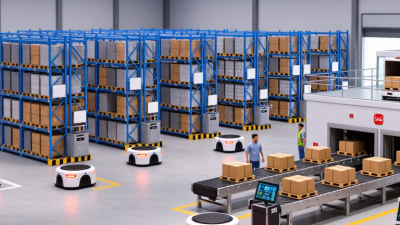
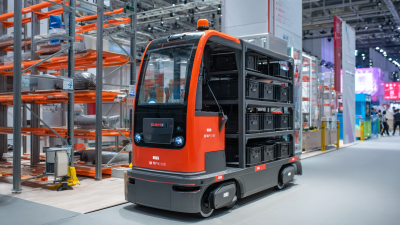
In 2026, autonomous mobile robots are moving beyond simple warehouse transport. Modern AMRs combine LiDAR, cameras, onboard software, and simultaneous localization and mapping. They can detect pallets, workers, racks, and changing floor conditions. Fleet management systems assign routes, balance workloads, and report battery status in real time. This reduces manual travel, but it does not remove operational responsibility.

Manufacturers and suppliers now design AMRs for specific industrial demands. Warehouses use them for goods-to-person delivery, sorting, and replenishment. Factories deploy them between assembly cells, storage areas, and quality inspection stations. Hospitals can use enclosed models to move linens, meals, and approved supplies. Cold-storage sites require sealed components, stable navigation, and batteries that perform under low temperatures.

Integration experience often matters more than a robot’s advertised speed. A reliable deployment begins with route mapping, traffic analysis, safety testing, and worker training. It should also connect with warehouse or manufacturing software. Small details matter. Uneven floors, reflective surfaces, narrow aisles, and blocked charging stations can disrupt a promising project.

Reality is less tidy.

A pilot may succeed because staff provide extra support. That result can mislead decision-makers. Suppliers should document intervention rates, maintenance time, payload accuracy, and recovery performance. Buyers should request site trials under normal pressure, not ideal conditions. AMR technology is improving quickly, yet careful measurement remains essential for dependable industrial use.

Key Criteria for Evaluating AMR Manufacturers and Suppliers

Choosing an AMR manufacturer requires more than comparing navigation features or purchase prices. Examine real operating evidence, including uptime reports, payload tests, battery cycles, and recovery times after interruptions. A reliable supplier should explain how its robots behave near people, narrow aisles, loading points, and uneven warehouse floors. Ask for documented safety testing and compliance with applicable regional requirements.

Experience becomes visible during deployment. Strong suppliers provide site surveys, workflow simulations, integration support, operator training, and responsive maintenance. Request customer references from facilities with similar floor plans and workloads. Speak with users, not only sales teams. Review software update policies, data protection practices, spare-parts availability, and service response targets. An impressive demonstration may hide difficult integration work. I have found that simple tasks often reveal more than polished presentations. No supplier is perfect, and honest answers about limitations usually build greater trust.

Tips: Test a robot during a busy shift, not only in a quiet showroom. Measure delivery accuracy, obstacle recovery, noise, charging time, and worker acceptance. Start with a limited pilot and define measurable success criteria. Include supervisors and operators in the evaluation. Their practical feedback may challenge the original plan, which is useful. Compare total operating cost over several years, including installation, training, software, maintenance, and downtime. A lower purchase price can become expensive when support is slow or integration remains unfinished.

2026 Best Robot AMR Manufacturers and Suppliers – Key Criteria for Evaluating AMR Manufacturers and Suppliers

Evaluation Criterion What to Evaluate Reference Benchmark or Practical Indicator Recommended Verification Evidence Potential Risk if Overlooked Suggested Weight
Navigation and Localization Ability to navigate safely and repeatably in changing environments without relying exclusively on fixed routes. Reliable localization in the intended facility, including normal changes in lighting, people, pallets, and temporary obstacles. On-site demonstration, map-generation records, localization recovery test, obstacle-avoidance results, and performance data from a comparable facility. Frequent stops, route deviations, manual recovery, and reduced fleet productivity. 15%
Payload and Towing Capacity Maximum payload, towing capacity, load dimensions, load-center limitations, and compatibility with carts, racks, pallets, or bins. Rated capacity must exceed the heaviest normal load, with allowance for load variation, acceleration, ramps, and floor conditions. Published technical specifications, load tests, center-of-gravity requirements, interface drawings, and sample load validation. Unsafe operation, premature drive-system wear, failed missions, or inability to serve the intended material-flow process. 12%
Throughput and Mission Performance Travel speed, loading and unloading time, mission cycle time, dispatch efficiency, and performance during peak demand. Evaluate completed missions per hour under real operating conditions rather than relying only on maximum travel speed. Simulation model, time-and-motion study, peak-load test, historical fleet data, and clearly defined uptime and mission-success metrics. The system may meet nominal specifications but fail to achieve the required production or warehouse throughput. 14%
Battery and Charging Strategy Battery chemistry, operating time, charging method, charge time, opportunity charging, battery replacement, and lifecycle cost. The charging strategy should support the planned shifts without creating a process bottleneck or excessive spare-battery inventory. Battery datasheet, charging profile, duty-cycle test, thermal-management information, replacement procedure, and warranty terms. Downtime, shortened battery life, charging congestion, unexpected replacement costs, or reduced availability. 10%
Safety and Compliance Safety scanners, emergency stops, speed control, audible and visual warnings, separation monitoring, and risk-assessment support. Safety functions should be validated for the actual layout, pedestrian traffic, operating speeds, and applicable machinery-safety requirements. Declaration of conformity where applicable, risk assessment, safety-function documentation, test reports, manuals, and site acceptance records. Worker injury exposure, project delays, regulatory nonconformity, or restrictions on operating areas. 15%
Fleet Management and Software Multi-robot task allocation, traffic control, mission scheduling, dashboards, alerts, analytics, user permissions, and software updates. The platform should manage the required fleet size and integrate mission status, exception handling, and operational reporting in one interface. Live software demonstration, application-programming-interface documentation, cybersecurity controls, update policy, and user-role configuration. Traffic conflicts, poor visibility, manual intervention, difficult scaling, and dependence on unsupported custom software. 12%
Integration Capability Connectivity with warehouse-management, manufacturing-execution, enterprise-resource-planning, warehouse-control, conveyor, elevator, and automatic-door systems. Standard interfaces and documented integration methods should be available for the systems already used by the customer. Interface specifications, integration architecture, reference projects, testing protocol, data-ownership terms, and change-control process. Long implementation periods, high engineering costs, duplicate data entry, and unreliable handoffs between systems. 10%
Environmental Suitability Performance on floors, ramps, thresholds, narrow aisles, loading areas, cold rooms, dusty zones, humid areas, and variable lighting. Operating limits should match the actual temperature, humidity, floor flatness, gradients, clearances, and surface conditions. Environmental ratings, site survey, traction test, ramp test, clearance analysis, and documented operating limitations. Reduced traction, navigation errors, corrosion, sensor degradation, or unplanned restrictions on deployment areas. 7%
Service and Technical Support Local service coverage, spare-parts availability, remote diagnostics, response times, preventive maintenance, training, and escalation procedures. Support commitments should define response and resolution targets, spare-parts lead times, and responsibilities after commissioning. Service-level agreement, support organization chart, maintenance schedule, training plan, spare-parts list, and customer references. Extended downtime, inconsistent maintenance quality, and limited ability to recover from software or hardware faults. 8%
Total Cost of Ownership Robot and software price, installation, integration, infrastructure, training, maintenance, batteries, subscriptions, and decommissioning. Compare the complete cost over the planned service period, not only the initial purchase price. Itemized quotation, five- to ten-year cost model, warranty coverage, consumables list, subscription terms, and energy assumptions. Budget overruns, unexpected recurring charges, and a lower return on investment than forecast. 7%
Scalability and Product Roadmap Ability to add robots, expand operating zones, introduce different robot types, and support future process changes. The supplier should provide a clear expansion architecture without requiring a complete replacement of the original system. Scalability demonstration, fleet-size limits, roadmap, backward-compatibility policy, and commercial terms for additional units. Vendor lock-in, costly redesign, limited capacity during growth, or incompatibility with future automation projects. 5%
Recommended evaluation method: Score each criterion from 1 to 5, multiply by the suggested weight, and validate the result through a site-specific pilot or acceptance test. 100%

Leading Robot AMR Manufacturers and Suppliers in 2026

Leading Robot AMR Manufacturers and Suppliers in 2026

Leading robot AMR manufacturers and suppliers in 2026 are judged by more than navigation speed. Their value appears in daily warehouse work, where narrow aisles, changing loads, and human traffic create real pressure. Experienced suppliers provide complete systems, including mobile robots, fleet software, charging equipment, installation, and operator training. The strongest teams also explain limitations clearly instead of promising effortless automation.

Reliable manufacturers support practical testing before large deployment. A pilot may begin with two robots moving cartons between storage and packing areas. Engineers measure route accuracy, battery recovery, obstacle response, and hourly throughput. Small gaps matter. Suppliers should provide maintenance schedules, spare-part access, software update policies, and documented safety procedures. Their technical teams need to understand local facility conditions, not only product specifications.

Trust also depends on evidence. Look for transparent performance data, verified safety validation, cybersecurity controls, and references from similar operations. A supplier with strong integration skills can connect AMRs with warehouse management and conveyor systems without creating fragile workarounds. Still, no supplier is flawless. Indoor maps may require frequent adjustment, and wireless interference can reduce performance. Buyers should question optimistic demonstrations and request clear failure-handling plans. The leading AMR partners in 2026 will be practical collaborators, capable of improving a system after real workers expose its weaknesses.

AMR Product Features, Navigation Systems, and Customization Options

Choosing an AMR manufacturer requires more than comparing payloads and battery capacity. A useful evaluation begins with the robot’s actual working environment. Measure aisle width, floor condition, lighting, traffic, and delivery cycles. These details show whether the AMR performs reliably beyond a showroom.

Payload ratings should include carts, shelves, and uneven load distribution. Small details matter. Braking distance, charging behavior, access clearance, and manual recovery procedures affect daily productivity.

Navigation systems may combine laser scanning, cameras, inertial sensors, and mapped routes. Laser navigation supports accurate positioning around racks and fixed structures. Vision systems can identify people, pallets, and temporary obstacles.

Sensor fusion usually performs better than one technology alone, especially in changing warehouse conditions. However, no navigation method is perfect. Reflective surfaces, poor lighting, dust, or crowded crossings can still create hesitation.

During acceptance testing, observe blocked paths, emergency stops, and route recovery instead of checking speed alone.

Customization options should match the operation, not merely add features. Manufacturers may provide adjustable shelves, conveyor tops, robotic attachments, lifting modules, and software interfaces.

Integration with warehouse systems should define task rules, priority levels, alerts, and traceable movement records. Ask for interface documentation, test reports, maintenance schedules, and operator training.

A neat specification can still disappoint when support is slow or updates are unclear. Pilot testing with real loads often exposes small problems, such as tight turning spaces or charging queues, before they become expensive habits.

Market Trends and Selection Considerations for AMR Buyers

2026 Best Robot AMR Manufacturers and Suppliers

The AMR market is moving from pilot projects toward measurable warehouse performance. The International Federation of Robotics reported 541,302 industrial robots installed globally in 2023. This figure shows strong automation demand, although it does not measure AMRs alone. Interact Analysis also identifies warehouse mobile robots as a fast-growing automation segment. Buyers should treat forecasts carefully. Market estimates often use different definitions.

A suitable AMR supplier must match the actual workflow, not just display impressive specifications. Check payload stability, navigation accuracy, charging behavior, fleet management, and integration with warehouse software. Ask for site references with similar aisle widths, floor conditions, and order volumes. Safety documentation and local service capacity matter equally. A machine that moves quickly may still create delays during congestion. Total cost should include installation, software, maintenance, training, and battery replacement. Perfect comparisons are rare. Your scoring model may need revision after a live trial.

Tips: Test three representative routes during peak activity. Measure completed missions per hour, waiting time, recovery time, and human intervention. Request twelve months of uptime data, not only demonstration results. Confirm spare-part availability and response times in writing. A short pilot can reveal issues that brochures hide.

Scroll to Top