China Top 10 Laboratory Robotics Suppliers?
China’s laboratory robotics sector has expanded rapidly, supporting pharmaceutical research, clinical testing, biotechnology, and academic laboratories. This guide introduces ten notable Chinese suppliers associated with laboratory robotics and automated workflow equipment.
The comparison considers product range, automation accuracy, software compatibility, service support, certifications, and documented customer experience. Attention is given to liquid handlers, robotic arms, sample transport systems, and integrated platforms. Practical details matter, such as reliable tube handling, clear calibration records, stable plate positioning, and software that connects with laboratory information systems.
Performance is not the only concern. A supplier may offer impressive equipment but provide limited installation guidance or slow technical support. That weakness can become expensive during a busy testing cycle. Rankings should therefore be treated as a useful starting point, not a permanent verdict. Market positions change, product lines evolve, and public information is sometimes incomplete. Readers should verify specifications, validation documents, maintenance terms, and regional service coverage before making a purchase. This approach aims to provide a balanced, evidence-conscious introduction for laboratories comparing Chinese automation partners. It also recognizes an uncomfortable point: the cheapest system may not deliver the lowest total cost. Reliable automation is measured over months of daily operation, not during a brief demonstration.
What Laboratory Robotics Suppliers Provide in China
China Top 10 Laboratory Robotics Suppliers?
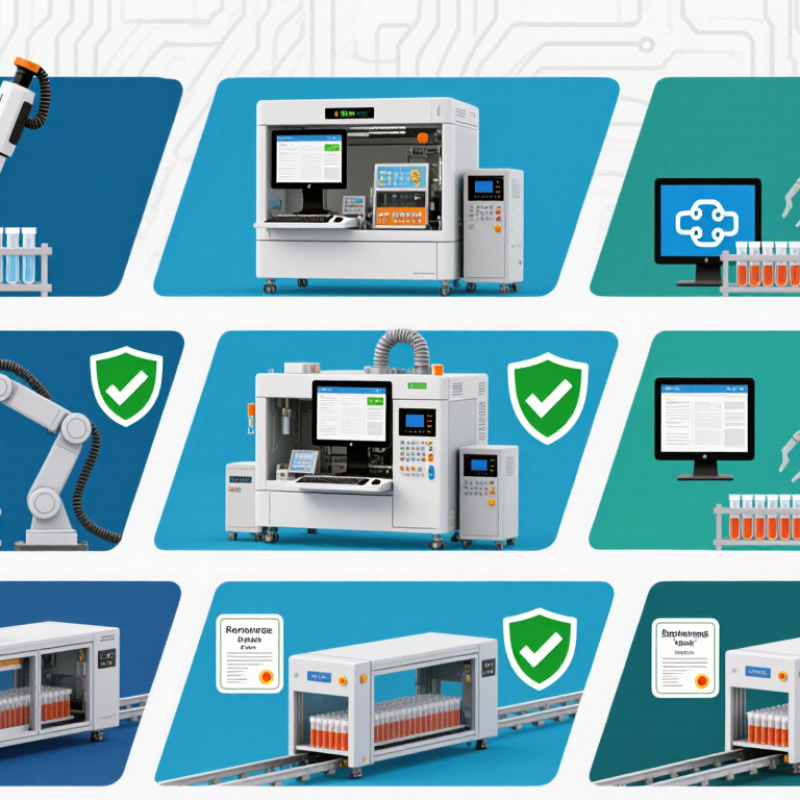
Laboratory robotics suppliers in China provide more than robotic arms. They deliver liquid handlers, automated pipetting stations, plate readers, centrifuge links, storage systems, and laboratory software. In daily operations, a supplier may also design the complete workflow, from sample barcode scanning to refrigerated retrieval. Small details matter. A misaligned tip rack can stop an entire shift.
The market is supported by China’s wider automation growth. The International Federation of Robotics reported 276,288 industrial robot installations in China during 2023, representing more than half of global installations. Laboratory automation is smaller, but it benefits from the same engineering base. MarketsandMarkets estimates the global laboratory automation market could grow from about 6.7 billion US dollars in 2023 to 9.5 billion by 2028. Different reports use different market definitions. That limitation should be acknowledged.
What do Chinese suppliers provide in practice? Many offer modular instruments, custom integration, control software, validation documents, operator training, and maintenance contracts. Some adapt systems for genomics, clinical testing, pharmaceutical research, or food analysis. Local technical teams can shorten response times and modify fixtures for domestic laboratory equipment. Yet customization is not automatically better. Poor documentation, weak software interfaces, or insufficient user training can reduce reliability. The fit is not always clean. Buyers should request cycle-time evidence, error recovery tests, data-integrity controls, and service-response records before selecting a supplier.
China Top 10 Laboratory Robotics Suppliers: What They Provide
Relative coverage of commonly supplied laboratory-automation capabilities in China, based on publicly described market offerings. The index reflects how frequently each capability appears in supplier portfolios, not company revenue or market share.
Laboratory robotics suppliers in China commonly provide automated liquid handling, sample preparation, microplate processing, laboratory information-system connectivity, and robotic transport. Higher scores indicate broader availability across the supplier landscape.
How China’s Laboratory Robotics Suppliers Are Evaluated
China Top 10 Laboratory Robotics Suppliers?
Ranking China’s top laboratory robotics suppliers requires more than comparing catalogues. Evaluation should begin with evidence from real laboratory workflows. Ask for cycle-time records, failed-run logs, and maintenance histories. Photographs are not enough. A serious assessment includes hands-on trials using representative samples, containers, and pipetting volumes. Engineers should observe whether the system handles jams, liquid variation, and unexpected pauses without unsafe movement.
Integration is another critical measure. The robot should communicate reliably with laboratory information systems, barcode readers, balances, and existing instruments. Review data integrity, user permissions, audit trails, and software update procedures.
Suppliers should provide clear validation documents, risk assessments, and equipment qualification support. Service quality also matters. Check response times, spare-parts availability, remote diagnostics, and technician training. A low purchase price can become expensive when downtime reaches several working days.
Independent customer references add credibility, especially from laboratories with similar workloads. However, references should be verified rather than accepted at face value. A polished demonstration can hide limitations. It is useful to request a factory acceptance test and a site acceptance test with written performance targets. No score is perfect. Some suppliers may offer stronger hardware but weaker software support, while others may reverse that balance. Evaluation teams should record these weaknesses openly and reassess them after six or twelve months of operation.
Profiles of China’s Top 10 Laboratory Robotics Suppliers
China’s laboratory robotics sector is moving from isolated instruments toward connected workflows. These systems support hospitals, universities, and industrial laboratories. Grand View Research projects steady growth in the global laboratory automation market through 2030. Its analysis highlights labor shortages, reproducibility, and higher testing volumes as major drivers. The International Federation of Robotics reported 276,288 industrial robot installations in China during 2023. That figure covers wider manufacturing, not laboratories, but it shows the country’s strong automation foundation.
The ten leading Chinese suppliers differ in practical strengths. Some specialize in robotic liquid handling and precise dispensing. Others develop modular stations for extraction, plate management, and sample preparation. Their profiles deserve evaluation through installed systems, protocol flexibility, validation records, uptime, and service response. Clinical-focused suppliers often emphasize barcode tracking, contamination control, and laboratory information system integration. Research-oriented suppliers usually offer open programming and compact equipment. That matters.
Public procurement records and technical disclosures can reveal capability. They rarely show total ownership cost. A lower purchase price may hide training, consumables, or delayed maintenance. This ranking is useful, but not absolute. Market data remains fragmented, and supplier claims are not always comparable. A dependable laboratory robotics supplier must provide more than hardware. It should support the full workflow, from installation to daily troubleshooting.
Key Technologies and Applications in Laboratory Automation
China’s top laboratory robotics suppliers compete through practical automation, not attractive catalogs alone. Their systems commonly combine robotic arms, liquid handlers, barcode readers, and laboratory information management software. In real laboratories, dependable sample tracking matters as much as movement speed.
A missed barcode can delay an entire batch. I have seen small calibration errors create large data gaps.
Key technologies include precise pipetting, automated plate handling, temperature control, and machine vision. Liquid handlers must manage different viscosities without damaging samples or producing unstable volumes. Vision systems can confirm tube positions, liquid levels, and cap removal.
Integrated sensors also detect clots, empty wells, and instrument interference. These safeguards support repeatable testing, especially in clinical, pharmaceutical, environmental, and research laboratories.
Fast is useful. Accurate is essential.
Applications are expanding beyond repetitive dispensing. Robots now prepare samples, transfer plates, organize cold storage, and support high-throughput screening. Modular designs allow laboratories to begin with one workstation and add functions later.
However, software integration remains a difficult issue. Different instruments may use incompatible data formats or communication protocols. Staff training is another overlooked cost. Automation can reduce manual handling, but it cannot repair poor workflows.
No platform is perfect. Buyers should verify validation records, service response times, cleaning procedures, and recovery steps after a power failure.
Supplier claims need practical testing with real samples, not only demonstrations.
How to Choose a Suitable Laboratory Robotics Supplier in China
Choosing a suitable laboratory robotics supplier in China requires more than comparing the top ten search results. Define your workflow first. Record sample types, daily volumes, accuracy limits, and required instruments. A supplier should explain how its system handles liquid transfer, barcode tracking, contamination control, and error recovery. Ask for a live demonstration using containers similar to yours. Test it live.
Experienced suppliers provide clear technical documents, risk assessments, validation support, and traceable quality records. Check manufacturing controls, software update procedures, calibration methods, and operator training. Request references from laboratories with comparable workloads, not only impressive facilities. During factory visits, inspect assembly areas, testing records, spare-parts storage, and packaging methods. Details matter. They often do.
After-sales capability deserves equal attention. Confirm response times, remote diagnostics, local engineers, warranty boundaries, and the availability of replacement parts. Discuss installation, acceptance testing, and performance verification before signing a contract. A low purchase price may become expensive when integration takes months. Ask for a detailed timeline and written responsibilities.
Do not rely on polished demonstrations alone. Some systems perform well with ideal samples but struggle with viscosity changes, small volumes, or crowded benches. This is where careful questioning helps. A supplier may not fit every application, and that is acceptable. In my experience, transparent limitations are more reliable than confident promises. Keep a trial plan, measurable acceptance criteria, and an honest record of unresolved issues. Human review still matters, even in highly automated laboratories.
Related Posts
-
What Are the Best Types of Laboratory Robotics in 2026?
-
Why Is Laboratory Robotics Important for Global Buyers?
-

China Best Lab Robotics Manufacturers How to Choose?
-

How to Optimize Lab Robotics for Efficient Procurement in 2026?
-

Revolutionizing Research: The Impact of Lab Robotics on Scientific Discoveries
-
Top 10 Autonomous Robots for Global Procurement Needs?