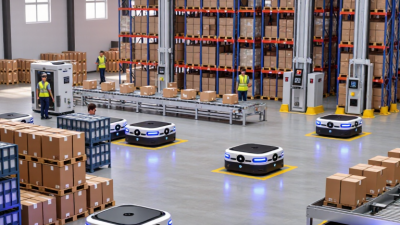
10 Tips for Choosing Autonomous Logistics Solutions
Choosing an autonomous logistics solution is not just a technology purchase. It changes how goods move, how teams work, and where daily decisions are made. A warehouse robot may look impressive during a polished demonstration. The harder test comes at 6 a.m., when a loading bay is crowded and a delayed pallet disrupts the route.
MIT roboticist Daniela Rus’s work offers a useful principle: autonomous systems should extend human capabilities, not be treated as isolated replacements for people. This is a paraphrase of her broader perspective, not a direct quotation. It matters because successful autonomous logistics depends on people, software, vehicles, and facilities working together. A solution must fit real workflows, including the awkward ones that rarely appear in a sales presentation.
This guide presents 10 practical tips for evaluating options. It considers operational fit, safety features, system integration, scalability, vendor support, and measurable returns. It also asks what happens when connectivity drops or a robot meets an unexpected obstacle. Small details count: turning space, floor conditions, shift patterns, and the clarity of an alert on a busy operator’s screen. No checklist predicts every disruption. I’d be cautious of any plan that claims otherwise. The right choice is not necessarily the most advanced system; it is the one that solves a defined problem reliably and can improve with experience. Start with the work, not the brochure.
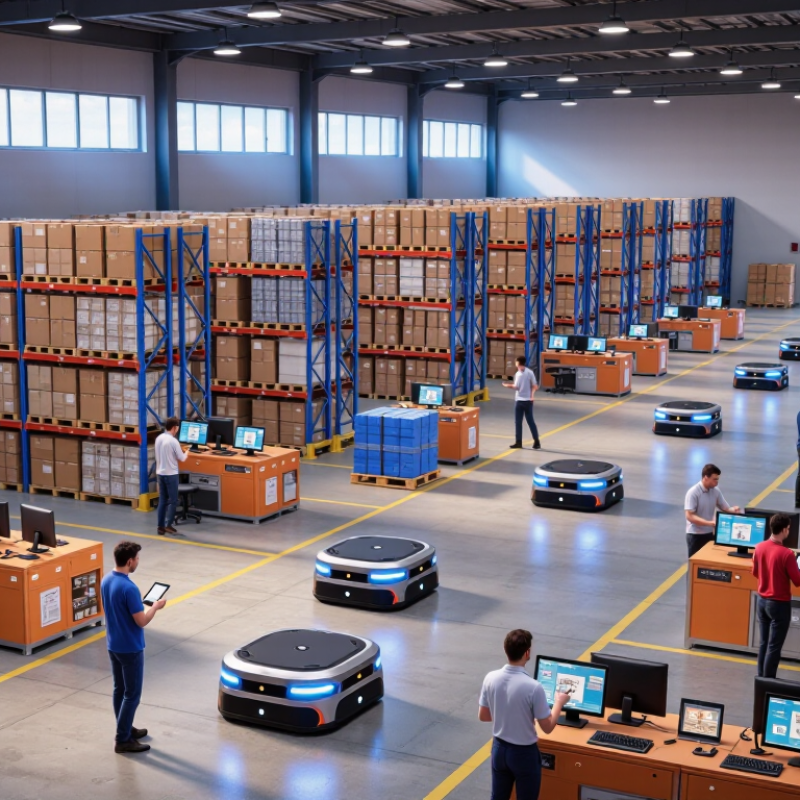
Defining Operational Needs and Logistics Goals
Before choosing an autonomous logistics solution, document how work moves through your operation. Measure order volume by shift, peak-hour congestion, travel distance, loading delays, and the number of manual handoffs. A warehouse with long, repetitive routes has different needs from a facility slowed by variable orders or crowded staging areas. Walk the floor during a busy shift; spreadsheets can miss the bottleneck beside a dock door.
Set goals that connect to these conditions. Define a baseline for picking time, on-time dispatch, damage rates, and labor hours, then choose measurable targets and a review period. MHI’s 2024 Annual Industry Report found that 88% of respondents expected to increase supply-chain technology investment over the next five years. That signals strong interest, not guaranteed returns. Compare options using a small pilot, and include integration effort, safety procedures, maintenance, and staff training in the cost estimate. Targets may need revision. That is useful feedback.
Tip: Choose one high-friction workflow for a pilot. Record its current performance before automation. Set a success threshold, such as shorter order-cycle time without more errors. Ask floor staff what disrupts the process, too; their observations can expose awkward exceptions that a clean dashboard hides.
10 Tips for Choosing Autonomous Logistics Solutions: Define Operational Needs and Goals
Example readiness scores (1 = low, 5 = high) across practical selection criteria. These illustrative ratings are a planning aid, not industry benchmarks; assess your own site using measured operational data.
Assessing Automation Technologies and Vehicle Capabilities
Choosing autonomous logistics solutions starts with the work, not the vehicle. Map a typical shift: aisle widths, floor joints, loading points, pedestrian crossings, and peak-hour congestion. Compare navigation options, such as laser mapping, cameras, or fixed guidance, against those conditions. A polished demo is useful, but a live trial with mixed traffic reveals more. Ask how the system detects blocked routes, recovers after a stop, and records exceptions. Small details matter.
Tips: Test one busy route. Check stopping distance, turning radius, payload stability, and battery runtime under a realistic load. Request maintenance intervals and recovery procedures in writing.
Vehicle capability should match today’s tasks and likely changes. Confirm rated payload at the required lift height; capacity can fall as loads rise. Check doorway clearance, ramp gradients, floor limits, and whether the vehicle handles carts or pallets consistently. Consider speed limits near people, audible alerts, emergency controls, and visibility from the operator station. Review fleet software too: Can it assign jobs fairly, prioritize urgent moves, and share status with warehouse systems? Use measured cycle times, not optimistic estimates. One awkward corner can undo a neat spreadsheet estimate. Keep a manual fallback during rollout, then revisit assumptions using real shift data.
| # | Assessment Area | What to Evaluate | Evidence to Request or Measure | Why It Matters |
|---|---|---|---|---|
| 1 | Match the vehicle to the material flow | Compare the load type and movement pattern with suitable vehicle classes, such as mobile robots for totes, autonomous forklifts for pallets, or tugger vehicles for carts. | Document load dimensions, pickup and drop-off methods, route frequency, transfer points, and whether loads are carried, lifted, or towed. | A vehicle must handle the actual material and transfer interfaces, not just travel through the facility. |
| 2 | Verify payload and load handling | Check rated payload, load-center assumptions, lifting height, fork or platform dimensions, towing limits, and compatibility with the facility’s containers and pallets. | Compare equipment specifications with the heaviest and largest expected loads; test representative loads, including their center of gravity. | Payload ratings depend on how a load is positioned and handled; exceeding operating limits can affect stability and safety. |
| 3 | Assess navigation technology | Determine whether the system uses mapped natural-feature navigation, markers, reflectors, or a combination, and assess how it handles changes to the operating area. | Run route trials in representative aisles and work areas. Check localization reliability, rerouting behavior, and performance after layout changes. | Navigation approaches differ in infrastructure requirements and how easily they adapt to changing environments. |
| 4 | Test obstacle detection and safe operation | Review protective sensors, warning indicators, speed control, stopping behavior, and responses to people, equipment, and unexpected obstructions. | Request a documented risk assessment and observe controlled tests under the site’s operating conditions, including intersections and shared pedestrian areas. | Safe operation depends on the complete vehicle and workplace system, including traffic rules, visibility, and human interaction. |
| 5 | Calculate throughput for the real route | Evaluate travel speed alongside loading, unloading, waiting, crossing, and charging time. Include route length, traffic, and task-release frequency. | Measure completed transport cycles per hour during a representative pilot; record cycle time, queue time, mission completion, and peak-period performance. | Published maximum speed alone does not predict delivered throughput in a busy facility. |
| 6 | Check battery and charging strategy | Assess operating time per charge, charging duration, charging method, battery service requirements, and whether charging can fit around work cycles. | Compare measured energy use over a representative shift with the planned duty cycle; confirm charging locations and their impact on traffic and capacity. | Battery performance and charging availability affect vehicle availability and the number of vehicles needed. |
| 7 | Confirm floor and facility compatibility | Check aisle width, turning space, floor condition, gradients, thresholds, door clearances, lift access, and transitions between different floor surfaces. | Survey the intended routes and test the vehicle at the narrowest turns, steepest gradients, and most challenging floor transitions. | Physical constraints can limit access or reduce performance even when navigation and payload specifications appear suitable. |
| 8 | Evaluate fleet coordination and integration | Review how missions are assigned, traffic is coordinated, priorities are managed, and the system exchanges tasks or status with warehouse and production software. | Demonstrate end-to-end mission handling, exception management, traffic rules, and integration using representative operational scenarios. | Reliable coordination helps prevent vehicle conflicts and ensures automated transport fits existing workflows. |
| 9 | Plan for maintenance and recovery | Assess routine inspection needs, replaceable components, fault reporting, service access, recovery procedures, and availability of technical support. | Request maintenance schedules, fault-response procedures, operator training requirements, and a demonstration of recovery from common stoppages. | Downtime and slow recovery can reduce effective capacity and disrupt dependent operations. |
| 10 | Run a measured pilot before scaling | Set acceptance criteria for safety, completed missions, cycle time, system availability, exception rate, and operator workload before a broader deployment. | Use baseline and pilot data from comparable shifts and routes; document exclusions, operating assumptions, and results for peak and normal conditions. | A representative pilot tests real-world performance and reveals integration or process issues before investment is expanded. |
Evaluating System Integration, Safety, and Regulatory Compliance
An autonomous logistics system must fit the warehouse it enters, not just the demonstration floor. Check how it exchanges orders, location data, and status updates with warehouse software and existing equipment. MHI and Deloitte’s 2024 Annual Industry Report found that 55% of surveyed supply chain leaders planned to increase technology investment. Spending alone, however, does not guarantee smooth integration. Test real handoffs, including delayed messages and blocked aisles.
Safety needs practical testing. A vehicle stopping near a blind corner is more important than a polished dashboard. The U.S. Bureau of Labor Statistics recorded 930 fatal work injuries in transportation and warehousing in 2023, underscoring the sector’s serious risks. Review risk assessments, emergency stops, pedestrian detection, and procedures for restarting after faults. ISO 3691-4:2020 sets safety requirements for driverless industrial trucks and their systems. Standards matter, but local rules and site conditions still need review.
Ask suppliers to document interfaces, software updates, incident logs, and responsibility for safety checks. Verify that workers can recognize alerts and safely clear a stalled unit. Small details count: a poorly placed charging point can obstruct a marked walkway. Compliance paperwork can look complete while daily workflows remain unclear. I would test the awkward shift change, too. That is where assumptions often show.
Comparing Vendors, Costs, and Scalability
Compare vendors against the same warehouse workflow, not polished demonstrations. Ask each supplier to move a 12-kilogram carton from receiving to a packing lane, then show how the system handles a blocked aisle. Record travel time, human interventions, and missed handoffs. Small differences matter. A solution that saves 20 seconds per trip may still disappoint if staff must stop it every hour.
Costs extend well beyond the vehicle or software fee. Request a three-year estimate covering integration, site mapping, charging equipment, support, training, and downtime. Check whether updates or additional units change the fee. A low quote can hide costly service limits. Compare total cost per completed task, using your own order mix and peak-hour volume. If vendors exclude setup labor, add a realistic allowance; this estimate is often messy.
Scalability means more than adding units. Ask how traffic rules, fleet supervision, and task assignments perform when volume doubles or a second site opens. Request evidence from a comparable operation, including peak utilization and recovery time after network loss. Check whether workers can learn the controls during a short shift briefing. Growth assumptions deserve scrutiny. Your future layout may not match today’s map, and forecasts are rarely tidy. Keep one manual fallback; it may feel old-fashioned, but it can reveal weak dependencies.
Planning a Pilot and Measuring Long-Term Performance
A pilot should test a real operating problem, not just demonstrate a robot moving smoothly. Choose one bounded workflow, such as replenishing a picking area during a busy shift. Record a baseline first: trips per hour, order delays, labor time, near misses, and battery-related downtime. Start small. Then test again under peak volume, mixed traffic, and occasional blocked aisles. A quiet afternoon is not a useful stress test.
The International Federation of Robotics reported 541,302 industrial robot installations worldwide in 2023, with 4.28 million units operating globally. That signals expanding automation, but it does not prove autonomous logistics will pay off at a particular site. Measure results against your own baseline. Track completed missions, intervention frequency, uptime, charging time, and cost per task. Include integration, maintenance, training, and software costs; purchase price alone can make a weak case look strong.
Keep measuring after the pilot. Compare performance across shifts and seasons, and review exceptions with operators who know where workflows actually snag. Set targets before deployment, then agree on what would trigger a pause or redesign. Some benefits, like fewer repetitive trips, may appear quickly; reliability often takes longer to assess. That matters. A pilot can look successful while relying on unusually attentive staff or ideal traffic conditions. Record those dependencies, revisit them after several months, and be willing to revise the original assumptions.
Related Posts
-
Top 10 Logistics Robotics Companies for Global Buyers
-
How to Choose Autonomous Logistics Solutions?
-
Top 10 Warehouse Robotics Companies for Global Buyers
-
Unlocking Warehouse Efficiency: How Robot AMRs Are Transforming Supply Chains Today
-

Exploring the Future of AMR Robots in Everyday Life and Their Impact on Our Daily Activities
-

What is an AMR Robot and How Does it Revolutionize Automation