Top 10 Warehouse Robotics Companies for Global Buyers

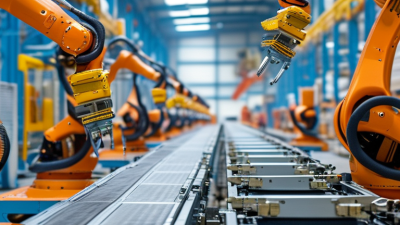
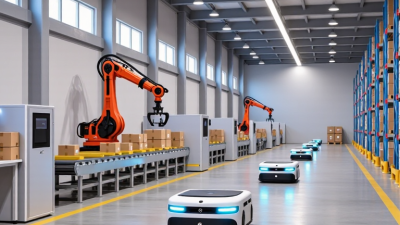
Warehouse robotics is reshaping how global warehouses receive, store, pick, and dispatch goods. Autonomous mobile robots move cartons between storage zones and packing stations. Automated storage systems retrieve inventory from dense vertical locations. Robotic arms handle repetitive picking tasks with increasing precision.

This guide examines 10 warehouse robotics companies serving international buyers. It considers more than impressive product demonstrations. Each company is assessed through practical factors, including deployment experience, system reliability, software compatibility, safety design, maintenance support, and total ownership cost. Buyers should also examine warehouse size, product variety, floor conditions, labor availability, and expected order volumes. A robot that performs well in a controlled showroom may face difficulties in a busy facility with mixed packaging and frequent layout changes.

Details matter. A two-minute battery swap can influence daily throughput. A delayed software update can affect an entire fulfillment line. Local service teams and training resources may matter more than a polished specification sheet. Real results vary. No ranking can perfectly represent every market or warehouse operation. Some vendors publish limited performance data, while customer case studies may emphasize their strongest outcomes. That limitation deserves attention.

The companies featured here represent different approaches, technologies, and regional strengths. This overview is designed to support careful comparison, not automatic purchasing decisions. Global buyers should validate references, request site-specific demonstrations, and calculate costs using their own workflows. The best partner is rarely the most visible one. It is the company that can deliver safely, integrate reliably, and improve operations over time.
Top 10 Warehouse Robotics Companies for Global Buyers

Warehouse Robotics: Definition, Scope, and Core Technologies

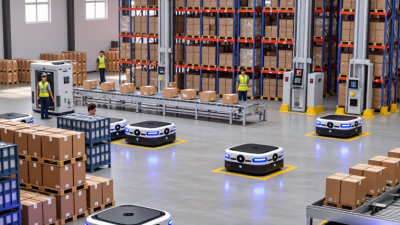
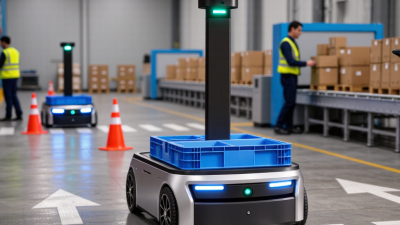
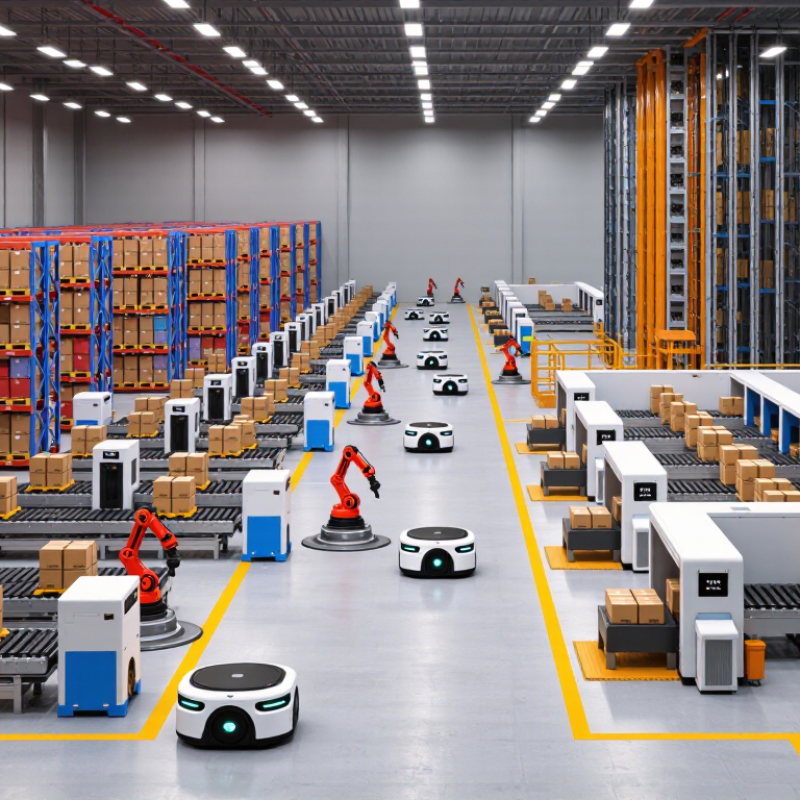
Warehouse robotics refers to automated machines and software that move, store, pick, sort, or count goods. These systems support warehouses from receiving docks to packing stations. Their scope includes mobile robots, robotic arms, automated storage systems, conveyor networks, and inventory drones. A small robot may carry a sealed tote across a concrete floor, while a robotic arm places cartons into shipping containers.

Core technologies include sensors, machine vision, navigation software, robotic control systems, and warehouse management integration. Autonomous mobile robots use cameras, scanners, and mapping tools to avoid obstacles and select efficient routes. Goods-to-person systems bring shelves or bins to workers, reducing walking time. Vision systems identify package size, labels, and damaged surfaces. Fleet software assigns tasks and monitors battery levels, traffic, and delays.

Global buyers should examine more than advertised speed. Ask how the system performs during peak seasons, Wi-Fi interruptions, uneven flooring, and mixed package sizes. Maintenance access matters. So does local technical support. A fast pilot can expose hidden costs, but pilot results may not represent a full facility. That limitation deserves honest attention. Clean data is also essential; poor item dimensions can create repeated routing errors. Human workers still need clear procedures, training, and safe interaction zones. A practical evaluation should measure order accuracy, recovery time, energy use, and total operating cost over several weeks. Fancy automation can disappoint when basic processes remain unstable.

How the Top 10 Warehouse Robotics Companies Are Selected

Top 10 Warehouse Robotics Companies for Global Buyers

How the Top 10 Warehouse Robotics Companies Are Selected

A credible ranking needs more than product visibility. We assess verified warehouse deployments, system uptime, payload capacity, navigation accuracy, and integration performance.

The International Federation of Robotics reported nearly 113,000 logistics robots sold globally in 2023. This growth makes evidence more important, not less.

We compare results across practical operating conditions. These include cold storage, narrow aisles, mixed pallets, and peak-season workloads.

MHI’s 2024 Annual Industry Report found that 88% of supply chain professionals planned to increase technology investment. However, investment interest does not prove operational value.

Each candidate must show measurable labor savings, throughput improvement, maintenance response, and realistic implementation timelines. Safety certifications and compliance support also affect the score.

Cost requires careful judgment. We examine purchase price, software fees, training, spare parts, energy use, and long-term service coverage. Payback periods can look attractive on paper. They may change after integration delays or layout modifications.

Public performance data is often incomplete. That is a weakness worth acknowledging. Buyer interviews, independent case evidence, and supplier references help reduce promotional bias. We also consider regional support, language capability, cybersecurity practices, and compatibility with existing warehouse systems. A technically advanced solution may still rank lower if local service is unreliable or replacement parts take weeks to arrive.

Company Profiles: Products, Markets, and Automation Capabilities

Top 10 Warehouse Robotics Companies for Global Buyers

Company Profiles: Products, Markets, and Automation Capabilities

Global buyers should compare warehouse robotics companies by operating fit, not publicity. The International Federation of Robotics reported 113,000 transport and logistics robots sold in 2023, a 24% annual increase. That growth covers several product groups. Autonomous mobile robot suppliers focus on tote movement and flexible route planning. Automated storage providers deliver shuttle systems, cranes, and dense pallet storage. Picking specialists combine robotic arms, vision cameras, and machine-learning software. Other firms serve palletizing, parcel sorting, inventory drones, cold-chain handling, or micro-fulfillment.

Market coverage varies sharply. Some suppliers target large distribution centers in North America and Europe. Others design compact systems for Asian e-commerce facilities or labor-constrained markets. Strong profiles should show installed-site evidence, local maintenance teams, safety validation, and integration with warehouse management software. Integration matters. A fast robot can still become an expensive island. MHI’s 2024 Annual Industry Report found that 55% of supply-chain professionals already use robotics and automation, while 86% expect adoption within five years.

The best ten candidates should disclose payload limits, battery cycles, uptime methods, and recovery procedures. Buyers should request measured throughput during peak periods, not laboratory averages. A refrigerated warehouse needs different sensors and materials. A high-volume parcel hub needs different orchestration logic. Costs also include software licenses, spare parts, training, and network upgrades. Vendor claims deserve skepticism. Even strong systems may struggle with damaged cartons, irregular pallets, or changing order profiles. Pilot tests remain essential, although they can delay purchasing decisions. That delay is often useful.

Top 10 Warehouse Robotics Companies for Global Buyers - Company Profiles: Products, Markets, and Automation Capabilities
Rank Profile Primary Robotics Products Core Warehouse Applications Typical Customer Segments Geographic Market Coverage Automation Capabilities Deployment Model Best Fit for Buyers
1 Profile A Autonomous mobile robots, fleet software, goods-to-person workstations, and robotic carts Picking, replenishment, kitting, put-away, order consolidation, and internal transport E-commerce, third-party logistics, retail, apparel, and general merchandise North America, Europe, Asia-Pacific, and selected Middle Eastern markets Dynamic navigation, multi-robot traffic control, warehouse-management integration, and human-robot collaboration Flexible, phased automation Fast deployment with limited structural changes
2 Profile B Cube-based storage robots, robotic picking cells, storage bins, and control software High-density storage, goods-to-person picking, buffering, and order sequencing Online retail, grocery, consumer products, spare parts, and omnichannel fulfillment Europe, North America, Australia, and other international logistics markets High-density cube storage, robotic grid movement, workstation orchestration, and software analytics Modular fixed installation Space-constrained facilities with high SKU variety
3 Profile C Shelf-carrying mobile robots, picking stations, robotic arms, and warehouse-control software Goods-to-person picking, shelving, replenishment, returns processing, and inventory movement E-commerce, pharmaceuticals, retail distribution, and third-party logistics North America, Europe, China, Japan, South Korea, and Southeast Asia Shelf-to-person workflows, autonomous navigation, robotic induction, and scalable fleet management Scalable modular system High-throughput piece-picking operations
4 Profile D Pallet-shuttle robots, autonomous pallet movers, conveyors, and automated storage systems Pallet transport, storage and retrieval, cross-docking, staging, and truck loading support Food and beverage, manufacturing, cold chain, retail, and industrial distribution Europe, North America, Asia-Pacific, and Latin America Pallet handling, mixed-load movement, conveyor integration, safety sensing, and warehouse-control connectivity Integrated project solution Heavy-load and pallet-intensive warehouses
5 Profile E Autonomous case-handling robots, palletizing cells, depalletizing systems, and robotic arms Case picking, pallet building, depalletizing, replenishment, and mixed-SKU handling Grocery, food and beverage, consumer packaged goods, and wholesale distribution North America, Europe, and selected Asia-Pacific markets Layer handling, case recognition, pallet pattern generation, autonomous driving, and robotic manipulation Robotic workcell or fleet-based Case-level automation and labor reduction
6 Profile F Automated storage and retrieval systems, mini-load cranes, pallet cranes, and conveyor technology Pallet storage, carton storage, buffer management, sequencing, and automated picking support Manufacturing, retail, pharmaceuticals, food, automotive, and industrial logistics Global coverage across Europe, the Americas, and Asia-Pacific High-bay storage, crane-based retrieval, conveyor control, inventory accuracy, and warehouse execution software Large-scale engineered system Greenfield or major facility modernization
7 Profile G Autonomous pallet trucks, reach robots, tugger robots, and fleet-management software Pallet transport, line feeding, trailer unloading, staging, and repetitive horizontal movement Manufacturing, automotive, consumer goods, food, and distribution centers North America, Europe, and Asia-Pacific industrial markets Autonomous navigation, pallet detection, traffic management, safety-rated operation, and mixed-fleet control Retrofit-friendly mobile automation Existing facilities needing transport automation
8 Profile H Parcel-sorting robots, autonomous carts, conveyor modules, and sortation-control software Parcel induction, destination sorting, order consolidation, cross-docking, and outbound dispatch Parcel delivery, express logistics, e-commerce, postal operations, and 3PL providers China, Southeast Asia, Europe, the Middle East, and selected international hubs Barcode and vision identification, high-speed routing, destination sorting, and real-time dispatch control High-volume fixed or hybrid system Parcel hubs with fluctuating daily volumes
9 Profile I Robotic picking arms, vision systems, depalletizing units, and AI-enabled orchestration software Piece picking, item induction, depalletizing, tote handling, and order assembly Grocery, retail, e-commerce, pharmaceuticals, and contract logistics Europe, North America, and selected Asia-Pacific markets 3D vision, machine learning, grasp planning, SKU recognition, and integration with conveyors and mobile robots Targeted robotic automation Difficult or variable item-handling tasks
10 Profile J Shuttle-based storage systems, pallet and carton shuttles, conveyors, and warehouse software High-density storage, buffer allocation, pallet retrieval, carton sequencing, and fulfillment staging Cold chain, food and beverage, retail, manufacturing, and distribution Europe, North America, Latin America, and Asia-Pacific Multi-depth storage, shuttle coordination, temperature-controlled operation, inventory tracking, and system integration Engineered automated storage High-density storage and temperature-sensitive inventory

Note: Company identifiers are intentionally anonymized. Product categories, applications, market coverage, and automation capabilities reflect established warehouse robotics solution types used in global logistics operations.

Comparing Robotics Solutions for Different Warehouse Operations

Top 10 Warehouse Robotics Companies for Global Buyers

Warehouse robotics should match the operation, not the sales presentation. Mobile robots suit long travel routes and flexible picking zones. Automated storage systems support dense inventory and controlled temperature areas. Robotic arms handle repetitive picking, palletizing, and depalletizing tasks. Sortation systems work well when parcels move through high-volume outbound lanes. Inventory drones can scan elevated locations, but battery planning remains important.

The 2024 MHI Annual Industry Report found that 67% of supply-chain leaders expected to adopt robotics and automation within five years. The International Federation of Robotics also reported a 35% rise in logistics robot sales during 2023. These figures show strong demand, but adoption is not automatically profitable. Buyers should compare throughput, payload, aisle width, software integration, and service coverage. A picking robot may reduce walking distance while creating new replenishment work. That trade-off is easy to miss. Labor availability, local infrastructure, and peak-season volumes can change the best choice.

Tips: Start with one measurable process. Record travel time, picking accuracy, downtime, and training hours. Request a site simulation using real cartons and actual peak volumes. Check spare-parts availability in each target market. A low purchase price can become expensive when support is slow. Pilot results should guide expansion, even when they challenge the original plan.

Top 10 Warehouse Robotics Companies for Global Buyers

Comparing Robotics Solutions for Different Warehouse Operations

This comparison uses a 0–100 operational-fit score based on the typical suitability of each robotics solution for key warehouse requirements, including storage density, picking flexibility, pallet movement, inventory visibility, order speed, and integration complexity. Scores represent solution categories rather than individual companies or brands.

Global Buyer Guide: Costs, Integration, Support, and Scalability

Top 10 Warehouse Robotics Companies for Global Buyers

Global Buyer Guide: Costs, Integration, Support, and Scalability

Comparing the top ten warehouse robotics providers requires more than checking purchase prices. A practical budget includes robots, charging stations, software licenses, integration labor, staff training, and annual maintenance. For a small pilot, buyers may spend tens of thousands of dollars. Larger deployments can reach several hundred thousand dollars, depending on building size and workflow complexity.

Integration often determines the real project outcome. Ask whether the system connects with your warehouse management software, barcode scanners, conveyor controls, and existing safety equipment. Request a site survey before signing. Floor conditions, Wi-Fi coverage, aisle width, and peak order volumes can change the design. A polished demonstration may hide difficult exceptions. It is worth testing damaged cartons, blocked aisles, and sudden demand spikes.

Support quality matters after installation. Confirm response times, spare-parts availability, remote diagnostics, and local service coverage. A low-cost system may become expensive when technicians travel across borders. Scalability also needs evidence. Ask for a staged expansion plan, not only a large sales forecast. Can the platform add robots without stopping operations? Can it handle new warehouse zones and seasonal labor changes? I have found that spreadsheets often underestimate training time and process disruption. That deserves honest review. A short pilot with measurable targets, such as picking accuracy, travel reduction, and recovery time, provides stronger evidence than promises.

Scroll to Top