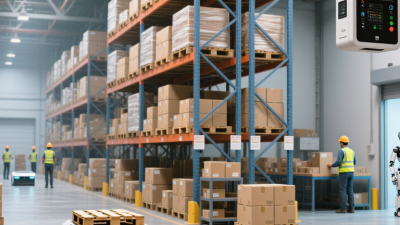
Top 10 Autonomous Robots for Businesses?
Autonomous robots are moving from controlled demonstrations into warehouses, factories, hospitals, and commercial buildings. IFR’s World Robotics 2024 report records 541,302 industrial robot installations worldwide in 2023, bringing the operational stock above 4.28 million. The same report says sales of professional service robots reached nearly 205,000 units, up 30% from 2022. The shift is real. Yet impressive totals do not tell a business whether a robot can navigate its aisles, handle its payloads, or integrate with existing systems.
This guide to the top 10 autonomous robots for businesses compares systems by practical fit, not headline-grabbing claims. It considers navigation, payload capacity, operating environment, safety features, deployment effort, and support requirements. A mobile robot that moves totes between picking stations solves a different problem from a cleaning robot covering a hotel corridor. Small details matter: doorway widths, floor transitions, charging locations, and busy shift changes can determine whether a pilot succeeds. The ranking is useful, but not definitive. Vendor specifications may not reflect performance in your facility, and results vary with layout and workflow. Treat each entry as a starting point for evaluation, then request a site assessment and verify claims against documented trials. Even a modest pilot can reveal overlooked bottlenecks. That’s worth doing.
How Autonomous Robots Support Business Operations
Top 10 Autonomous Robots for Businesses: How Autonomous Robots Support Business Operations
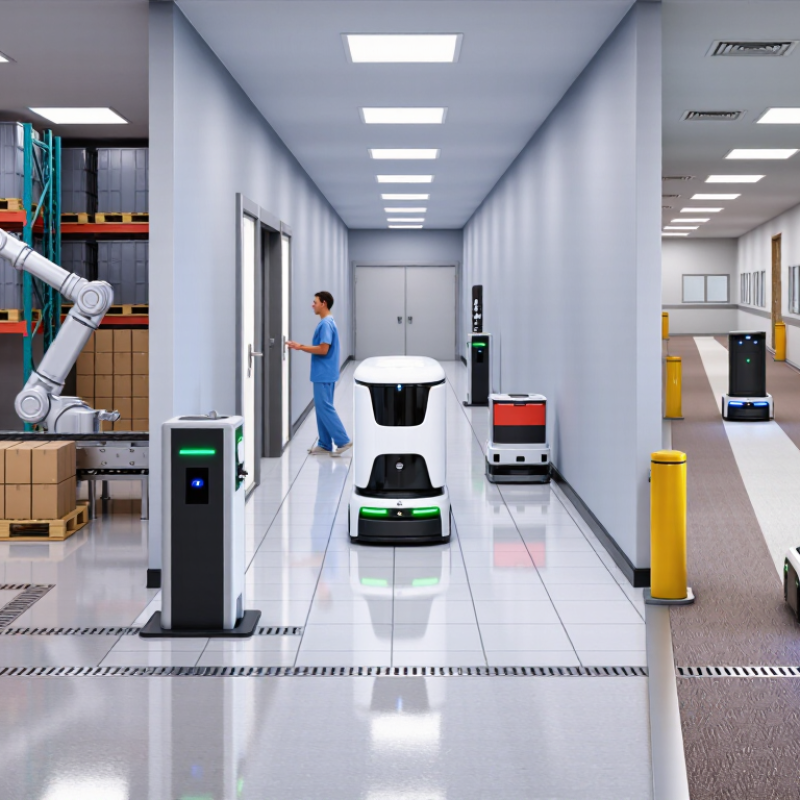
Autonomous robots support daily work by moving goods, scanning inventory, cleaning floors, inspecting equipment, and handling repetitive picking tasks. Common options include mobile robots, autonomous forklifts, delivery units, and robotic inspection systems. The International Federation of Robotics reported 4,281,585 industrial robots operating worldwide in 2023. That figure shows the scale of workplace automation, though it does not count every service or mobile robot. The distinction matters.
In a warehouse, a mobile robot can carry a tote between shelving and a packing station while staff focus on exceptions. Cleaning robots can follow scheduled routes, but cluttered aisles and sudden layout changes still require human oversight. Robots work best when routes, handoffs, and safety zones are mapped before deployment. Track practical measures, such as delivery time, missed scans, and downtime, against a reliable pre-automation baseline. A shiny demo is not an operating plan. I have seen teams underestimate the effort of keeping maps and workflows current.
Tips: Start with one repeatable task and a defined area. Record its current labor time and error rate. Test during a normal busy shift, not only in a quiet pilot. Keep a manual fallback ready.
How to Evaluate Robots for Commercial Use
Choosing among the top ten autonomous robots for business starts with the task, not the sales demo. Map a typical shift: where loads begin, which doors stay busy, and where people cross the route. Measure aisle widths and note floor changes, reflective glass, and crowded corners. Small details matter. A robot that navigates an empty showroom may struggle beside a stock cart at 4 p.m.
Evaluate performance in your actual work area. Track completed tasks, missed stops, manual interventions, and time spent charging. Ask how the system responds when a doorway is blocked or a lift is unavailable. Watch it handle the messiest hour, not just a quiet morning. Check payload limits, cleaning or maintenance needs, and whether staff can learn routine controls without lengthy training. A polished dashboard cannot fix a poor workflow.
Safety and support deserve equal attention. Review operating instructions, emergency stops, warning signals, and procedures for faults. Confirm who handles repairs, how quickly help is available, and what data the robot collects. Run a limited trial with clear measures before expanding deployment. That takes time. I would also repeat the trial after staff routines change; a successful first week is useful, but it is not proof of lasting fit. Some measurements will be imperfect, so record assumptions and revisit them instead of treating estimates as facts.
Top 10 Autonomous Robots for Businesses
For businesses, the top 10 autonomous robot roles are warehouse movers, picking assistants, inventory scanners, floor cleaners, delivery units, inspection crawlers, agricultural machines, hospital transporters, security patrol units, and industrial mobile manipulators. Each solves a different bottleneck. A warehouse mover can carry a tote between shelving and packing stations, while an inspection crawler can check pipes without sending staff into cramped spaces.
The International Federation of Robotics reported about 205,000 professional service robots sold in 2023, up 30% year over year. Transportation and logistics robots accounted for roughly 113,000 units, with sales rising 35%. These figures indicate strong operational demand, but not guaranteed savings. A robot still needs clear routes, reliable charging points, and workflows designed around its limits. Fit matters more.
Before buying, measure walking time, missed inventory scans, cleaning hours, or repetitive lifting. Then test a robot in one real shift, including crowded aisles and awkward handoffs. Track uptime, task completion, and staff workload; vendor demonstrations rarely show every interruption. The numbers can be messy. That is useful: a failed pilot may reveal poor process design, not just a weak machine. Compare service support, maintenance access, and safety features alongside purchase price.
Top Autonomous Robot Business Applications
Worldwide sales of professional service robots in 2023, by application area.
Transportation and logistics robots led the categories shown. These figures represent units sold, not a ranking of individual robot models. Source: International Federation of Robotics (IFR), World Robotics 2024 — Service Robots.
Business Applications Across Key Industries
Autonomous robots create the most value when assigned clear, repeatable tasks. In factories, mobile units can move parts between workstations, while robotic arms handle consistent pick-and-place work. In warehouses, robots carry totes through aisles and pause when sensors detect obstacles. These systems may reduce walking and reveal bottlenecks, but they need accurate maps, clear handoff zones, and regular checks. A misplaced pallet can still block a route.
Tips: Start with one shift and one measurable task. Track completion time, human interventions, and downtime. Small gains matter. Ask workers where delays occur before choosing a route or robot.
Hospitals can use delivery robots to move linens or supplies between designated areas, leaving staff more time for patient care. On farms, autonomous machines can monitor rows, carry produce, or support targeted fieldwork. Building operators may use them for floor cleaning after hours. Conditions change, though: wet floors, narrow corridors, and changing layouts can reduce reliability. Keep a manual fallback, review incident logs, and adjust routes with frontline staff. A pilot may look smooth in a quiet hallway, then struggle during a busy shift.
Top 10 Autonomous Robots for Businesses: Applications Across Key Industries
| Rank | Robot Type | Typical Business Applications | Key Industries | How It Operates | Business Value | Important Considerations |
|---|---|---|---|---|---|---|
| 1 | Autonomous mobile robot (AMR) | Moving materials, components, and orders between workstations or storage areas | Manufacturing, warehousing, healthcare, retail | Uses onboard sensors and mapped routes to navigate, detect obstacles, and adjust its path. | Can reduce repetitive transport work and support more consistent material flow. | Requires suitable routes, safe interaction rules, charging arrangements, and integration with dispatch systems. |
| 2 | Automated guided vehicle (AGV) | Transporting pallets, carts, or production materials along established routes | Manufacturing, distribution, logistics | Follows predefined guidance, such as floor markers, reflectors, or magnetic paths; some systems use additional sensing. | Provides repeatable transport for stable, predictable workflows. | Fixed routes may be less adaptable when layouts or traffic patterns change; pedestrian safety planning is essential. |
| 3 | Autonomous inventory-scanning robot | Reading shelf labels, detecting stock locations, and flagging discrepancies | Retail, warehousing, distribution | Moves through aisles and uses cameras or other sensors to capture product and location information. | Can increase the frequency and consistency of inventory checks while limiting manual aisle walks. | Results depend on readable labels, clear sightlines, accurate inventory data, and system integration. |
| 4 | Autonomous floor-cleaning robot | Routine floor scrubbing, sweeping, or vacuuming in commercial spaces | Retail, healthcare, hospitality, facilities management | Uses sensors and route planning to cover assigned areas while detecting obstacles and restricted zones. | Supports scheduled cleaning and allows staff to focus on tasks that require human judgment. | Needs appropriate floor conditions, routine maintenance, clear operating zones, and oversight around people. |
| 5 | Autonomous delivery robot | Carrying meals, supplies, documents, or small parcels within a site or defined service area | Healthcare, hospitality, campuses, logistics | Navigates between designated pickup and drop-off points using maps and onboard sensing. | Can streamline short-distance deliveries and reduce routine trips for staff. | Deployment may be limited by doors, elevators, uneven surfaces, weather, local rules, and handoff procedures. |
| 6 | Autonomous inspection robot | Collecting visual, thermal, acoustic, or environmental readings during facility inspections | Energy, utilities, manufacturing, infrastructure | Follows inspection routes and records sensor readings for review or comparison over time. | Can improve inspection frequency and help identify conditions that need human investigation. | Sensor readings require validation; hazardous-area operation and access permissions must be assessed carefully. |
| 7 | Agricultural field robot | Crop monitoring, targeted weeding, seeding, and selected field operations | Agriculture, horticulture | Uses positioning, cameras, and other sensors to navigate rows or field areas and perform a defined task. | May support more targeted fieldwork and provide data about crop and soil conditions. | Performance depends on crop type, terrain, weather, connectivity, and safe operation near people and equipment. |
| 8 | Autonomous security patrol robot | Patrolling defined areas and recording visual or environmental alerts for security teams | Commercial property, industrial sites, campuses | Travels along scheduled routes and uses cameras and sensors to report selected events to human operators. | Can extend routine patrol coverage and provide consistent records for review. | Does not replace emergency response or human judgment; privacy, data retention, and escalation policies matter. |
| 9 | Autonomous underwater vehicle (AUV) | Surveying, mapping, and inspecting underwater assets or environments | Marine research, offshore energy, ports, infrastructure | Follows a planned underwater mission using navigation and onboard sensing, then returns data for analysis. | Enables repeatable data collection in environments that are difficult or costly for people to access. | Mission range, underwater communications, currents, recovery plans, and operating conditions constrain use. |
| 10 | Autonomous robotic arm or workcell | Machine tending, part handling, inspection, and repetitive assembly tasks | Manufacturing, electronics, food processing | Performs programmed motions; vision and sensing can support locating parts or adapting to task conditions. | Can deliver consistent task execution and support production workflows across shifts. | Needs task-specific tooling, guarding or collaborative safety measures, and validation when products or processes change. |
Deployment, Safety, and Maintenance Considerations
Autonomous robots can move goods, inspect spaces, or support routine tasks, but a successful deployment starts with the worksite. Map narrow aisles, uneven thresholds, busy crossings, and charging points before choosing a machine. A robot that performs well in a showroom may struggle near a crowded loading bay. Run a limited pilot during normal shifts, then compare completed tasks, delays, and staff feedback. The first layout may be wrong.
Tips: Mark pedestrian routes clearly, keep charging areas unobstructed, and test emergency stops with trained staff. Record small failures, too. A wheel that repeatedly catches on a floor seam can reveal a larger route-planning problem.
Safety and maintenance need daily ownership. Set clear procedures for handovers, blocked paths, and unusual behavior. Workers should know how to pause a robot and report faults without guessing. Check sensors, wheels, batteries, and safety alerts on a regular schedule; dust or loose debris can affect performance. Keep maintenance logs with dates, symptoms, and repairs. Match service intervals to actual use, not just a calendar. This takes discipline. Even a careful plan can miss something, so review incidents and near misses with the people who work beside the machines.
Related Posts
-
How to Choose the Best Robot AMR in 2026?
-
2026 Best Robot AMR Manufacturers and Suppliers
-
2026 Best Robot AMR for Global Buyers?
-
Exploring the Future of AMR Robots in Smart Warehousing and Supply Chain Optimization
-

2025 Top Autonomous Robots Revolutionizing Industries and Daily Life
-
2025 How to Choose the Best AMR Robot for Your Warehouse Operations