2026 Best Robot AMR for Global Buyers?
Choosing the best robot amr for global buyers in 2026 requires more than comparing prices and payload figures. Warehouses now expect reliable navigation, safe human interaction, simple integration, and measurable productivity gains. A polished product video cannot prove performance on a crowded warehouse floor.
This guide examines robot AMR options through practical buying criteria. These include payload capacity, battery endurance, charging methods, fleet software, obstacle detection, and maintenance support. It also considers deployment experience, integration with warehouse management systems, and the availability of trained local technicians. Small details matter. A robot stopping beside a loading dock for ten minutes can disrupt an entire shift.
Performance must be verified.
Global buyers should review manufacturer data alongside independent testing, customer references, and documented service policies. Regional certification requirements, network conditions, floor quality, and labor workflows can change the final decision. A strong robot amr in one facility may perform poorly in another. That limitation deserves attention.
No ranking can remove every purchasing risk. Some specifications may appear impressive but lack long-term field evidence. Others may reflect controlled demonstrations rather than daily operations. This introduction therefore treats the 2026 market with careful optimism, not certainty. The goal is to help buyers compare systems honestly, identify hidden costs, and select automation that remains dependable after installation. Reliable support, transparent software updates, and realistic return-on-investment estimates should carry as much weight as speed. Safety should never be treated as a marketing feature.
What Is an AMR and How Does It Work?
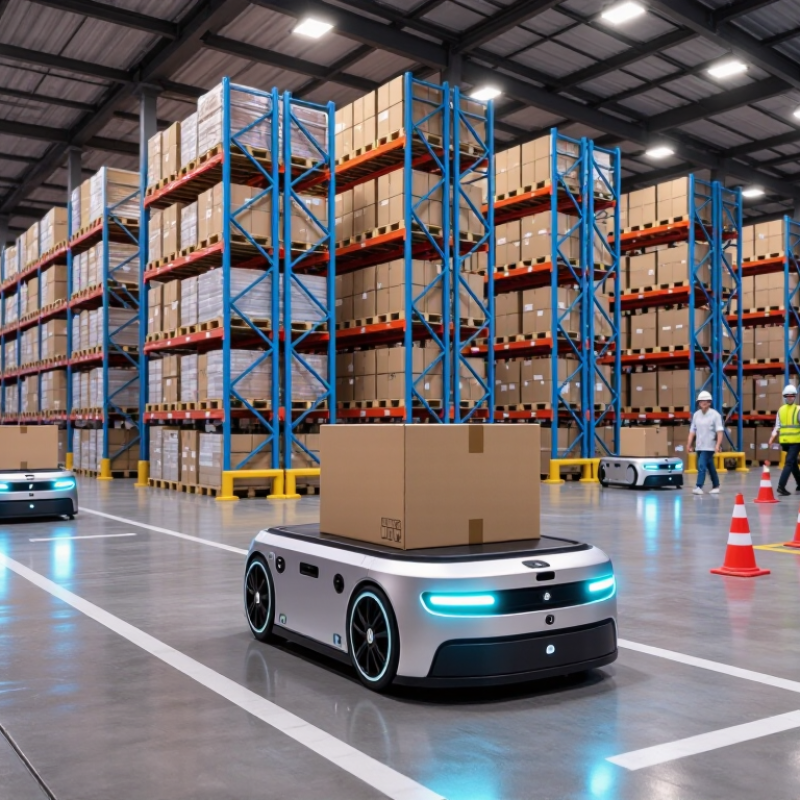
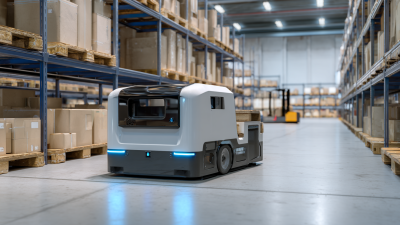
For global buyers asking about the best AMR in 2026, the real question is how well it works in a specific facility. An autonomous mobile robot, or AMR, moves materials without fixed tracks or magnetic wires. It uses cameras, lidar, wheel encoders, and software to understand its surroundings. The robot can carry totes, pallets, or tools between defined locations.
The process starts with mapping. During setup, the AMR scans aisles, workstations, doors, and safety zones. Its navigation system compares sensor data with the map while moving. If a worker, cart, or box blocks the route, the robot slows, stops, or selects another path. Fleet software can assign tasks, monitor battery levels, and coordinate several units. Docking stations may support automatic charging, which helps maintain regular operations.
Not magic.
In real facilities, performance depends on floor conditions, Wi-Fi coverage, lighting, traffic, and payload design. Reflective surfaces can confuse some sensors. Temporary storage can also make an accurate map outdated. I have found that a careful site survey often matters more than impressive speed claims. Buyers should check stopping distances, cybersecurity controls, maintenance access, spare-part availability, training, and local safety requirements. A small pilot can reveal problems that a demonstration hides. The best AMR is not always the fastest model; it is the one that safely repeats useful work with predictable support.
Key Types of AMRs for Different Industrial Applications
2026 Best Robot AMR for Global Buyers?
Key Types of AMRs for Different Industrial Applications
In 2026, the best AMR depends on the work, not the brochure. The International Federation of Robotics reported nearly 205,000 professional service robots sold in 2023. Transportation and logistics remained the largest application area. This growth reflects a practical need: moving materials safely, repeatedly, and with fewer manual journeys.
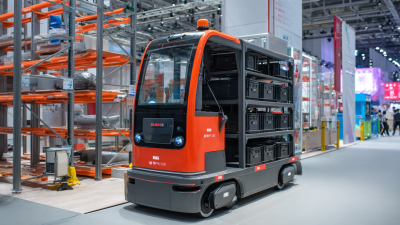
Goods-to-person AMRs suit warehouses with dense shelving and frequent order changes. They bring bins to operators, reducing walking across long aisles. Tugger AMRs fit factories that move carts between assembly lines, supermarkets, and inspection areas. Pallet-moving AMRs handle heavier loads around docks and storage zones. They need accurate floor mapping and reliable obstacle detection. Outdoor AMRs require stronger weather protection, wider tires, and safer operation on uneven concrete. Cleanroom models demand controlled particles and careful maintenance. Different floors. Different risks.
Interact Analysis projects the global mobile robot market will exceed 10 billion US dollars by 2028. Yet market growth does not guarantee a good deployment. Site trials often reveal narrow turning spaces, unstable wireless coverage, or poorly marked pedestrian routes. Those details matter. A faster robot may perform worse when traffic rules are unclear. Buyers should compare payload, battery recovery, software integration, safety functions, and local service capacity. No selection is perfect. A small pilot with real cartons and real shift patterns can expose uncomfortable assumptions before a full rollout.
Essential Features to Compare in a 2026 AMR
2026 Best Robot AMR for Global Buyers?
Essential Features to Compare in a 2026 AMR
Selecting an AMR in 2026 requires more than checking payload and price. In warehouse trials, strong results usually come from fit, not flashy specifications. Measure aisle width, floor quality, traffic density, and average route length. Match payload capacity with real loads, including uneven carts and shifting cartons. A safety scanner should detect people, pallets, and low obstacles. Braking behavior matters more than brochure range. Test it during busy shifts.
Reliable navigation should combine mapping, localization, and controlled recovery after blocked routes. Ask how the AMR handles reflective floors, dust, poor lighting, and temporary storage. Fleet software should show mission status, battery levels, delays, and exception logs clearly. Integration with warehouse systems is essential. Confirm available interfaces, cybersecurity controls, user permissions, and data retention practices before deployment. Do not accept vague promises.
Battery chemistry and charging strategy affect uptime. Compare automatic charging, opportunity charging, replacement time, and heat management. Check wheels, sensors, covers, and other wear parts for quick access. Local service capability, spare-part availability, training, and documented response times deserve equal attention. A short pilot can reveal more than a polished demonstration. I would not pretend every test is clean. Unexpected stops and confused routes are useful evidence. Record them honestly, then calculate throughput, labor impact, and recovery time. Buyers should also verify electrical, workplace safety, and radio requirements with qualified local specialists. Cheap on paper can become expensive in practice.
How to Evaluate AMR Safety, Navigation, and Integration
Choosing the best AMR in 2026 starts with safety, not speed. A reliable unit should detect people, pallets, doors, and unexpected obstacles in real time. Test it near blind corners, reflective floors, and narrow aisles. Quiet warehouses can be deceptive. Ask for documented risk assessments, emergency-stop tests, braking distances, and maintenance records. Verify that the system supports local safety requirements and trained operator procedures.
Navigation should remain stable when layouts change. Evaluate mapping time, localization accuracy, traffic handling, and recovery after a blocked route. Watch a live trial during shift changes, not only in an empty demonstration area. Check whether the robot slows smoothly or stops abruptly. Small details matter. Floor dust, poor lighting, and temporary storage can expose weaknesses that a polished demo hides.
Integration determines whether an AMR creates value or extra work. Confirm compatibility with warehouse software, order systems, elevators, charging points, and access controls. Request clear APIs, event logs, cybersecurity practices, and remote diagnostic limits. A practical pilot should measure completed tasks, intervention frequency, uptime, and training hours. The fastest robot may not be the best fit. I have seen teams overvalue speed and underestimate exception handling. That assumption deserves challenge. Leave time for human feedback, because operators often notice failures before dashboards do.
2026 Best Robot AMR for Global Buyers: How to Evaluate Safety, Navigation, and Integration
This procurement scorecard uses a practical 100-point weighting model for comparing AMRs across global industrial sites. Safety receives the highest weight because risk assessment, protective functions, speed control, emergency stopping, and compliance with applicable requirements such as ISO 3691-4 are fundamental. Navigation and integration are also critical for reliable operation in changing environments and for connecting with WMS, MES, ERP, fleet-management, and facility systems. The weighting is a buyer-side evaluation framework rather than a ranking of any specific company or brand.
Selecting the Best AMR for Global Operations
2026 Best Robot AMR for Global Buyers?
Selecting the Best AMR for Global Operations
Selecting the best autonomous mobile robot (AMR) starts with the site, not the brochure. Measure aisle widths, floor joints, slopes, lighting, and peak traffic during real shifts. Payload planning should include containers, product variation, and occasional overweight exceptions. A robot that performs well in a quiet pilot may struggle beside forklifts and urgent replenishment. A common pilot mistake is using a route that is too clean.
Compare navigation accuracy, obstacle response, docking repeatability, and recovery after blocked paths. Ask for logged performance data, not only advertised travel speed. Integration matters equally. The AMR should exchange tasks with warehouse software and provide clear operator alerts. Check battery runtime, charging behavior, spare-part access, and local technical support in each target country. Remote diagnostics can reduce downtime. They cannot replace trained technicians.
Use a representative pilot with mixed loads, night shifts, and manual exceptions. Track completed missions, idle time, interventions, damage events, and energy use. Include pedestrian behavior and safety zones in the test. Global deployment also requires documented training, maintenance procedures, and site-specific risk reviews. Do not choose only by unit price. Integration, installation, updates, and support can change the total cost. Leave room for doubt. Recheck assumptions after thirty days of live operation, then adjust fleet size and routes using evidence.
Related Posts
-
How to Choose the Best Robot AMR in 2026?
-

2026 Best Robot AMR Manufacturers and Suppliers
-
Top 10 Warehouse Robotics Companies for Global Buyers
-
What Are the Top Agile Robotics Companies in China?
-
How to Maximize Efficiency with AMR Robots: Insights from the 2023 Logistics Automation Report
-
Revolutionizing Supply Chain: Exploring AMRs at the 138th Canton Fair 2025 in China