What Is a Cobot Robot and How Does It Work?

A cobot robot is a collaborative industrial robot designed to work near people. Unlike traditional robots, it combines motion control, force sensing, and safety-limited operation. A worker may place a metal part on a fixture while the cobot robot picks, assembles, or inspects it nearby. The machine does not “think” like a human. It follows programmed paths, sensor inputs, and defined safety rules.

Industry data shows why this technology matters. The International Federation of Robotics reported 541,302 industrial robots installed worldwide in 2023. Its World Robotics reports also identify collaborative robots as an expanding part of modern automation. MarketsandMarkets has projected strong growth for the global collaborative robot market through the decade. These figures suggest momentum, but market forecasts are not guarantees. Actual results depend on task design, integration quality, training, and maintenance.

In practice, a cobot robot monitors speed, position, and contact forces during operation. If its sensors detect unexpected resistance, it can slow down or stop. However, safe operation requires more than built-in sensors. Engineers must assess the workspace, tooling, payload, pinch points, and human movement patterns. ISO/TS 15066 provides guidance for collaborative robot applications and power-and-force limiting. Even so, standards cannot replace competent risk assessment. A small gripper can still pinch a finger. A poorly configured restart sequence can surprise an operator. This article explains how a cobot robot works, where it performs well, and why careful integration remains essential.
What Is a Cobot Robot and How Does It Work?

What Is a Cobot Robot?

Cobot robots are collaborative robots designed to work near people, rather than staying behind a fixed safety barrier. “Cobot” combines collaborative and robot. A cobot robot usually has articulated joints, electric motors, sensors, and a programmable controller. It can move tools, pick parts, tighten fasteners, or support repetitive inspection tasks. The machine does not think like a person. It follows programmed paths and measured conditions.

During operation, joint sensors monitor force, speed, and position. If unexpected resistance appears, the robot can slow down or stop. Some systems also use cameras or external safety scanners to detect nearby movement. An operator may guide the arm by hand, teach points through a control panel, then test the sequence at low speed. That practical testing matters. A small change in payload, grip, or surface friction can alter the robot’s behavior.

Cobots can reduce repetitive strain and improve consistency, but they are not automatically safe. Proper installation requires a task-based risk assessment, emergency controls, and regular maintenance. Their payload and speed are often limited compared with industrial robots. That trade-off is important. In a real workshop, dust, glare, awkward parts, and human mistakes can challenge a carefully planned setup. A responsible team keeps observing performance and adjusts the application when evidence shows a weakness.

How Cobots Differ from Traditional Industrial Robots

What Is a Cobot Robot and How Does It Work?

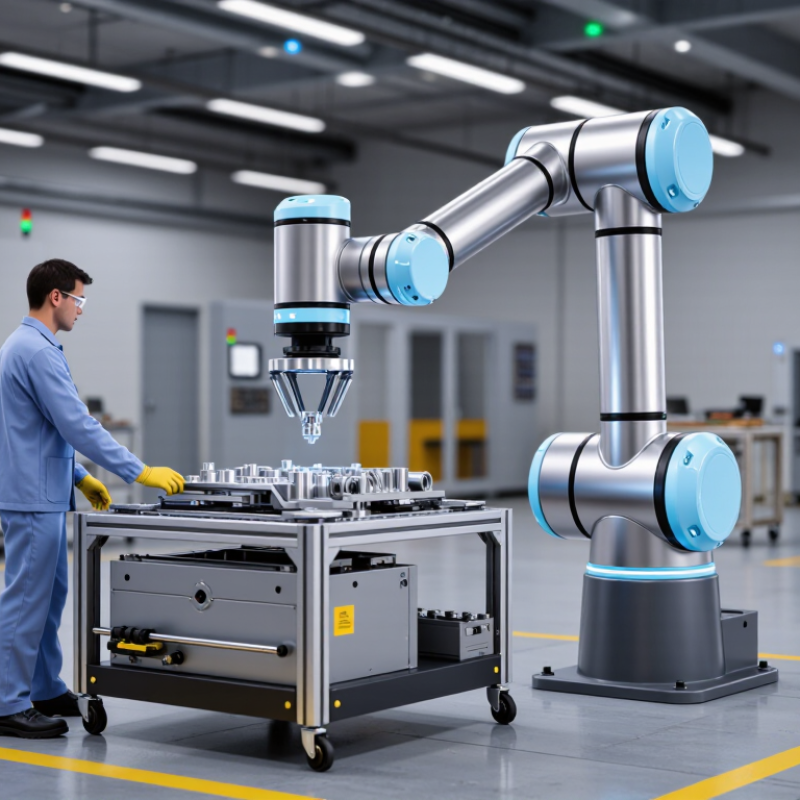
A collaborative robot, or cobot, is designed to work near people. It uses sensors, force monitoring, and programmed movement limits to reduce contact risks. In a typical production cell, a cobot may lift a small part, place it in a fixture, and wait for a worker’s next action. Its rounded body and slower motion can make setup feel less intimidating. Still, appearance does not prove safety.

Traditional industrial robots usually operate inside guarded areas. They are built for high speed, heavy payloads, and repeatable production over long shifts. A worker normally loads materials from outside the cell or pauses the machine before entering. Cobots take a different approach. They can share workspace with operators when a risk assessment supports that arrangement. Their installation often needs less fencing, which may help smaller factories change layouts quickly.

The difference is not simply “safe robot versus dangerous robot.” Cobots often trade speed and payload for flexibility and interaction. A heavy metal arm moving quickly can exceed their practical limits. Tool shape, sharp parts, squeezing points, and unexpected movement still matter. During a real setup, an operator may need to adjust the speed after noticing a part swinging slightly. That detail is easy to miss during planning. Cobots also require proper training, emergency controls, testing, and documented procedures. Human cooperation remains part of the system.

The Main Components of a Cobot System

What Is a Cobot Robot and How Does It Work?

The Main Components of a Cobot System

A cobot is a collaborative robot designed to work near people. Its system begins with a robotic arm, built from linked joints and electric actuators. Each joint controls a specific movement, such as rotation, lifting, or positioning. The arm needs an end effector, too. This tool may grip, weld, inspect, or move parts, depending on the task.

The controller acts as the system’s decision center. It converts programmed instructions into accurate joint movements and monitors speed, position, and force. Software defines the work sequence through a teach pendant or computer interface. A technician can guide the arm through selected points, although programming is rarely perfect on the first attempt. Small errors in tool alignment can affect every later movement.

Safety depends on more than software. Joint torque sensors, position sensors, emergency stops, and protective monitoring work together. These components can detect unexpected resistance or movement and trigger a controlled stop. The power supply and mounting structure also matter. A weak fixture may cause vibration, even when the arm is correctly programmed. In real production areas, lighting, floor space, cables, and changing part sizes can create problems that testing misses. Careful risk assessment and repeated trials remain essential.

What Is a Cobot Robot and How Does It Work? - The Main Components of a Cobot System

System Component Primary Function How It Works Typical Data or Capability Safety and Control Considerations
Mechanical Arm Provides multi-axis movement and positions the tool or workpiece. A series of linked joints moves through programmed angles to reach a target position and orientation. Common collaborative arms have 6 rotational axes, allowing positioning and orientation in three-dimensional space. Joint speed, payload, reach, and stopping distance must be assessed for the intended task and workspace.
Joint Motors and Gearboxes Generate and transmit torque at each robotic joint. Electric motors drive reduction mechanisms, which increase torque and regulate joint motion. The controller uses joint position, velocity, and torque information to coordinate smooth movement. Torque limits and controlled stopping help reduce the risk of excessive contact force.
Joint Position Sensors Measure the angular position of each joint. Encoders or comparable feedback devices report actual joint position to the control system. Feedback is used for closed-loop positioning, repeatability, calibration, and fault detection. Redundant or monitored feedback can support protective stops when a motion fault is detected.
Force and Torque Sensing Detects external contact, resistance, and interaction forces. Sensors in the joints or near the tool compare expected motion with measured load changes. Enables force-limited operation, collision detection, compliant assembly, and controlled contact tasks. Force limits must be validated for the tool, workpiece, posture, speed, and foreseeable contact locations.
Robot Controller Coordinates motion, logic, feedback, and safety functions. It converts programmed instructions into synchronized commands for the motors while monitoring sensor feedback. Controls trajectories, acceleration, speed, tool actions, inputs, outputs, and error handling. Safety-related functions should be monitored and validated in accordance with the applicable risk assessment and safety requirements.
End-of-Arm Tooling Performs the task at the robot's wrist. A gripper, vacuum device, screwdriver, dispenser, camera, or other tool interacts with the workpiece. Tool choice determines gripping method, rated load, air or electrical requirements, and task accuracy. Sharp edges, pinch points, stored energy, dropped objects, and unexpected tool motion must be controlled.
Human-Machine Interface Allows operators and technicians to program, monitor, and adjust the system. A teach pendant, graphical interface, or external control panel is used to create waypoints, sequences, and task parameters. Supports manual jogging, program selection, status monitoring, diagnostics, and controlled restart procedures. Access levels, emergency-stop devices, and restart controls help prevent unauthorized or unexpected operation.
Safety Functions Reduce risk during human-robot interaction. The system monitors speed, force, position, protective stops, and emergency-stop circuits according to the application design. Common functions include emergency stop, protective stop, speed limitation, force limitation, and workspace restriction. Collaborative operation is not automatically safe; the complete application requires a documented risk assessment.
Communication Interfaces Connect the cobot with tools, sensors, machines, and factory systems. Digital inputs and outputs, industrial networks, or application programming interfaces exchange commands and status information. Can coordinate part-present sensors, conveyors, programmable controllers, vision systems, and production data. Communication faults should generate a predictable safe state and prevent unintended restart.
Base and Mounting Structure Supports the arm and transfers operating loads to the floor, bench, or mobile platform. A rigid mounting arrangement maintains the robot's reference position and limits unwanted vibration or movement. Mounting design affects reachable workspace, repeatability, stability, and the effective payload. Anchoring, clearance, cable routing, and structural strength must be checked before operation.

Note: A cobot system is a complete application consisting of the robot, tooling, software, workpiece, surrounding equipment, and people. Safe collaborative operation depends on the combined design and risk assessment of all these elements.

How a Cobot Performs Tasks Step by Step

What Is a Cobot Robot and How Does It Work?

How a Cobot Performs Tasks Step by Step

A collaborative robot, or cobot, is designed to work near people in controlled industrial settings. It uses motors, sensors, software, and a programmed tool to perform repeatable tasks. The process begins when an operator defines the task, such as picking a part from a tray and placing it into a fixture. The operator records positions, sets movement speeds, and checks the working area.

The cobot then reads sensor data and compares it with the programmed path. Its joints move in small, coordinated steps. A camera may locate the part, while a force sensor detects contact during gripping or assembly. The end tool closes around the object with measured pressure. It moves slowly toward the fixture and releases the part at the programmed point. Small details matter.

During operation, safety systems monitor speed, force, and unexpected contact. If resistance becomes too high, the cobot can stop or reduce its movement. An operator should test the task without production materials first. The trial may reveal a weak grip, poor lighting, or an unsafe reach. In practice, the first program is rarely perfect. A pause can prevent damage. Engineers adjust waypoints, tool settings, and approach angles after observing real movement. Regular inspections also help detect loose fittings, cable wear, or inaccurate positioning before these issues affect the work.

Common Applications, Benefits, and Safety Features of Cobots

A collaborative robot, or cobot, assists people in shared workspaces. Unlike traditional industrial robots, it is designed to respond to nearby human movement. Force and torque sensors detect unexpected contact, while cameras or scanners can monitor protected areas. If a person enters a restricted zone, the cobot can slow down or stop.

Cobots support many practical tasks. They can assemble small parts, load machines, package products, inspect surfaces, and move materials between workstations. In a busy factory, one cobot may handle repetitive lifting while a worker manages adjustments and quality decisions. This reduces physical strain and can improve consistency. Cobots are also relatively flexible. Teams can often redeploy them when production changes, although setup still requires time and technical skill.

Safety features include speed limits, force monitoring, emergency stops, safety-rated control systems, and hand-guiding modes. Some models use protective separation to maintain distance from workers. These features do not make every application automatically safe. A sharp tool, unstable load, or poorly planned movement can still create hazards. Not perfectly. A proper risk assessment should examine the full cell, including tooling, software, access points, and human behavior. Operators need practical training, clear procedures, and regular inspections. In real workplaces, small layout changes can affect safety more than expected.

Scroll to Top