How to Choose the Right Robot AMR in 2026?
Choosing a robot AMR in 2026 starts with the work, not the showroom. Map the route from receiving to storage, then note narrow aisles, floor joints, busy crossings, and peak-hour traffic. A compact vehicle may turn neatly beside a packing bench, yet struggle when pallets block its sensors. A faster model may look impressive, but speed alone rarely fixes a poorly designed workflow.
Robotics pioneer Rodney Brooks wrote, “The world is its own best model.” His observation offers a useful lens for evaluating a robot AMR: test it in the actual environment, where lighting, people, loads, and Wi-Fi behave as they do each day. Ask vendors to demonstrate the proposed routes with representative payloads. Check stopping behavior, fleet-management tools, charging plans, maintenance access, and how the system responds when a path is blocked. Small details matter. A charging station placed near a busy doorway can disrupt the very traffic the automation is meant to improve.
Compare more than purchase prices. Estimate installation, integration, training, service, and the cost of workflow changes. Confirm that the AMR can exchange data with your warehouse or manufacturing systems, and ask how updates and support are handled. Request references from operations similar in scale and layout. Then run a limited pilot with clear measures, such as completed trips, waiting time, and manual interventions. No checklist removes every uncertainty. A pilot can still miss seasonal peaks or unusual congestion. Treat those gaps as questions to investigate, not reasons to rush into a fleet-wide commitment.
Define Your Operational Needs and AMR Use Case
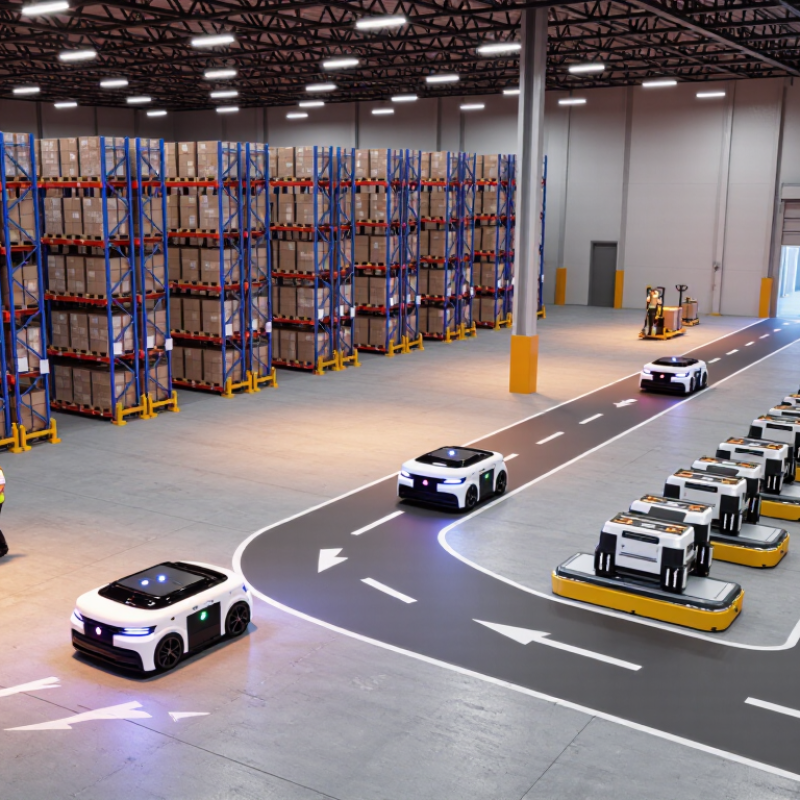
Before comparing AMRs, define the work they must perform. Start on the floor. Record the load’s weight and dimensions, pickup and drop-off points, travel distance, and trips required per hour. Measure aisle widths and note doors, ramps, busy crossings, and places where people stop unexpectedly. A route that looks clear on a plan may be crowded during a shift change. Include operating hours, floor conditions, and how often tasks change.
Then match the use case to the workflow. Line-side delivery may require frequent, predictable trips with small containers. Pallet movement may call for heavier loads and wider turning space. Towing carts changes the vehicle’s stopping distance and how it handles corners. Map the full journey, including loading, unloading, waiting, and return travel. “Move materials” is not a complete requirement. Specify who presents the load and what happens when a destination is blocked.
Set measurable targets before a pilot: completed trips per hour, delivery accuracy, waiting time, and manual interventions. Test during normal operations, not only in a quiet aisle. Track exceptions, including missed handoffs and temporary obstructions. The first estimate is often wrong; revise it using observed data. Also confirm that charging locations, traffic controls, and connections to existing systems fit the site. Keep a manual fallback for tasks the AMR cannot reliably complete.
Map the Facility, Routes, and Working Conditions
How to Choose the Right Robot AMR in 2026?
Map the Facility, Routes, and Working Conditions
A useful AMR plan starts with a real walk-through, not just a floor plan. Measure aisle widths, doorway clearances, ramps, and floor gaps. Note blind corners, fire doors, charging locations, and places where pallets often wait. A route that looks clear on paper may narrow to one meter during a busy shift.
Record what the robot will carry, how often it will travel, and who shares its routes. A loaded cart behaves differently on a polished floor than on a rough threshold. Watch traffic during shift changes, when people, forklifts, and deliveries may converge. Small details matter. One overlooked cable ramp can disrupt a route. Plans are rarely perfect, and the map will need updates as operations change.
Tips: Walk the route at different times of day. Mark temporary obstacles, pedestrian crossings, and slow zones. Test a representative load on the actual floor, then revise the route based on observed stops and delays.
Compare AMR Types, Payloads, Navigation, and Performance
Choosing the right robot AMR starts with the work it must do, not a headline speed. A tugger suits long routes with carts, while a mobile shelf carrier fits compact picking zones. For pallets, compare lift height, turning radius, and load stability. Payload ratings need context: a robot carrying 500 kilograms on a smooth floor may behave differently on ramps or uneven joints. Check the load’s size and center of gravity, too.
Navigation should match the building. Lidar-based systems can adapt to changing layouts, while vision or floor markers may suit controlled areas. Look closely at pedestrian crossings, reflective surfaces, narrow aisles, and temporary obstacles. Test with real lighting and traffic. A clean demo route proves little.
Then measure performance over a full shift. Track completed missions, queue time, docking accuracy, and battery use—not just peak speed. Ask how the fleet handles blocked aisles and priority changes. Small delays add up. A missed docking can stall a whole handoff. I would also leave room for uncertainty: published figures rarely capture every floor crack or human detour. A short pilot with representative loads can reveal gaps before deployment. Keep the test conditions written down, so comparisons remain fair.
Check Safety Features, Software, and System Integration
Choosing an AMR in 2026 means looking beyond advertised travel speed and payload. Ask how it behaves beside people, racks, and shifting loads. A safe machine should detect obstacles reliably, slow at marked crossings, and stop predictably. Request details on sensor coverage, emergency stops, speed zones, and what happens when a sensor is blocked. Test it with a loaded cart on a tight turn, not just an empty showroom floor. Small details matter. Braking distance can change with floor conditions and load weight, so check the figures against your actual site.
Software deserves equal scrutiny. Can operators adjust routes without specialist help? Can the system show why a robot paused, and keep useful event logs for troubleshooting? A polished dashboard is not proof of reliable performance; I would want to see it handle a real interruption. Check how the AMR connects with warehouse or production software, as well as doors, lifts, and charging stations. Confirm what happens when Wi-Fi drops and how work resumes afterward. A short pilot on one busy route can reveal bottlenecks that a presentation misses. Track completed trips, manual interventions, and waiting time, then discuss the results with both operators and integration staff.
Evaluate Total Cost, Support, and Deployment Readiness
A robot AMR’s purchase price is only the visible part of its cost. Estimate the full bill over three to five years, including software, charging equipment, integration, operator training, spare parts, and maintenance. Ask what happens when a unit is unavailable during a busy shift. That matters. A low quote can become expensive if routine service requires long waits or specialist travel.
Support should be specific, not just reassuring. Confirm response hours, remote troubleshooting options, parts availability, and who owns an issue when the robot and warehouse system disagree. Request a sample service plan with realistic response times. Then check those commitments against your site’s operating hours. Small gaps matter.
Deployment readiness is equally practical. Map aisle widths, floor transitions, Wi-Fi coverage, pickup points, and pedestrian crossings before committing. Run a pilot during a normal shift, not only in a quiet demo area. Measure completed tasks, stalled trips, manual interventions, and recovery time. Ask frontline staff what feels awkward; their observations may challenge the original plan. A pilot can still miss seasonal peaks, messy handoffs, or changing inventory. Be honest about those limits, and budget time to adjust workflows before scaling.
How to Choose the Right Robot AMR in 2026? - Evaluate Total Cost, Support, and Deployment Readiness
| Evaluation area | AMR option or metric | Typical use and planning data | What to verify on site | Cost and support checks | Readiness signal |
|---|---|---|---|---|---|
| Load and transport type | Tugger or cart-pulling AMR | Moves trains of carts between repeatable pickup and drop-off points. Confirm the rated towing capacity for the full train, including carts and payload. | Check turning space, coupling method, cart brakes, floor transitions, gradients, and whether carts can be presented consistently. | Include cart modification, couplers, traffic controls, and maintenance for both robot and carts. Ask who supports the complete train. | Routes and cart handoffs are standardized, and loaded-train trials complete without frequent manual intervention. |
| Load and transport type | Cart, tote, or shelf-carrying AMR | Carries items directly or transports a cart or shelf. Capacity and usable deck size vary by model and configuration; select against the heaviest and largest real load. | Measure loaded dimensions and center of gravity. Test pickup and drop-off alignment, aisle clearance, rack interfaces, and pedestrian crossings. | Account for carts, racks, docking equipment, fleet software, and any required interface work with warehouse or production systems. | Loads are presented within repeatable position and tolerance limits, with clear rules for shared-aisle traffic. |
| Load and transport type | Pallet-moving AMR | Moves pallets using an under-running, fork-style, or other pallet-handling design. Verify pallet type, rated load, and compatibility with the actual load and handling process. | Check pallet condition and openings, floor flatness, ramps, dock transitions, pickup/drop-off accuracy, and space for loaded turns. | Include pallet presentation changes, safety measures at transfer points, charging capacity, and integration with conveyors or lifts where applicable. | The pallet population and transfer points are controlled, and representative loaded cycles pass the site acceptance test. |
| Total cost of ownership | Compare full lifecycle cost, not purchase price alone | Build a multi-year model covering robot purchase or lease, integration, fleet software, infrastructure, training, energy, maintenance, batteries, downtime, and end-of-term value. | Use measured trip volumes, shifts, travel distances, charging windows, staffing, and expected manual exceptions. State assumptions and compare like-for-like scenarios. | Request itemized pricing, recurring fees, warranty exclusions, spare-parts costs, battery replacement terms, and paid support options. | The business case remains acceptable under conservative throughput, labor-savings, maintenance, and downtime assumptions. |
| Deployment readiness | Facility, routes, and traffic | AMRs need navigable routes and workable interactions with people, vehicles, doors, lifts, and production equipment. Requirements depend on the robot and the application. | Survey aisle widths, turning areas, floor condition, thresholds, slopes, lighting where relevant, Wi-Fi coverage, and peak traffic. Confirm interfaces and recovery procedures. | Identify site work, network changes, access-control requirements, safety assessment responsibilities, and costs for integration with existing systems. | The supplier has validated the proposed routes and interfaces in the operating environment, not only on a map or in a demonstration area. |
| Safety and compliance | Risk assessment and operating controls | Industrial driverless trucks are addressed by standards including ISO 3691-4. Applicability and required measures depend on the equipment, workplace, and local regulations. | Review the application-specific risk assessment, protective functions, speed zones, crossings, emergency stops, signage, and procedures for blocked routes or faults. | Clarify which party supplies documentation, performs commissioning checks, trains operators, and addresses safety-related changes after deployment. | Safety responsibilities and acceptance criteria are documented before live operation; compliance is not assumed from a product label alone. |
| Support and service | Response, repair, and parts availability | Support quality affects recovery time and fleet availability. A response-time commitment is different from a repair or restoration-time commitment. | Confirm local service coverage, remote diagnostics, escalation route, spare-parts location, technician access, and support hours for every operating shift. | Compare service-level terms, exclusions, travel charges, software updates, cybersecurity support, training, and warranty coverage in writing. | Named service owners, measurable service commitments, and a practical manual fallback are in place before fleet expansion. |
| Pilot and acceptance | Prove performance under real operating conditions | A representative pilot should cover normal and peak traffic, real loads, full shifts, charging, handoffs, and common exceptions. | Agree in advance on measurable targets for completed missions, throughput, interventions, availability, safety events, and recovery time. | Define pilot duration, included engineering, acceptance tests, data ownership, changes outside scope, and the conditions for scaling or stopping. | Scale only after agreed targets are met consistently and operators can manage routine exceptions using documented procedures. |
Planning note: AMR capabilities, costs, and site requirements vary by configuration and application. Validate specifications, lifecycle assumptions, safety obligations, and support commitments with a site survey and written supplier proposals.
Related Posts
-
2026 Best Robot AMR for Global Buyers?
-

How to Choose the Best Robot AMR in 2026?
-
Top 10 Autonomous Robots for Businesses?
-

2026 Best Robot AMR Manufacturers and Suppliers
-
How to Maximize Efficiency with AMR Robots: Insights from the 2023 Logistics Automation Report
-
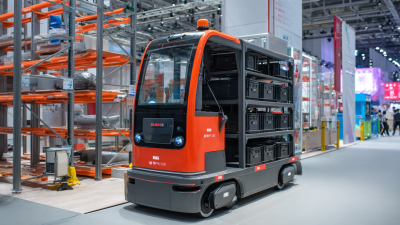
Revolutionizing Supply Chain: Exploring AMRs at the 138th Canton Fair 2025 in China