Who Are the Top 10 Laboratory Robotics Companies in China?
China’s laboratory robotics sector is moving from isolated automation toward connected, flexible workflows. Robotic arms now transfer sample tubes, while liquid handlers dispense precise volumes across crowded benches. Imaging systems and automated storage can link those steps, reducing repetitive manual work. Yet a polished demonstration does not prove reliable performance over months of daily use.
Robotics pioneer Joseph Engelberger is often quoted as saying, “I can’t define a robot, but I know one when I see one.” For laboratory buyers, seeing is only the beginning. They also need to assess instrument compatibility, software integration, service coverage, and the effort required to adapt a system to real protocols. Small details matter: a gripper that mishandles one tube format can interrupt an otherwise impressive workflow.
This overview of the top 10 laboratory robotics companies in China should be read as a guide, not a universal league table. Company capabilities, product availability, and support can change, and the “top” choice depends on the laboratory’s application. A ranking can look cleaner than reality. The comparison should therefore consider documented products, relevant deployments, technical support, and transparency about limitations. Some providers may excel in sample handling; others may focus on liquid handling, mobile robots, or integrated platforms. Those distinctions deserve attention. Readers should verify current specifications and request application-specific demonstrations before making purchasing decisions. A careful comparison can reveal strong options, but no shortlist replaces hands-on evaluation.

What Laboratory Robotics Companies Do in China
Laboratory robotics companies in China design, build, and integrate automated systems for research and testing environments. Their work can include robotic arms, sample-handling equipment, automated storage, and software that tracks each task. A typical system may move small tubes between racks, add measured liquids, and record results with fewer manual steps. Some companies also adapt equipment to fit existing laboratory layouts. Others provide installation, operator training, and maintenance. The details matter: a robot must handle different containers reliably, not just repeat a polished demonstration. Integration can be difficult.
These suppliers may serve pharmaceutical research, biotechnology, clinical testing, and materials laboratories. They help automate repetitive workflows, improve consistency, and make better use of staff time. Yet automation is not a cure-all. Poorly planned workflows can simply become faster sources of errors. Equipment selection should reflect sample types, throughput, available space, and data requirements.
Tips: Map the manual workflow before choosing a system. Check how it handles real samples, cleaning, and exceptions. Ask who supports the equipment after installation. Small details matter.
Some laboratories need a fully connected line; others benefit from automating only one step. A careful pilot can reveal bottlenecks that were easy to miss on paper. Results may vary, and that is worth acknowledging. Reliable implementation depends on clear requirements, staff involvement, and ongoing validation—not robotics alone.
How to Identify the Leading Companies
Identifying leading laboratory robotics companies in China starts with the work a laboratory needs done, not a glossy product catalogue. Look for systems that handle the actual tubes, plates, caps, and volumes used in daily workflows. Ask for a live demonstration with representative materials, then record transfer accuracy, recovery time, and failed runs. Small details matter. A robot that saves minutes but needs frequent operator intervention may not improve throughput.
Assess how equipment connects with existing instruments, laboratory information systems, and data-management procedures. Request documented performance ranges, maintenance schedules, training plans, and examples from comparable laboratories. Independent references can reveal whether uptime claims hold during busy shifts, not just staged demonstrations. Compare ownership costs, including consumables, service response, software updates, and staff training. Strong suppliers explain limitations clearly and support qualification with traceable records. No single score fits every laboratory; weighting criteria requires judgement, and even careful trials can miss awkward edge cases.
The Top 10 Laboratory Robotics Companies in China
The Top 10 Laboratory Robotics Companies in China are best assessed by what their systems can reliably do, not by publicity alone. Compare suppliers across liquid handling, sample preparation, plate transport, automated storage, imaging, and laboratory software. A practical test is simple: can a workcell move a microplate between instruments without spills, failed scans, or repeated manual resets? Small details matter. So does after-sales support.
China’s automation capacity provides useful context, but industrial robotics figures are not laboratory-specific.
The International Federation of Robotics reported 276,288 industrial robot installations in China in 2023, about 51% of global installations (World Robotics 2024). This signals a substantial automation ecosystem, not proof that every lab supplier has equal expertise.
Buyers should examine validated workflows, instrument compatibility, uptime records, and operator training. Ask for performance data from real laboratory settings.
Some evaluations still lean too heavily on demonstrations; that is a weakness worth questioning. A polished demo is not the same as dependable daily operation.
Key Technologies and Laboratory Applications
Laboratory robotics in China is shaped by precise liquid handling, machine vision, sample tracking, and robotic arms that move plates between instruments. Sensors monitor temperature and humidity, while software links instruments with laboratory information systems. In a busy testing room, this can mean a gripper transferring a 96-well plate without interrupting an overnight assay. Precision matters.
Applications span biomedical research, pharmaceutical development, clinical testing, and food analysis. Grand View Research’s Laboratory Automation Market report projects a 7.4% compound annual growth rate for the global market from 2024 to 2030. This figure covers laboratory automation broadly, not China’s robotics market alone. The distinction matters: market growth does not prove that every lab is ready to automate.
China’s wider robotics capacity offers useful context. The International Federation of Robotics reported 276,288 industrial robot installations in China in 2023, equal to 51% of global installations. Those figures are not laboratory-robot sales, but they reflect a substantial manufacturing and engineering base. Still, a robot cannot rescue a poorly designed protocol. Plate formats vary, legacy instruments resist integration, and small labs may struggle to justify the setup cost. There is no perfect workflow yet.
Market Trends Shaping China’s Laboratory Robotics Industry
China’s laboratory robotics industry is shifting from isolated automated instruments toward connected workflows. Laboratories increasingly want systems that move samples between preparation, testing, and storage with fewer manual handoffs. A rack of labeled tubes, a barcode reader, and a compact robotic arm can make routine work more consistent. Smaller labs are also seeking modular equipment that fits existing benches. Space matters.
AI-assisted imaging and software integration are attracting attention, especially where sample volumes are high. Better tracking can help teams spot delays and document each handling step. Yet automation is not an instant fix. Older instruments may be difficult to connect, and poorly planned workflows can simply move bottlenecks elsewhere. Human oversight, maintenance access, and staff training still matter. The industry may be moving quickly, but some purchasing claims deserve careful testing.
Tips: Map a sample’s full journey before choosing equipment. Ask vendors to demonstrate real workflows, including exceptions such as unreadable labels or a delayed instrument. Check cleaning access, service response, and data export options. A short pilot with actual staff can reveal awkward steps that a polished presentation may miss.
China’s R&D Investment: A Demand Context for Laboratory Robotics
China’s rising research and development expenditure provides a broad indicator of the expanding research environment in which laboratory automation may be adopted. These figures represent total national R&D spending, not laboratory robotics market revenue.
Source: National Bureau of Statistics of China. Expenditure shown in trillion yuan.
Related Posts
-
What Are the Best Types of Laboratory Robotics in 2026?
-
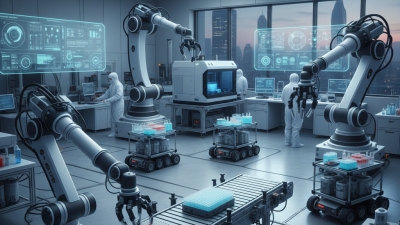
How to Choose the Best Lab Robotics for Your Needs?
-
What Are the Benefits of Laboratory Robotics for Efficiency?
-
How to Optimize Lab Robotics for Efficient Procurement in 2026?
-
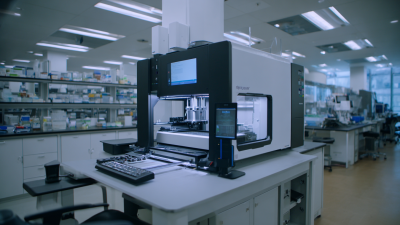
Revolutionizing Research Efficiency through Lab Robotics and Automated Workflows in Life Sciences
-

Revolutionizing Research: The Impact of Lab Robotics on Scientific Discoveries