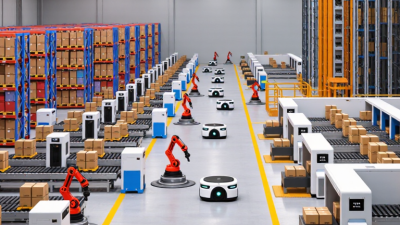
What Are the Top Warehouse Robotics Companies in China?
China’s warehouse robotics market is expanding alongside the country’s broader automation base. The International Federation of Robotics reported 276,288 industrial robot installations in China in 2023, about 51% of global installations. That figure is useful context, but it does not measure warehouse robots alone. Industrial robots and warehouse systems serve different tasks.
For warehouse robotics, the practical questions are more specific: Can autonomous mobile robots navigate crowded aisles? Do picking systems integrate with warehouse software? Can operators maintain them during peak-season pressure? DHL’s Dr. Markus Kückelhaus, Vice President of Innovation and Trend Research, has emphasized that robots should support human work rather than be treated simply as replacements. That distinction matters. A robot that looks impressive in a demonstration may still struggle with changing inventory, narrow routes, or uneven floors.
This introduction examines leading Chinese companies through those operational details, alongside their product focus, deployment evidence, and integration capabilities. It also separates reported performance from marketing claims, since public data can be incomplete or difficult to compare. Not every warehouse needs the same level of automation. Sometimes, a modest fleet is the smarter choice. The rankings that follow should therefore be read as a starting point for evaluation, not a universal buying guide.
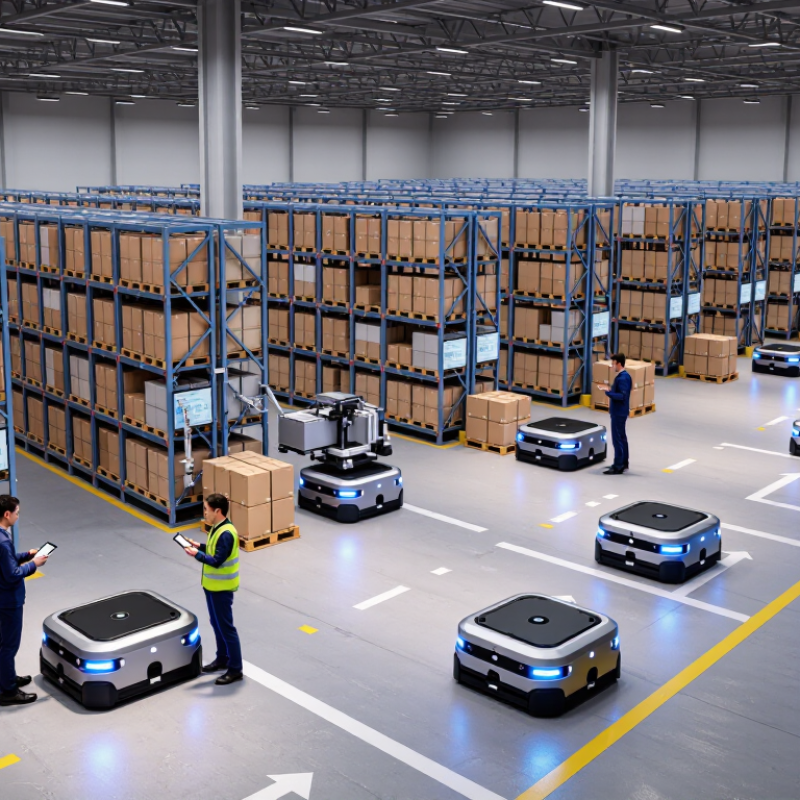
Understanding Warehouse Robotics in China
Warehouse robotics in China covers more than mobile robots. It includes automated storage and retrieval systems, conveyor networks, robotic picking, and software that coordinates orders, inventory, and equipment. The right setup depends on the building, goods, and daily order pattern. A narrow aisle or uneven floor can change what works.
China’s warehouses serve varied industries, from online retail to electronics and cold-chain logistics. In practice, teams may use autonomous mobile robots to move totes between workstations, while fixed systems handle repetitive storage tasks. Sensors and cameras help equipment detect obstacles and identify items. Small details count. Lighting, barcode quality, and network coverage can affect performance.
A useful evaluation looks beyond speed claims. Measure travel distance, order accuracy, downtime, and how quickly staff can clear a blocked route. Check whether the control software can connect with existing warehouse systems, and ask how maintenance is handled during busy shifts. A polished demonstration is not a full deployment. Real sites are messier, and automation can add complexity when workflows are poorly defined. That deserves honest attention. Companies choosing a system should test it with representative orders, actual packaging, and realistic peak volumes before expanding across a facility.
How to Evaluate Warehouse Robotics Companies
Choosing among warehouse robotics companies in China requires more than comparing vehicle speed or quoted prices. Start with the warehouse itself: measure aisle widths, floor unevenness, turning space, and peak-hour traffic. Ask whether the robots can handle your actual load sizes and package shapes, not just demonstration totes. Real floors are messier. A useful trial should include blocked routes, shift changes, and temporary storage in unexpected places.
Evaluate how easily the system connects with your warehouse software and existing equipment. Request a clear plan for installation, staff training, maintenance, and spare-part delivery. During a site visit, watch how workers interact with robots near busy intersections. Check safety procedures and ask how incidents are recorded and investigated. That matters. Compare measurable results, such as completed tasks per hour, downtime, and recovery time after a fault. Ask for references from facilities with similar layouts and workloads. A polished demonstration can hide awkward handoffs or software delays; even a careful pilot may not predict every seasonal rush. Leave room to revise assumptions after seeing real operating data.
| Evaluation Dimension | Evidence to Request | How to Evaluate | Why It Matters |
|---|---|---|---|
| Operational Fit | Supported workflows, such as goods-to-person transport, pallet movement, case handling, or robotic picking; supported floor conditions and load types. | Match the proposed system to actual order profiles, aisle layouts, storage methods, and material-handling tasks. Confirm limitations in writing. | Avoids buying capability that does not address the warehouse’s core needs. |
| Robot Type and Load Handling | Robot category, rated payload, compatible load dimensions, lifting or conveying method, and required clearances. | Compare stated specifications with the heaviest and largest real loads, including pallets, totes, or cases used at the site. | Affects task coverage, safety, and layout compatibility. |
| Navigation and Site Adaptability | Navigation method, mapping and localization approach, obstacle detection, and requirements for floor markings or infrastructure. | Test representative routes and operating conditions, including intersections, temporary obstructions, and changes to storage locations. | Determines how well robots work in the real facility, not just a demonstration area. |
| Fleet Management | Fleet-control functions, task allocation, traffic coordination, charging management, monitoring, and exception handling. | Observe the system under normal and peak operating scenarios. Check how it handles blocked routes, task changes, and multiple robots requesting shared resources. | Coordination affects throughput and congestion as fleets grow. |
| System Integration | Documented interfaces and integration experience with warehouse management, warehouse control, enterprise, and material-handling systems. | Request an interface specification, data-flow diagram, responsibility matrix, and a test of representative orders and exception messages. | Robots must exchange reliable task and status data with warehouse operations systems. |
| Safety and Compliance | Risk assessment, safety functions, emergency-stop design, operating instructions, maintenance procedures, and applicable test reports. | Verify the standards and regulations applicable to the specific equipment and deployment. For driverless industrial trucks and their systems, check the relevance of ISO 3691-4:2020 and request supporting evidence. | Safety requirements depend on the robot type, site, and intended use. |
| Performance Validation | Measured task-cycle times, completed missions, queueing, charging impact, and system availability from a clearly defined test. | Agree on test conditions and definitions before a pilot. Measure performance with representative loads, routes, shifts, and order patterns. | Comparable, site-specific results are more useful than unsupported headline claims. |
| Reliability and Service | Maintenance schedules, spare-parts plan, fault records, remote-support process, service coverage, and escalation procedures. | Review service commitments and verify who provides support locally, what response arrangements apply, and how downtime is recorded. | Support quality affects recovery time and ongoing operations. |
| Software and Cybersecurity | Software update process, user-access controls, network requirements, logging, backup and recovery procedures, and security documentation. | Review the system against the facility’s IT and operational-technology policies. Confirm how updates, access, and incident response are managed. | Robots and fleet software connect physical operations with digital systems. |
| Deployment and Scalability | Site-survey outputs, implementation plan, commissioning criteria, training plan, and documented examples of deployments with comparable workflows. | Check the proposed rollout sequence, operational disruption, acceptance tests, and the changes needed to add robots or expand to new zones. | A workable pilot should have a clear path to sustained operation and expansion. |
| Total Cost of Ownership | Itemized costs for equipment, software, integration, infrastructure, maintenance, support, training, and future upgrades. | Compare costs over the same evaluation period and operating assumptions. Include labor changes, downtime, charging, and required facility modifications. | Purchase price alone does not represent the full cost of a robotics system. |
Leading Warehouse Robotics Companies in China
China’s leading warehouse robotics companies are best judged by how reliably their systems move goods through real facilities, not by robot counts alone. Their strengths often include autonomous mobile robots, goods-to-person picking, fleet software, and integration with warehouse management systems. The sector benefits from China’s broader automation base: the International Federation of Robotics reported 276,288 industrial robot installations in China in 2023, equal to 51% of global installations. That figure covers industrial robots, not warehouse systems specifically, so it should not be treated as a warehouse market share.
In practice, a strong supplier must handle narrow aisles, changing storage layouts, and peak-season order surges without creating bottlenecks. Ask for site-level measures: picks per hour, system uptime, charging time, and recovery after a blocked route. Small details matter. A robot that pauses safely beside a pallet can save more time than a faster machine that needs frequent intervention. MHI and Deloitte’s 2024 Annual Industry Report found that 55% of surveyed supply-chain professionals planned to increase technology investment. That signals demand, but investment alone proves little. Pilot the system with your own order mix; even a polished demonstration may not reflect a messy warehouse floor.
Key Technologies and Solutions in Warehouse Robotics
Warehouse robotics combines autonomous mobile robots, automated storage and retrieval systems, robotic picking, and warehouse software. In Chinese facilities, these tools can move totes between storage racks and packing stations, while cameras help identify parcels and check their orientation. Software coordinates routes and work queues; it must also handle blocked aisles and sudden order spikes. That is where integration gets difficult.
The International Federation of Robotics’ World Robotics 2024 report recorded 276,288 industrial robot installations in China in 2023, about 51% of global installations. This figure covers industrial robots broadly, not warehouse systems alone. That distinction matters.
MHI’s 2024 Annual Industry Report found that 55% of surveyed supply-chain professionals were increasing technology investment, while 88% expected investment to rise over five years. Those figures signal interest, not guaranteed returns.
A practical assessment should test robots on real shifts, including peak periods, battery changes, and narrow aisles. Small failures add up. Poor handoff rules can leave a robot waiting beside a full conveyor, while staff work around it. Automation still needs thoughtful process design.
How to Compare Chinese Warehouse Robotics Providers
Compare Chinese warehouse robotics providers against the same warehouse conditions, not polished demonstration videos. Map the full route: receiving dock, storage aisle, picking station, and dispatch lane. Ask how robots behave when a pallet blocks an aisle or a lift changes the route. Look beyond the demo.
Request measured results from sites with similar order profiles. Compare picks per hour, uptime, recovery time, and peak-season performance. Check whether the system connects with your warehouse software and existing equipment. Ask for service response times, spare-parts availability, and training plans. Ask for proof. A quoted return-on-investment figure can miss integration costs or downtime; request the assumptions behind it.
Market scale is useful context, not a substitute for site evidence. The International Federation of Robotics’ World Robotics 2024 report records 276,288 industrial robot installations in China during 2023, about 51% of global installations. That figure covers industrial robots broadly, not warehouse systems alone. Compare providers using a controlled pilot, with agreed baseline measures and clear acceptance criteria. Record exceptions too: manual interventions, blocked paths, and failed handoffs. They can reveal weaknesses that headline throughput hides.
Related Posts
-
Top 10 Warehouse Robotics Companies for Global Buyers
-
Top 10 Logistics Robotics Companies for Global Buyers
-
How to Choose the Best Warehouse Robotics for Your Needs?
-
What Is Logistics Robotics and How Does It Work?
-
10 Tips for Choosing Autonomous Logistics Solutions
-
How to Maximize Efficiency with AMR Robots in Your Business Operations